
Cook with limited worktop space
You want to use the oven without squeezing it between or beneath kitchen cupboards. Its external dimensions and the space needed for heat to escape will determine whether the spot is suitable.


Start by checking where the oven can sit while in use, with enough space for heat to escape. Then compare its interior and door opening with your oven dish: the capacity in litres alone won’t tell you whether your dish will fit. A compact model may suit a small dish, while a larger one takes up more room. Compare energy use per cooking session, rather than looking at wattage alone.
You want to use the oven without squeezing it between or beneath kitchen cupboards. Its external dimensions and the space needed for heat to escape will determine whether the spot is suitable.
You want to keep using your own dish and serving size. In that case, the usable interior space and door opening matter more than the capacity in litres alone.
You’re looking for a convection function and want to adjust the top heat to suit what you’re cooking. A function description alone doesn’t guarantee a particular result.
First, measure the space where you’ll use the oven and check the size of your dish. Then check the cooking functions and compare energy use per cooking session, if you have figures based on the same criteria.
| What to consider | What to look for | Who is this important for? |
|---|---|---|
| Placement and ventilation | Measure the available space and follow the instructions for placing the exact model, including the clearance needed for heat to escape. | If you have limited worktop space, you’ll want to know whether the oven can sit safely there while in use. Around 36% of consumers put the location first. |
| Oven dish fit | Compare your dish, including its handles, with the interior space and door opening. Check whether any stated baking tin or tray dimensions suit your dish. | If you want to keep using your usual dish and serving size, measure it before choosing an oven. For around 29% of consumers, the dish is the top priority. |
| Cooking functions | Check whether the exact model has convection and whether the top and bottom heat can be set separately. | If you want to adjust the top of a baked dish, check which heating settings the model offers. Around 21% of consumers give cooking functions top priority. |
| Energy use | Where possible, compare energy use per cooking session on the same basis, taking your portion and cooking method into account. | If you want to keep running costs down, comparing energy use per cooking session is more useful than looking at wattage alone. Around 14% of consumers put energy use and costs first. |
The capacity in litres doesn’t confirm that your rectangular oven dish, handles and all, will fit through the door.
Measure the outside of your dish and compare it with the usable interior space and door opening of the exact model. A stated size for round baking tins won’t necessarily apply to a rectangular dish.
If your dish doesn’t fit, you may need a different oven dish.
Even a compact oven gives off heat that needs to escape; its external dimensions don’t tell you how much clearance it needs while in use.
Follow the model’s placement instructions and only use the oven where the required ventilation can be provided.
A product listing may describe a model as a convection oven, even if the manufacturer says that exact model doesn’t have a convection function. A listing may also contain conflicting specifications.
Check the full model number and compare the key functions with the manufacturer’s information before making your choice.
Severin lists a capacity of 20 L for the TO 2068. This may be worth considering if you’re looking for a compact model, but it doesn’t tell you whether your oven dish will fit.
Tristar describes the OV-3652 as a 20 L oven with convection, designed for smaller portions.
Princess lists a capacity of 32 L for the 112751, more than the 20 L models mentioned.
Rommelsbacher lists a capacity of 30 L for the BG 1550 and mentions circulating air.
This selection includes mini ovens, larger freestanding ovens and a freestanding gas oven. Always check that the model suits your dish, available space and cooking needs.
 No image available
A mini oven to consider if you’re looking for a smaller appliance. Measure your dish and check the interior space and door opening of this exact model.
A stated size for round baking tins doesn’t confirm that a rectangular oven dish will fit.
 No image available
A mini oven to consider if you’re looking for a small cooking space. Check that the stated tray dimensions and door opening are suitable for your dish.
A tray size doesn’t confirm that your oven dish will suit a macaroni cheese bake.
 No image available
The stated 45 L capacity may be worth considering if you’re looking for a larger oven. Compare its external dimensions and required ventilation clearance with the space where you’ll use it.
Keep the ventilation openings clear and place the oven on a stable, heat-resistant surface.
 No image available
This 45 L freestanding oven is only worth considering if you have space for a larger appliance. Compare its stated width with your worktop.
Allow for the stated width of 59 cm and keep the ventilation openings clear.
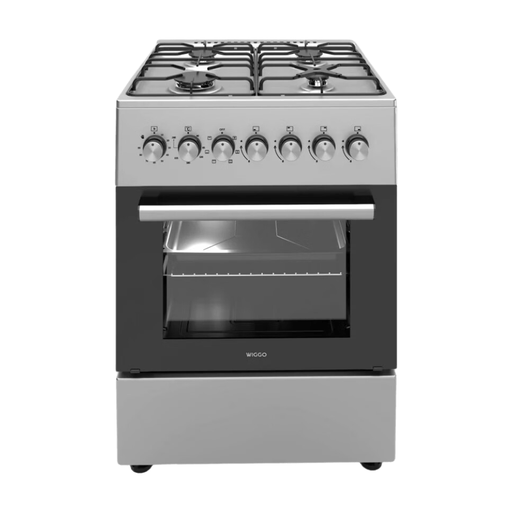 No image available
This is a freestanding gas cooker, not a compact mini oven. Check the space and installation requirements before considering this model for a small kitchen.
According to the product information, the gas connection must be installed by a qualified professional.
Don’t assume you can: heat from the oven needs to escape. The Dutch Fire Service advises taking into account the heat given off by electrical appliances. Check your model’s placement and ventilation instructions, and measure the space where you plan to use the oven.
Measure the dish, including its handles, and compare it with the interior space and door opening of the exact model. A stated capacity in litres or a measurement for round baking tins doesn’t confirm that your rectangular dish will fit.
Not on its own: wattage doesn’t tell you how much energy each cooking session uses. Milieu Centraal recommends comparing ovens by their energy use per session or per year. Compare figures on the same basis, taking your portion and cooking method into account.
According to the Dutch Ondernemersplein, electrical appliances must meet the relevant European requirements. After an assessment, the manufacturer must apply a CE mark and draw up an EU declaration of conformity. A CE mark for one model doesn’t prove that another model meets the same requirements.
The Voedingscentrum advises reheating leftovers until they are piping hot all the way through. A browned cheese topping alone doesn’t show that the centre has been heated sufficiently.