
Baking one large galette
You mainly want to know whether the pastry and baking tray will fit in the oven. The Consumentenbond recommends checking the internal dimensions and measuring your largest oven dish.


Start by checking the size of your pastry, baking tray and available kitchen space: a capacity in litres won’t tell you whether your galette will actually fit. An oven with both fan and conventional heating gives you more choice of cooking settings, but the right setting and temperature will still depend on your recipe and oven.
You mainly want to know whether the pastry and baking tray will fit in the oven. The Consumentenbond recommends checking the internal dimensions and measuring your largest oven dish.
You may be looking for a freestanding oven to avoid having one built in, but you’ll need to weigh up the space available against the size of your galette.
You want to cook other dishes as well as this galette, so you’ll also want to consider the oven settings, controls, energy information and cleaning. The European Commission publishes energy information for household ovens covered by the relevant rules.
Choose this if: you don’t have a suitable built-in space and want to place the oven separately.
Trade-off: a compact exterior can also mean a smaller baking tray; check the usable dimensions and the space where you plan to put it.
Choose this if: you have a suitable housing unit and want to use both fan and conventional heating.
Trade-off: measure both the housing unit and the interior, and check the connection details for the exact model.
Choose this if: you also want a microwave function and the oven settings and baking tray suit your galette.
Trade-off: according to the Consumentenbond’s buying advice, combination microwave ovens often don’t have a conventional heating setting and sometimes have fewer shelf positions; check the exact model.
| What to consider | What should you check? | Who is this most important for? |
|---|---|---|
| Baking space | Measure the baking tray, the internal width and depth, and your pastry or baking tin. | If I’m baking one large galette, I want to know whether both the pastry and baking tray will fit; that’s why around 36% of consumers prioritise the available baking space. |
| Oven settings | Check that the exact model has fan and conventional heating; follow the setting and temperature in your recipe. | If I want to match the cooking setting to the recipe and the base, I’ll focus on the functions available; around 29% of consumers put oven settings first. |
| Installation | For a built-in oven, measure the housing unit and check the connection; for a freestanding model, measure the space and consult the manual. | If I don’t have a built-in space, or want to use an existing one, the oven needs to suit my kitchen; around 21% of consumers prioritise how it will be installed. |
| Energy use and maintenance | Where applicable, compare the energy consumption per cycle using the same oven setting, and check the cleaning requirements and warranty for the exact model. | If I use the oven regularly, I also want to know about energy use, cleaning and after-sales service; around 14% of consumers look at these first. |
The stated capacity and usable interior space can differ. For the Electrolux KOFGH40BK, the manufacturer gives a stated capacity of 65 litres; the Consumentenbond measures a usable capacity of 56.1 litres for this model.
Measure the baking tray and internal dimensions of the model you’re considering.
If the baking tray doesn’t fit, you may have to use a different tin or make a smaller galette.
According to the Consumentenbond’s buying advice, combination microwave ovens often don’t have a conventional heating setting for oven cooking and sometimes have fewer shelf positions.
Check the settings, baking tray and shelf positions of the exact combination model.
A model may not have the oven setting or shelf position you need.
Fan and conventional heating cook in different ways; the right setting depends on the recipe and the oven. The Consumentenbond gives around 20 °C lower as a general rule of thumb for fan ovens, not a guarantee for every oven or galette.
Start with the recipe instructions and keep an eye on the crust and base as it bakes.
The KOFGH40BK is an example of a built-in oven with fan and conventional heating, plus a separate conventional heating setting.
The freestanding OV457B is an example for anyone who doesn’t want a built-in oven.
According to Severin, the freestanding TO 2058 has a fan function and separately selectable upper and lower heating.
According to Bosch, the HBA534BS3 built-in oven has 3D Hotair, conventional heating and a separate lower heating setting.
This selection of Joybuy products includes built-in and freestanding ovens for baking. Check the baking space, installation requirements and heating functions of each model to make sure they suit your galette and recipe.
 No image available
A built-in option with fan-assisted cooking; check that the housing unit and baking tray suit your kitchen and galette.
The product name specifies 3 kW. The description lists ten functions, including a grill, pizza function and AquaClean steam cleaning.
 No image available
A freestanding convection oven if you’re not looking for a built-in model; check that there’s enough room for your pastry and baking tray.
The product name mentions a four-level rack, a thermometer and an LED display.
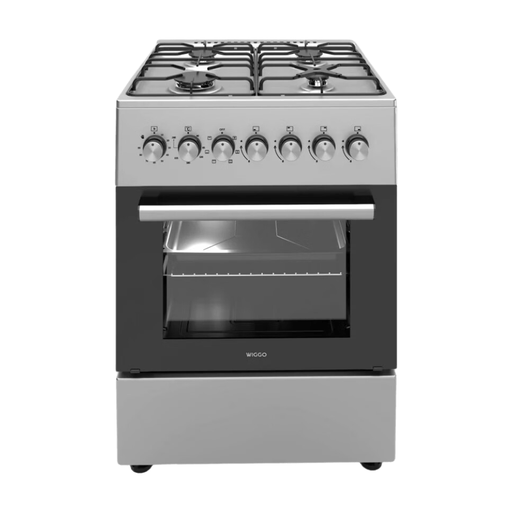 No image available
A freestanding gas oven if you’re not looking for a built-in model. Check the model specifications to make sure its heating functions suit your recipe.
The product description lists six programmes, a grill and a timer. A qualified technician must install the gas appliance and connect it to the gas supply; make sure the room is ventilated when the oven is in use.
 No image available
A freestanding oven with fan-assisted cooking if you’re not looking for a built-in model; check that its dimensions suit the baking tray you’ll use for your galette.
The product listing mentions a turbo fan and six cooking functions. The description says it needs to be cleaned by hand.
 No image available
A built-in option with 3D Hotair; measure the housing unit and check the connection before choosing a built-in model.
The product name specifies a capacity of 71 litres. Check the interior space and baking tray for your galette.
No, use the setting specified in your recipe. A fan circulates the heat, while conventional heating warms the base in a different way. For a published peach galette recipe, Heel Holland Bakt suggests 200 °C with conventional heating or 180 °C with the fan setting, but this hasn’t been tested as the right setting for every pear galette.
Compare the housing unit dimensions and connection details with the installation manual for the exact model. The Consumentenbond recommends consulting the manual during installation and asking the retailer for guidance if needed.
For ovens covered by the EU energy label, compare the consumption in kWh per cycle using the same oven setting; this doesn’t measure the energy used to bake one galette. ACM ConsuWijzer explains that your statutory guarantee applies alongside any retailer’s or manufacturer’s guarantee: if a product is faulty despite being used normally, the retailer must offer an appropriate solution free of charge.
No, don’t assume that. The European Commission gives small ovens as an example of appliances that may fall outside the scope of the rules discussed; the precise boundaries are set out in the relevant regulations. Check whether the rules apply to the exact appliance: not having such a label doesn’t in itself prove that it uses more energy.