
Cooking for a large group
You want to prepare plenty of beetroot wedges, so you compare suitable baking trays and usable shelf levels before looking at the stated capacity in litres.


Start by checking the usable space for your baking tray and where the oven will go in your kitchen, rather than looking only at its stated capacity in litres. If you have a suitable built-in housing, a built-in oven with several shelf levels may work well for larger quantities. Without one, a freestanding oven could be a good fit, provided its position and tray space suit your needs. Check each model’s internal dimensions, included trays and convection function: specifications alone do not guarantee how well it will cook beetroot.
You want to prepare plenty of beetroot wedges, so you compare suitable baking trays and usable shelf levels before looking at the stated capacity in litres.
You have worktop space but no suitable built-in housing, and are looking for a freestanding oven with a tray and position that work for your dish.
As well as your family meal, you want to consider cooking performance, ease of cleaning and energy use when making your choice.
A good fit if: you have suitable built-in housing and want to be able to use several trays.
Bear in mind: measure the housing, oven interior and baking trays separately; the stated capacity is not the same as usable space.
A good fit if: you don’t have suitable built-in housing but do have an appropriate spot for a freestanding appliance.
Bear in mind: check the external dimensions, tray space and the model’s installation instructions.
A good fit if: the portions you need will fit on the baking tray you’ve checked, or you’re happy to roast in batches.
Bear in mind: check whether the exact model has the convection function you want.
| What to consider | What to look for when buying | Who is this important for? |
|---|---|---|
| Space for your portions | Measure the baking tray or oven dish you want to use and compare it with the internal dimensions. Also check the number of shelf levels and which trays are included. | If I need several trays for a family meal, I want to know how many beetroot wedges will actually fit; around 36% of consumers say tray space is their top purchase priority. |
| A suitable kitchen setup | For a built-in oven, check the housing dimensions and installation instructions. For a freestanding model, check the external dimensions and follow the manual for positioning. | If I don’t have suitable built-in housing, I’m looking for an oven that will fit in the space available; around 29% of consumers say their kitchen setup is their top purchase priority. |
| Cooking settings | Check the convection setting and temperature control. Follow a recipe suited to raw or pre-cooked beetroot, and keep an eye on how it is cooking. | If I want to adjust how my beetroot wedges cook to suit the recipe, I look at the available functions and settings; around 21% of consumers say control over cooking is their top purchase priority. |
| Energy use and cleaning | For ovens with an energy label, compare the stated consumption in kWh per cycle for the function you use. Also check which cleaning system the model has. | If I use my oven often, I want to consider energy use and cleaning as well as the purchase price; around 14% of consumers say running costs and maintenance are their top purchase priority. |
Consumentenbond points out that the usable space may be smaller than the oven’s stated capacity. So the capacity in litres alone won’t tell you whether your baking tray or oven dish will fit.
Measure the tray or dish you want to use, and check the internal dimensions and included accessories.
The stated number of shelf levels and the ability to cook on several levels at once are manufacturer claims specific to each model. They don’t prove how beetroot wedges will cook on a full tray.
Use the model specifications to help you choose, and check how the food is cooking with a recipe suited to your beetroot and oven.
An energy label compares ovens relative to their size. The label rating alone won’t tell you how much energy your chosen function uses per cycle.
For labelled ovens, also compare the stated consumption in kWh per cycle for convection, as well as the size and how you plan to use it.
ETNA lists the OM316MZ as a 77-litre convection oven with five shelf levels.
Inventum lists the freestanding OV607B as having a net capacity of 60 litres, a convection setting and an included baking tray.
Bosch lists the HBA4340B3 as having a capacity of 71 litres and 3D Hotair for cooking on up to three shelf levels.
Siemens lists the HB457G0B3F as having a capacity of 71 litres, 3D Hotair and varioClip rails.
AEG describes the NBH6X53PE as a convection oven with steam assistance and pyrolytic cleaning.
This selection includes built-in ovens and freestanding options. Check each model’s convection function, usable baking tray space and positioning to make sure they suit the quantity you want to cook.
 No image available
The product title mentions convection and a four-level rack; check that the tray space is suitable for the quantity of beetroot wedges you want to cook.
Listed features: 35 L capacity, thermometer, four-level rack and LED display.
 No image available
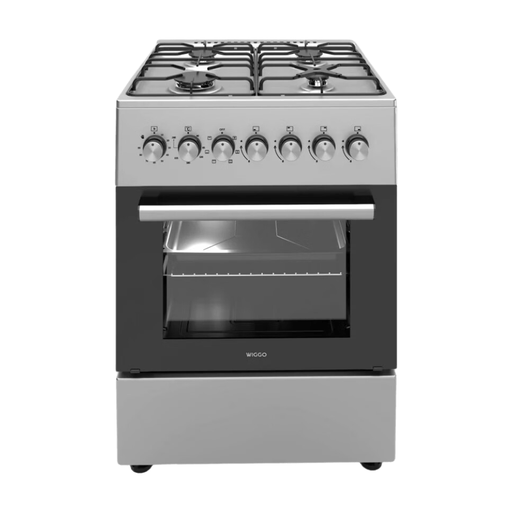
This is a freestanding gas cooker with an oven, not a confirmed convection oven. Choose it only if a gas cooker suits your kitchen and cooking needs.
Listed features: 60 cm wide, stainless steel finish and energy rating A. The product description says installation and connection to the gas supply must be carried out by a qualified professional.
 No image available
The product description mentions a turbo fan for heat distribution. Check whether the exact model has the convection function you want and whether the baking tray is large enough.
Listed features: 65 L capacity, four rack positions, 2000 W and a 90-minute timer. It needs to be cleaned by hand.
 No image available
The product description mentions 3D Hotair for cooking on up to three levels at once. Check the housing dimensions and the usable space for your baking trays.
Listed features: 71 L capacity and a cleaning assistance programme.
 No image available
The product title mentions 3D Hotair and a built-in design. Check the housing and included baking tray before working out whether there’s enough space for your portions.
The product description mentions 20 heating settings, a temperature range of 30–300 °C, a baking tray and a universal pan. The title lists pyrolytic cleaning and Home Connect.
Follow a recipe that uses raw beetroot and keep an eye on how it is cooking as it roasts. Voedingscentrum uses pre-cooked beetroot first in a different recipe, so don’t automatically use that recipe’s oven time for raw beetroot.
No. Before positioning it, consult the manual for the exact model for guidance on placement, connections and safe use. The capacity and other product specifications aren’t enough to determine this.
For ovens with an energy label, compare the stated consumption in kWh per cycle for the function you use most. Energielabel.nl recommends checking this figure. Also compare the size and how you plan to use the oven, as the label rating alone doesn’t mean a larger oven will use less energy overall.
With normal use, the product should meet the standards you’re entitled to expect. ACM ConsuWijzer says that if a product breaks down too soon, the seller is responsible for providing an appropriate solution at no extra cost; a manufacturer’s warranty doesn’t replace this legal right.
European energy-labelling rules apply to domestic ovens. Energielabel.nl says that small or portable ovens and combination microwave ovens don’t have an oven energy label. So if this type of appliance has no label, don’t automatically draw the same conclusion as you would for a standard built-in oven.