What should you look for when buying?
Different recipes have different requirements. King Arthur Baking discusses pre-baking a pastry base for a custard filling, while Rutger Bakt recommends a high oven temperature for pastéis de nata. So choose your recipe and baking tin first, then compare the oven settings, available space and installation requirements.
| What to consider |
What should you check? |
Which consumers does this matter more to? |
| Pastry base and filling as required by the recipe |
Compare the required setting and temperature with the range of the exact model. For the pastéis recipe mentioned, Rutger Bakt recommends more than 250 °C if possible. |
If I want to follow my chosen custard recipe closely, I prioritise the right oven setting and temperature. Around 36% of consumers list this as their main buying concern. |
| Space for the baking tin |
Measure your tin, including the rim, and compare it with the usable interior space, rack and shelf height. |
I want to know in advance whether my own tin will fit and whether the oven has enough room for the amount I’m baking. Around 29% of consumers prioritise questions about tin size and capacity. |
| A suitable place in the kitchen |
For a built-in oven, check the required housing dimensions and connection. For a freestanding model, check the model’s positioning and ventilation requirements. |
If I don’t have a suitable housing space or need to check where the oven will go on the worktop, the type of oven is a deciding factor. Around 21% of consumers put installation requirements first. |
| Energy use, maintenance and service |
For ovens covered by the EU regulation, compare the figures for the same heating setting. Also check the maintenance instructions and who the seller is. |
I also consider ease of use, energy consumption and what to do if a fault develops. Around 14% of consumers name this as their main buying concern. |
Ovens and baking appliances at Joybuy
This selection of Joybuy products includes freestanding ovens, built-in ovens and air fryer ovens. For each model, check that the temperature, settings and available space suit your recipe and baking tin.
 No image available
HAUSWIRT C40 Smart convection oven with thermometer, 35 L
A freestanding model to consider if you’re looking for a convection oven. Measure your baking tin and check the space available before choosing.
The product details list a capacity of 35 litres, a thermometer and a baking rack with four levels. The temperature settings aren’t listed here, so compare them with your recipe.
View at Joybuy
 No image available
Bosch HBG537EB4 Serie 6 built-in oven, 71 litres
A built-in option to compare if you want several heating settings as well as a suitable housing space.
The specifications list a capacity of 71 litres, 3D hot air, top and bottom heat, bottom heat and a range of 50–275 °C. The product description says you can bake on up to three levels at once; check that the oven and tin suit your kitchen and recipe.
View at Joybuy
 No image available
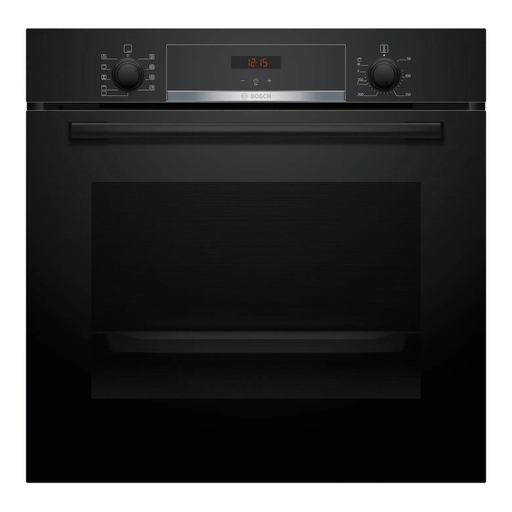
Bosch Serie 4 HBA534EB3 oven
A model to compare if you need convection cooking and a higher maximum temperature.
The details list a capacity of 71 litres and a temperature range of 50–275 °C. Check the available settings and the size of your baking tin for your recipe.
View at Joybuy
 No image available
Wiggo WMO-E657(B) freestanding oven, 65 litres
A freestanding model to consider if you don’t have a built-in oven space. Check the positioning requirements and the space for your tin.
The product details list a capacity of 65 litres, six functions and a temperature range up to 250 °C. Rutger Bakt recommends above 250 °C for its pastéis recipe, if possible, so this oven’s maximum temperature isn’t high enough to follow that recommendation.
View at Joybuy
 No image available
ROUNY 6.5L Air Fryer Oven
Consider this baking appliance only if its capacity and the space for your tin suit the bake you want to make.
The product details list a capacity of 6.5 litres, 360° hot air and a temperature range of 80–200 °C. This maximum temperature is lower than Rutger Bakt’s recommendation of above 250 °C for its pastéis recipe.
View at Joybuy
Frequently asked questions
Should I bake the pastry base of a large custard tart first?
You may need to if your recipe bakes the custard filling for less time, or at a lower temperature, than the base needs. King Arthur Baking discusses pre-baking the base for this type of bake; follow the instructions in your own recipe.
Can any convection oven bake pastéis de nata using the same recipe?
No. Check whether the oven can reach the temperature required by your chosen recipe. Rutger Bakt recommends more than 250 °C for its pastéis recipe if the oven can reach it, ideally around 280 °C; Inventum states that the OV457B has a maximum temperature of 230 °C. Also follow the instructions for your baking tin.
What should I check before installation or first use?
For a built-in oven, measure the housing space and check the connection and installation instructions for the exact model. For a freestanding oven, follow the manual’s positioning and ventilation instructions. Inventum warns that the OV457B’s ventilation openings must be kept clear.
How do I compare ovens’ energy consumption?
For ovens covered by the relevant EU regulation, compare the figures for the same heating setting. The European Commission lists energy consumption per cycle for the convection setting; an energy label won’t tell you how an oven will bake your custard tart.
Does the statutory warranty in the Netherlands automatically end after two years?
No. ACM ConsuWijzer explains that statutory warranty in the Netherlands doesn’t have a fixed two-year term: what you can expect from a product depends on the circumstances. If a fault is covered by the statutory warranty, the seller is your point of contact; a manufacturer’s warranty is separate.


