
Vandaag of morgen in huis

Kwaliteit gegarandeerd

Welkomstaanbiedingen ontgrendelen: GRATIS bezorging | Tot 80% korting | Gratis 30 dagen JoyPlus-proefperiode
Download de app
A contact grill can be a handy addition to any household. You can use it to make toasted sandwiches, panini, vegetables, fish and meat without switching on a large oven. However, models vary considerably in ease of use, size and maintenance. A low price does not automatically mean good value, while a long list of features may simply mean you need more storage space.
When comparing models, look out for these three common pitfalls:
If you only want to make toasted sandwiches, a compact sandwich maker may be enough. If you also want to cook panini, meat or vegetables, you may prefer an electric grill with a larger surface and a floating top plate. The top plate adjusts to thicker ingredients, without squashing your food unnecessarily.
Also check:
A large surface is practical for families, but it also takes up more cupboard space. Measure the space you have available beforehand. A model that can be stored upright is often more convenient in a smaller kitchen or student accommodation.
A basic sandwich maker usually has automatic temperature control. That is enough for bread, but less flexible for fish, vegetables or waffles. An adjustable thermostat gives you more control. Some contact grills also have automatic programmes or an indicator to show how cooking is progressing.
These features are helpful, but they do not guarantee the same results with every ingredient. Thickness, quantity and starting temperature all affect cooking. So consider the combination of power, temperature control and cooking surface.
For example, the Tefal OptiGrill 4-in-1 GC7748 is listed as having a power rating of 2100 W, nine automatic programmes, an adjustable thermostat and a floating top plate. According to the product description, the sensor detects the thickness of the food and adjusts the grilling time. This is a claim made in Tefal’s product information; decide for yourself whether this kind of automation suits your cooking routine.
A grill with a non-stick coating may need less cooking fat and is generally easier to wipe clean. Do not use metal utensils on the plates unless the manual expressly says you can. Scratches may damage the coating.
Pay particular attention to:
Never immerse an electric grill, plug or cable in water. Allow the appliance to cool completely before removing the plates. Place the contact grill on a flat, heat-resistant surface and keep the ventilation openings clear.
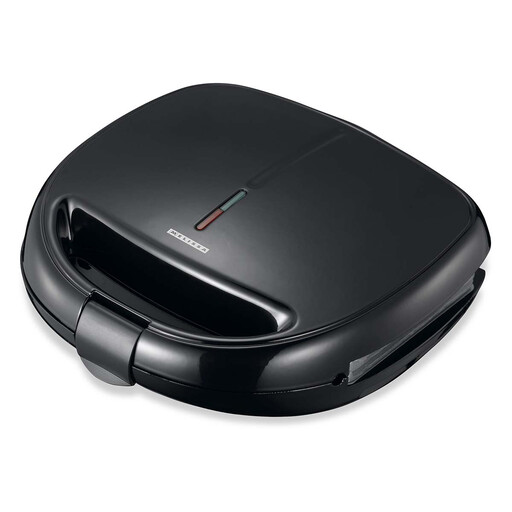
Why it suits this profile: This compact model comes with sandwich, panini and waffle plates. With 850 W and automatic temperature control, it is suitable for simple meals in a smaller kitchen.
The three interchangeable plates included make its functions clear. The plates are removable and have a non-stick coating; check the cleaning instructions before use.
850 W, three sets of plates, cool-touch handle, non-slip feet and upright storage.

Why it suits this profile: This model is designed for users who want to combine several cooking methods and automatic programmes in one contact grill for the home.
Its functions are split across four modes: grill, panini, barbecue and oven. The plates are removable and, according to the product information, dishwasher-safe.
2100 W, nine automatic programmes, 30 × 20 cm cooking surface, floating top plate and adjustable thermostat.
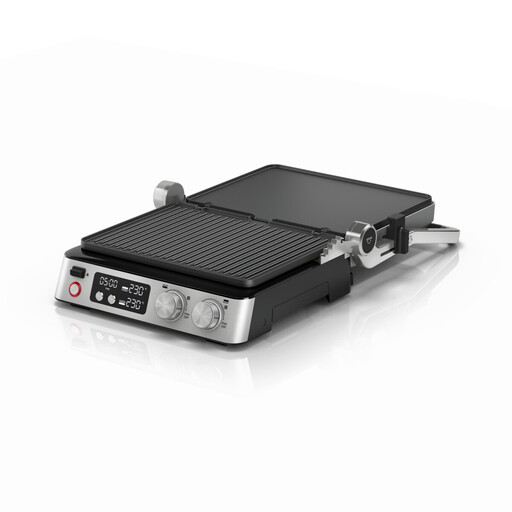
Why it suits this profile: The two cooking surfaces and independent temperature settings are practical for families or anyone cooking different ingredients at the same time.
Contact, open and oven modes are combined with two temperature controls. This means the appliance is not limited to just one type of sandwich.
2000 W, two 29 × 23 cm cooking surfaces, independent temperature control and removable dishwasher-safe parts.
We’ve put together a complete, up-to-date list of products that meet these strict selection criteria and the applicable European safety requirements.
Energy consumption depends on the power rating and how long you use the appliance. A 2000 W appliance theoretically uses 2 kWh when running at full power for an hour. In practice, the thermostat switches off regularly, so actual consumption may be lower. Calculate the exact cost using:
power in kW × usage time in hours × your electricity tariff
A contact grill usually heats up faster than a large oven, but only compare the two appliances when you are cooking the same amount of food. Switch the appliance off and unplug it after use.
Its lifespan depends on how often you use it, how you clean it and how you treat the plates. Let the appliance cool before cleaning it, use suitable utensils and follow the maintenance instructions. Many consumer products in the EU come with a legal guarantee of at least two years; check the terms for the specific model and retailer.
Usually, only the removable plates and drip tray can go in the dishwasher, if the manufacturer says they can. The main unit, cable and plug must not be put in water or the dishwasher. Always check the manual, even if the product is advertised as dishwasher-safe.
That depends on your menu and the space you have available. If you make toasted sandwiches every day, a compact sandwich maker should be enough. For meat, fish, vegetables and panini, a model with a larger surface, adjustable temperature, drip tray and interchangeable plates is more practical. Choose features you will actually use, so the appliance doesn’t end up being unnecessarily large or complicated.
