
Vandaag of morgen in huis

Kwaliteit gegarandeerd

Welkomstaanbiedingen ontgrendelen: GRATIS bezorging | Tot 80% korting | Gratis 30 dagen JoyPlus-proefperiode
Download de app
The world of construction toys is vast. From colourful blocks for toddlers to complex building kits for adults, finding the right fit for a specific age and interest can be a challenge. This guide is here to help. We'll highlight different types of building toys and offer practical tips, so you can make an informed choice for yourself, your child, or as a gift.
Before we dive into the products, here are a few key factors to help you choose the right building toy.
The recommended age on the packaging is an important guideline. For young children (under 3), it's crucial to choose toys without small parts due to the choking hazard. Look for the CE marking, which indicates the product meets European safety standards. For older children and adults, you can consider the complexity. A marble run kit with hundreds of parts offers a different challenge than a simple arts and crafts set for kids.
Construction toys are about more than just building. They can be a form of educational toy that stimulates specific skills. Consider:
The choice of material affects the play experience and longevity. Wooden toys are often sturdy and long-lasting, while plastic sets are lightweight and colourful. For projects like model building for adults, materials such as laser-cut plywood are often used for a precise fit and a detailed end result.
Below is a selection of different types of construction toys, suitable for various ages and interests.
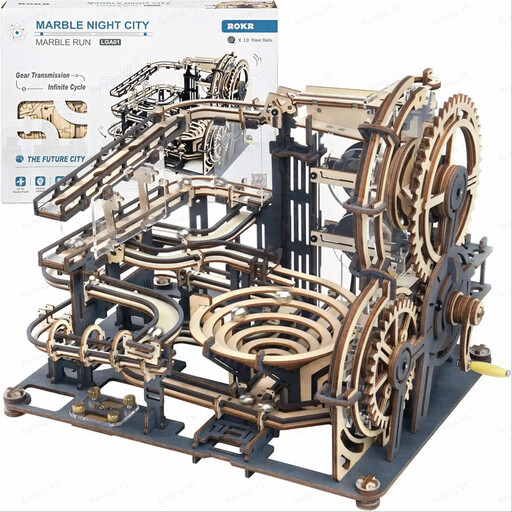
Why It Stands Out This isn't just a puzzle; it's a mechanical work of art. The Robotime Marble Night City is a marble run kit that you assemble yourself. After assembly, which takes about 4-5 hours, you turn the crank to send marbles through a complex system of lifts, funnels, and spiral slopes. The combination of black-framed wood and transparent acrylic gives it a modern aesthetic, making it a decorative piece as well.
Pros
Who Is It For? This kit is recommended for teens aged 14 and up and adults interested in engineering, model building, or looking for a rewarding DIY project. It is less suitable for young children due to the small parts and the complexity of the assembly.

Why It Stands Out This arts and crafts set for kids from Clementoni lets children create and personalise their own highlighters. The set includes a workstation and all the necessary materials to create six unique highlighters. The process is simple: dip the filter in the ink, place it in the barrel, add the tip, and seal it with the cap.
Pros
Who Is It For? This set is ideal for children aged 6 and up who love crafting and drawing. It provides a fun, hands-on activity that combines creativity with fine motor skills. Adult supervision is recommended when working with the ink.

Why It Stands OutMagna-Tiles is a household name in the world of magnetic toys. This combo set is special because it combines classic tiles with microMAGS, which are 75% smaller. This opens up new possibilities for creative constructions. The magnetic edges make building intuitive and frustration-free, even for young children.
Pros
Who Is It For? This is a classic educational toy suitable for children aged 3 and up. It's an excellent choice for parents and grandparents looking for a toy that grows with the child and offers years of play value.
The world of construction and building toys is broad and diverse. If the options above don't quite match what you had in mind, there are countless other possibilities to explore.
? Explore more options in our hands-on toys category.
1. What is the difference between STEM and educational toys?Educational toys is a broad term for any toy that helps develop a skill, such as fine motor skills or colour recognition. STEM toys are a specific type of educational toy focused on the principles of Science, Technology, Engineering, and Mathematics. A mechanical building kit is an example of a STEM toy, while a set of coloured blocks is more generally educational.
2. From what age are construction toys suitable? There are construction toys for almost every age. Large, soft blocks are available for babies. From age 3, sets with magnetic tiles or larger plastic blocks become popular. For older children and adults, there are complex model building kits and technical construction sets. Always check the manufacturer's age recommendation.
3. What is the best way to clean construction toys? This depends on the material. Wooden toys can usually be wiped with a slightly damp cloth. Do not use harsh cleaning agents or submerge them in water. Plastic parts can often be cleaned with mild soapy water. For electronic components, a dry cloth is sufficient. Always consult the manufacturer's care instructions.
