
Planning a simple meeting lunch
You want to know how many whole loaves you’ll need. First, you need to decide how many guests you’re catering for, how many portions to provide and how the bread will be served.


For a conference lunch, first decide how many guests you’re catering for, how the bread will be served and how many portions each guest should receive. You can then work out how much bread your budget needs to cover. Don’t choose only basic white bread: the Netherlands Nutrition Centre recommends replacing white bread with wholemeal or brown bread as much as possible. If you’re serving unpackaged bread, make allergen information available for each variety.
You want to know how many whole loaves you’ll need. First, you need to decide how many guests you’re catering for, how many portions to provide and how the bread will be served.
You want to offer brown or wholemeal bread as well as white bread. The Netherlands Nutrition Centre recommends replacing white bread with wholemeal or brown bread as much as possible.
You’re serving unpackaged bread or rolls and want to give guests information about the allergens in each variety before they make their choice.
First, choose between sliced bread and rolls based on how you’ll serve them. Then work out your portion plan, bread selection and allergen information before confirming quantities.
| Point to consider | What to check before buying | Most relevant to |
|---|---|---|
| Portions and quantities | Confirm the number of guests, serving method, portions per guest and a suitable extra amount. Compare whole loaves and rolls only once you know how many usable portions each will provide. | If I’m buying bread for the whole lunch, I want to make sure that counting loaves gives me the quantities I need for my portion plan. Around 42% of consumers put this kind of quantity planning first. |
| Bread selection | Check the label to see whether a loaf is wholemeal; multigrain doesn’t automatically mean wholemeal. Decide which varieties you want to offer alongside white bread. | For my lunch buffet, I want to offer guests brown or wholemeal bread as well as white bread. Around 25% of consumers put this choice of bread first. |
| Allergen information | Use the latest information for each bread variety and make sure guests can refer to it when choosing unpackaged bread. Take care not to mix up products and labels. | When I put out several varieties of unpackaged bread, guests need to be able to check which allergens their choice contains. Around 33% of consumers prioritise this information management. |
Knowing how many whole loaves you have won’t tell you how many guests you can serve. The number of usable slices, your chosen portion size and the other lunch items all affect how much bread you’ll need.
Plan how you’ll serve each guest, then compare only bread formats that can be used interchangeably. Allow for extra bread according to the event and the rest of the lunch.
Ordering too little can mean having to organise an extra purchase at the last minute.
This leaves guests without a brown or wholemeal option. The Netherlands Nutrition Centre recommends replacing white bread with wholemeal or brown bread as much as possible.
Include a clearly labelled brown or wholemeal variety in your selection and check the product description: multigrain doesn’t automatically mean wholemeal.
When you serve unpackaged bread, allergen information must be available to guests when they’re making their choice. The Netherlands Food and Consumer Product Safety Authority explains the information requirements for the 14 allergens.
Keep the latest product information for each variety and provide a clear allergen list alongside the bread. Let staff know where they can find this information.
Your planned selection may need to change if a variety isn’t available locally. Lidl directs organisers looking to order large quantities of rolls to their local branch.
Arrange larger orders in advance with your chosen location and confirm the collection or delivery time and product specifications.
If you choose a replacement product, you’ll also need to check its ingredients and allergen information again.
The online bread range can help you compare whole loaves and varieties in advance.
The online range includes both whole loaves and packaged rolls, which call for different serving plans.
A branch-based option if you need to arrange larger quantities of rolls for a reception or self-service lunch.
The range shown includes both white bread and wholemeal varieties for different bread selections.
Product information can be useful when you need to record the ingredients, allergens and weight of each bread variety.
Bread search results show whole and half loaves, as well as rolls, as possible ways to serve bread.
These products offer wholemeal bread, multigrain rolls and white rolls as possible additions to a conference lunch. Choose the format to suit your portion plan and check the latest product information before confirming quantities.
 No image available
A wholemeal flatbread option if individual loaves suit the way you’re serving lunch.
The product name states that the pack contains six pieces. Decide how many you want to offer per guest and check the latest packaging for allergen information.
 No image available
Two wholemeal loaves for a lunch where you want to portion out whole loaves.
The product name states that the pack contains two 550 g loaves. Allow time and oven space for defrosting, baking and cooling; check the packaging for the latest allergen information.
 No image available
Multigrain rolls for a reception or lunch where guests can take one roll each.
The pack contains four rolls. Multigrain doesn’t automatically mean wholemeal, so check the product description and the latest allergen information.
 No image available
A single wholemeal loaf if you’re planning by the loaf.
The product name states that it weighs 550 g. Allow time for defrosting, baking and cooling, and check the latest allergen information before serving.
 No image available
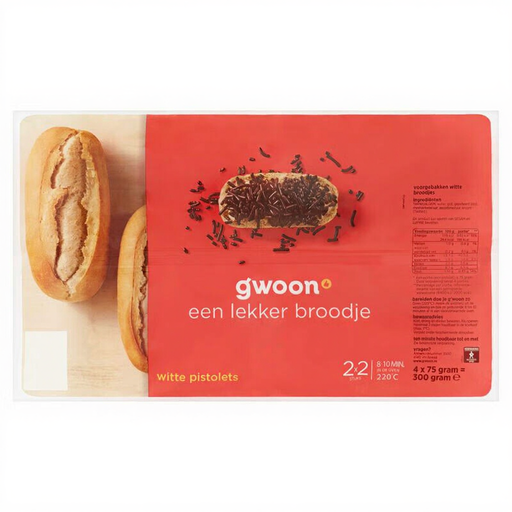
White rolls served individually, perhaps alongside a separate brown or wholemeal option.
The product name states that the pack contains four rolls and weighs 300 g. Match the number of packs to the portions you’ve planned and check the latest allergen information.
Yes. When you serve unpackaged bread, consumers must be able to get information about the allergens it contains. The Netherlands Food and Consumer Product Safety Authority outlines the information requirements for 14 allergens. Use the latest details for every bread variety and make them available where the bread is served.
No. Don’t assume that the term baker’s salt guarantees this for every loaf. Check the latest ingredients label for your chosen variety, and ask the supplier for clarification if you need this information to make your choice.
Ask your local Lidl branch about its options for large orders of rolls. Agree on the varieties, quantities and collection time with the branch in advance.
Work this out once you’ve confirmed the number of guests, how the bread will be served and how many portions each guest should receive. Then check how many usable portions your chosen loaves or rolls will provide, and take the other lunch items into account.