
Teacher with a group in one room
You want participants to be visible and audible on the same camera. Map out where they’ll be sitting before choosing between a front-facing camera and a central setup.


Choose your camera setup based on who needs to be on screen and where participants are sitting. A compact USB video bar suits a small group sitting in front of the camera, while a central 360° camera is designed for participants sitting around the device. Then check the microphone range, framing, connection and how you’ll show a whiteboard or demonstration. A wide field of view doesn’t automatically mean clear audio or readable details.
You want participants to be visible and audible on the same camera. Map out where they’ll be sitting before choosing between a front-facing camera and a central setup.
You need a setup that can follow the presenter or frame them precisely, with audio suited to the room. HP lists presenter tracking for the Poly Studio R30; check separately that the audio has sufficient range for the room you’re using.
You want to run the tutorial using your existing computer and meeting platform. So check the connection, cable and included audio. Logitech states that MeetUp requires a separate USB 3.0 cable for 4K.
Suitable when: the teacher and a small group are sitting close together and the video session is run on a computer. Logitech positions MeetUp for small team rooms; HP specifies the Poly Studio R30 for small rooms with 3–5 people.
Keep in mind: check that the furthest speaker is within the stated microphone range. According to Logitech, a separate USB 3.0 cable is required for 4K with MeetUp.
Suitable when: participants are sitting side by side across a wide area, or a physical whiteboard needs to be shown. Jabra specifies a 180° horizontal field of view and an integrated whiteboard camera for the PanaCast 50.
Keep in mind: according to the EMEA specification, panoramic output is 3840 × 1080 at 30 fps, not 3840 × 2160. Also check the position of the board and the display feature being used.
Suitable when: participants are sitting around a table and voices need to be picked up from different directions. Owl Labs specifies 360° video, 1080p output and a 5.5 m microphone range for Meeting Owl 3.
Keep in mind: the stated video radius is 3 m. A 360° view is not the same as a detailed image of a demonstration or a board at a distance.
Suitable when: the teacher moves around a larger room or microphones need to be placed closer to participants who are spread out. Logitech positions Rally Plus as a modular system for large rooms; Huddly describes the L1 as a camera that’s paired with a separate audio solution.
Keep in mind: plan the camera, microphones, cabling and controls as one setup. Camera specifications alone won’t tell you whether everyone will be easy to hear.
| Buying consideration | What to check | Which consumers does this matter most to? |
|---|---|---|
| Clear audio for multiple speakers | Measure the distance to the furthest speaking position and check the microphone range. Owl Labs specifies 5.5 m for Meeting Owl 3; HP states a maximum of 4.57 m for Studio R30. | If I want to hear participants’ questions clearly from different parts of the room, I focus on the audio and the distance to the microphone. Around 33% of consumers put clear audio for multiple speakers first. |
| Fitting everyone in the frame | Map out the seating and camera position; compare a front-facing field of view with a 360° setup, and consider the required distance too. | I want everyone in the room to fit in the frame, whether they’re sitting side by side or around a table. Around 27% of consumers put full group coverage first. |
| Framing the teacher and demonstration | Check the specific presenter-tracking or whiteboard-viewing feature, and assess the position of the board separately. | If I move around or demonstrate something while explaining, I want the camera to frame the lesson clearly. Around 20% of consumers prioritise framing the teacher or demonstration. |
| Connecting to your teaching setup | Check the computer port, cable and support for your meeting app on the exact model. According to Logitech, a separate USB 3.0 cable is required for 4K with MeetUp. | I want to use my existing computer and meeting app without having to make unnecessary changes to my teaching setup. Around 20% of consumers value easy connectivity above all else. |
A wide field of view doesn’t tell you how far away a microphone can pick up voices. Huddly describes the L1 as a camera that’s paired with a separate audio solution.
Measure the furthest speaking position and assess the picture and audio together as one setup.
If participants are spread out, you may need additional microphones or a separate audio solution.
The resolution and aspect ratio of the final output may differ from what a general resolution label suggests. According to Jabra, the PanaCast 50 has panoramic output of 3840 × 1080 at 30 fps.
Compare the stated output, cable and display mode used by the exact model.
If the output you want requires a different cable, check that you have it for your setup. Logitech notes this requirement for 4K with MeetUp.
A view of the participants doesn’t guarantee that text or a demonstration at a distance will appear in detail. Owl Labs specifies 1080p output and a 3 m video radius for Meeting Owl 3.
Assess the readability of a board or demonstration separately, and consider using a dedicated camera view for it.
MeetUp is a USB conference camera for small team rooms; Rally Plus is a modular setup for larger rooms.
The PanaCast 50 is a front-facing panoramic video bar for wide group setups and situations where a physical whiteboard is relevant.
Meeting Owl 3 combines a 360° camera, microphones and speakers for participants sitting around a centrally placed device.
HP specifies the Studio R30 as a USB video bar for small rooms with 3–5 people.
The L1 is a camera-focused solution for medium and large rooms, with audio chosen separately.
This Joybuy selection includes webcams for computer-based tutorials and a camera for presentations in a larger room. Check the framing, connection and any mounting requirements for each model.
 No image available
An option for computer-based tutorials where autofocus and built-in microphones are useful.
4K; PDAF autofocus; 75° field of view; dual microphones; USB-A and USB-C connections.
 No image available
The field of view may be useful when several participants are sitting together in front of the camera; check the positioning in your own room.
4K; 99° field of view; built-in microphone with noise reduction; plug and play; privacy cover.
 No image available
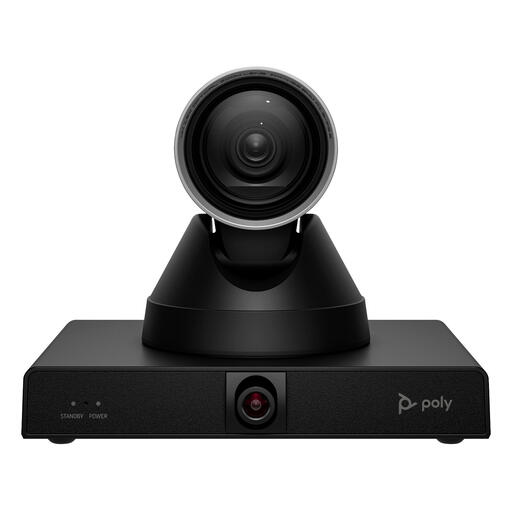
An option for a larger room or a teacher who moves around; the product information lists presenter tracking and smart group framing.
4K; 12× optical zoom; PTZ control.
The product information calls for secure mounting on a surface or a fixture that can support a weight of 1.79 kg.
 No image available
The product title mentions auto-framing for video calls, which may be useful if the teacher moves around during the tutorial.
4K webcam for PC and Mac; 1/2-inch sensor; HDR; microphone with AI noise reduction; gesture control.
 No image available
Worth considering if the teacher moves around during online video calls; the product title mentions AI tracking.
4K webcam for PC and Mac; 1/2-inch sensor; HDR; microphone with AI noise reduction; gesture control; compatible with Zoom.
You can’t tell from the resolution label alone. Jabra specifies a whiteboard camera and panoramic output of 3840 × 1080 at 30 fps for the PanaCast 50. Check the board’s position, the display feature you want and the meeting platform you’re using.
Position the camera to suit the seating and test the picture and sound with a question from the furthest speaking position. For a USB model, also check the computer port and cable: Logitech states that the USB 2.0 cable supplied with MeetUp is specified for up to 1080p, and a separate USB 3.0 cable is required for 4K.
It depends on the setup you choose. Logitech lists an optional expansion microphone for MeetUp and a separate USB 3.0 cable for 4K; Huddly L1 is paired with an audio solution chosen separately. Check what’s included with each version and what warranty terms apply.
Don’t assume you can. According to the Dutch Data Protection Authority, processing personal data requires an applicable legal basis under the GDPR. Educational institutions should in principle avoid recording lessons with identifiable pupils or students, and must be able to justify any exception. This specific requirement for education doesn’t automatically apply to every business tutorial.
No, not as a general rule for every tutorial. The Dutch Data Protection Authority says a DPIA is required for processing that presents a high privacy risk. An educational institution must assess the risks of its own use of video calls; for another organiser, whether there’s a specific requirement depends on the circumstances.