
Vandaag of morgen in huis

Kwaliteit gegarandeerd

Welkomstaanbiedingen ontgrendelen: GRATIS bezorging | Tot 80% korting | Gratis 30 dagen JoyPlus-proefperiode
Download de app
Dry hair often feels rough, tangles more easily and can look frizzy. A conditioner for dry hair can help make it easier to comb through and leave it feeling softer. However, not every formula suits every hair type. A rich conditioner can weigh down fine hair, while a lightweight formula may not provide enough care for thick or severely damaged hair.
When buying, therefore, do not focus only on words such as “intensive”, “shine” or “repair”. Pay particular attention to the ingredients, size, instructions for use and the purpose the conditioner was developed for.
Brands use terms such as “repair”, “anti-frizz” and “healthy-looking hair”. These do not automatically represent measurable results for every user. A brand may claim certain effects based on its own research or product information, but hair structure, porosity, thickness and styling habits vary from person to person.
A conditioner can temporarily make the hair’s surface feel smoother and make detangling easier. It cannot permanently repair split or damaged ends. So, primarily expect a caring effect that improves softness, manageability and shine.
Argan oil, coconut oil, avocado oil and shea butter are often highlighted on the packaging. However, an ingredient’s position in the ingredients list provides more context. Alcohols, silicones, fragrance and preservatives may also be relevant, especially if you have a sensitive scalp or known allergies.
A conditioner with coconut oil can feel pleasant on dry or thick hair, but fine hair may feel weighed down more quickly. A conditioner for frizzy hair containing oils or silicones may help create a smoother finish, but it will not necessarily suit someone looking for a completely silicone-free routine.
A 385 ml bottle may seem better value than a 200 ml bottle, but usage varies. Long or thick hair requires more product per wash. A multipack, such as six 200 ml bottles, can be practical for regular use, but first check that the formula really suits your hair.
Start by choosing the most important goal:
A conditioner for dry and frizzy hair is therefore not automatically suitable for an oily scalp or fine hair.
Check the current ingredients list on the packaging, as formulas can change. If you want to avoid fragrance allergens, look out for ingredients including linalool, limonene, geraniol and coumarin. Stop using the product if irritation occurs and rinse immediately with water if it gets into your eyes.
If you are looking for a vegan conditioner, rely on an explicit product statement from the brand or seller. The presence of natural oils does not automatically mean that a product is vegan. Garnier states that certain Loving Blends products are free from animal-derived ingredients and by-products.
Many products in this category are available as a 200 ml conditioner, while OGX variants often contain 385 ml. A smaller bottle is handy for trying a product first or taking it with you. A larger pack is better suited to daily or intensive use.
Usually, apply conditioner to the lengths and ends, rather than directly to the scalp. Leave the product in for the time stated on the packaging and rinse thoroughly. OGX Coconut Milk, for example, recommends leaving it in for 3 to 5 minutes; other products specify a shorter application time.
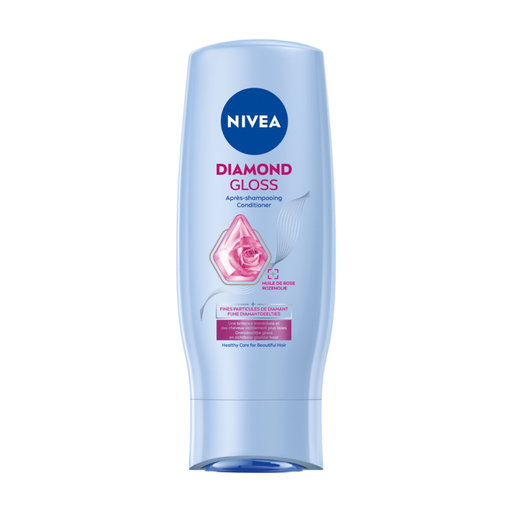
Why it suits this profile: The 200 ml size is a manageable choice for anyone wanting to try an everyday conditioner for normal to dull hair first.
The product information clearly states the hair type and size, making it less likely that you will choose a formula that is too heavy or an unsuitable quantity.
200 ml, with glycerine and rose oil according to the product information; designed to support softness, easy combing and shine.
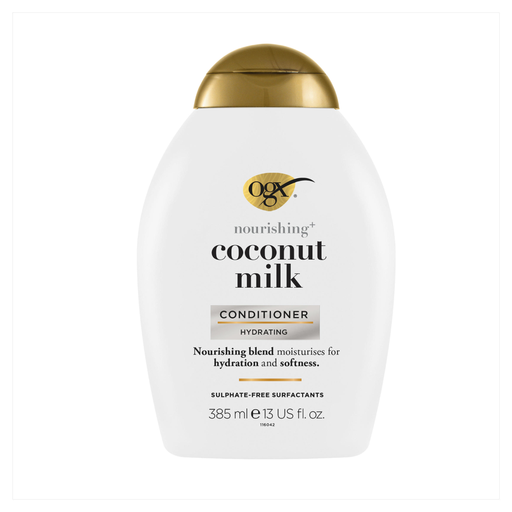
Why it suits this profile: The larger bottle and rich formula are a good match for dry or damaged hair that needs extra care with every wash.
The description mentions coconut milk, coconut oil and proteins. This allows you to compare the formula based on specific ingredients rather than focusing only on a shine claim.
385 ml; according to the product information, with coconut milk, coconut oil and proteins; recommended leave-in time of 3 to 5 minutes.
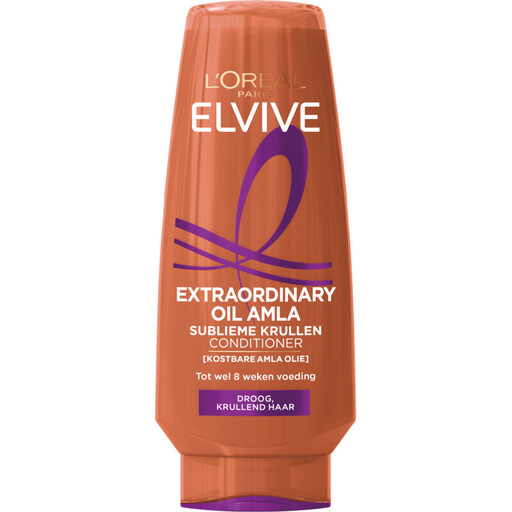
Why it suits this profile: This variant is specifically described for dry and curly hair, making it suitable for users who want to reduce tangles and stiff-feeling curls.
The intended use is linked to a clearly defined hair type. However, check the current ingredients list if you want to avoid fragrance or certain oils.
200 ml; product information lists amla and flower oil extracts; designed for dry, curly locks that are less prone to tangling.
We have compiled a complete, up-to-date list of products that fully meet these strict selection criteria and the applicable European safety regulations.
If you often use a hairdryer, straighteners or curling tongs, remember that conditioner is a caring product, not a substitute for heat protection. Check whether your routine needs a separate product for this purpose.
Look for a nourishing conditioner containing ingredients such as argan oil, coconut oil, avocado oil or shea butter. A richer formula may be suitable for thick or coarse hair. For fine hair, a lightweight conditioner is often more practical. Always compare the complete ingredients list and instructions for use.
This varies by product. Some conditioners are designed to work for a short time, while OGX Coconut Milk requires 3 to 5 minutes according to the product information. Follow the instructions on the label and rinse thoroughly. Leaving it in for longer does not automatically produce a stronger effect.
Follow the expiry or period-after-opening information on the packaging. Store the bottle at room temperature, away from direct sunlight, and keep the opening clean. If the smell, colour or texture changes noticeably, stop using the product. Also consider how much you use: a 200 ml bottle is suitable for occasional use, while 385 ml or a multipack may be more practical for a regular haircare routine.
