
Vandaag of morgen in huis

Kwaliteit gegarandeerd

Welkomstaanbiedingen ontgrendelen: GRATIS bezorging | Tot 80% korting | Gratis 30 dagen JoyPlus-proefperiode
Download de app
Buying a conditioner might seem straightforward, until you have to choose between nourishing, hydrating, repairing and professional formulas. Marketing terms like “intensive repair”, “more shine” or “natural ingredients” don’t always tell you enough about how a product actually works. If you only look at the front of the packaging, you could end up buying a conditioner that weighs your hair down, doesn’t detangle properly, or simply isn’t right for your hair colour.
With this buying guide, you can compare conditioners based on hair type, ingredients, usage, volume and packaging. That way, it’s easier to find a conditioner for dry hair, damaged hair, curls, fine hair or coloured hair.
A rich, nourishing conditioner can feel lovely on dry or frizzy hair, but on fine hair the same formula can feel heavy. So pay attention to the description:
The label “suitable for all hair types” is broad. That doesn’t automatically mean the conditioner will give the same result for every hair texture.
Brands are allowed to communicate product benefits, but it’s wise to look at claims in context. If it says “up to two times less frizz” or “20 times stronger”, check whether this is based on the brand’s own research and under what conditions the comparison was made. A product claim is no guarantee for every individual.
Also look at verifiable details such as volume, recommended hair type, usage duration, ingredients and shelf life after opening.
A conditioner deal might look appealing when the bottle is cheap, but a multi-pack or larger bottle could be better value if you use it daily. So compare the price per 100 ml. Also consider how much you actually need. A concentrated conditioner can last longer than a thin formula, even if the bottle is smaller.
Start with the problem you want to tackle:
Check the full ingredients list on the packaging, because formulas can change. If you want to avoid silicones, sulphates, fragrance or certain preservatives, you need to check this per product. A product with a claim like “vegan”, “paraben-free” or “silicone-free” should always be cross-checked against the current product information.
If you have a sensitive scalp or a known allergy, extra caution is needed. Avoid contact with the eyes and stop use if irritation occurs. A conditioner is intended for external use only and does not replace treatment for a medical scalp condition.
A pack of 200 to 250 ml is practical if you want to try a product first or if you’re often on the go. A bottle of 440 or 450 ml is better suited to regular use. Multi-packs are especially handy when several family members use the same formula, or when you want to stock up deliberately.
Apply conditioner to damp hair, mainly from the mid-lengths to the ends. Leave it on briefly according to the label instructions, then rinse thoroughly. Only apply a conditioner to the scalp if the product information explicitly says so.
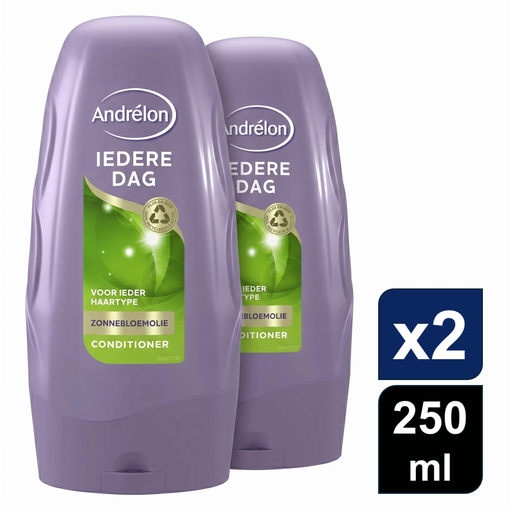
Why this fits the profile: The pack contains two 250 ml bottles and the formula is described as suitable for daily use and all hair types.
The 2-pack makes the total volume clearer than a single small bottle. The description also states that the conditioner is light and should not weigh hair down; this still depends on your hair texture.
2 bottles of 250 ml; suitable for all hair types according to the product information; designed for daily use.
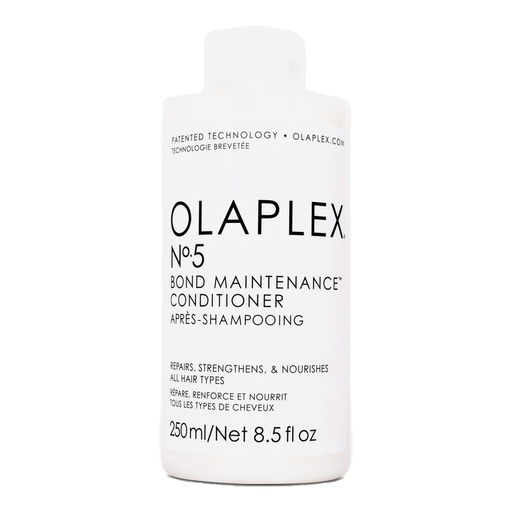
Why this fits the profile: According to the product information, this conditioner is suitable for all hair types, including coloured and bleached hair, and comes in a 250 ml bottle.
The application and target audience are clearly described. According to the product description, the formula focuses on hydration and repair; these brand claims are not a guarantee for every hair type.
250 ml; listed as vegan, paraben-free, sulphate-free and suitable for coloured hair; cream formula.
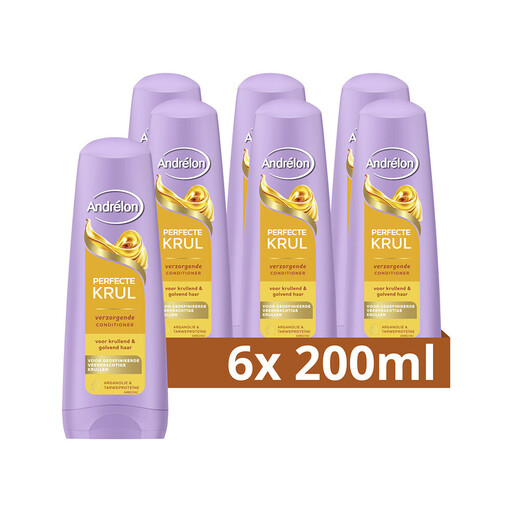
Why this fits the profile: The 12-pack is practical if you use conditioner regularly and are specifically looking for a conditioner for curly or wavy hair.
The variant is clearly linked to curls and waves, so you’re not relying solely on general terms like “for all hair types”.
12 bottles of 200 ml; according to the product description, enriched with argan oil and wheat protein; designed for definition and detangling.
We’ve put together a full, up-to-date list of products that fully meet these strict selection criteria and comply with current European safety regulations.
That depends on your hair and the product instructions. A light conditioner can be used with daily washing, while a rich or repairing conditioner may be needed less often. Start with a small amount on the mid-lengths and ends.
Check the symbol on the packaging, usually an open jar with something like 12M. This tells you how many months the product is intended for use after opening. Store conditioner tightly closed, in a dry place away from direct sunlight.
No. The price doesn’t just reflect the formula or volume. Compare the hair type, ingredients, volume per pack and frequency of use. An affordable conditioner that works well with your hair can be more practical than a more expensive formula that weighs your hair down.
