For concert films, choosing between OLED and Mini LED LCD mainly depends on the light in your room and where you sit. The Consumentenbond describes OLED as an option worth considering for dark scenes. In a bright room, a high-brightness LCD TV with Mini LED may be a good choice, although performance varies by model. Also measure your viewing distance, and assess sound and connections separately from screen type.
Who is this advice for?
Concert film viewer in a dark room
If you usually watch with the lights dimmed, compare how specific models show dark stages and bright spotlights. The Consumentenbond discusses the differences between OLED and LCD, but screen type alone won’t tell you how a particular model performs.
Music lover with a separate audio system
If vocals and instruments take centre stage, check that your TV and soundbar or receiver support the connections and audio formats you need. The HDMI Licensing Administrator explains how eARC can send audio to a soundbar or receiver via HDMI.
Viewer with multiple seating positions
Compare the viewing angles and dimensions of models that fit your room, especially if you also watch from the side. The Consumentenbond describes viewing distance as a starting point when choosing a screen size.
What should you look for when buying?
Start with the light and seating in your room. Then compare the sound, connections and energy use of the specific models that suit your needs.
| Buying consideration |
What to look for |
Who is this important for? |
| Contrast in dark scenes |
Compare model-specific information about contrast and reflections in the lighting conditions you watch in; don’t judge picture quality by OLED or Mini LED alone. |
If I mainly watch in a darkened room, I want to see dark stages and bright highlights clearly. Around 25% of consumers prioritise contrast for concert films. |
| Music and external audio |
Check the connections and audio formats supported by both the TV and the soundbar or receiver. HDMI eARC can pass compatible audio through a single HDMI connection, according to the HDMI Licensing Administrator. |
With a separate audio system, I want to know whether the TV and equipment connect properly; around 25% of consumers prioritise sound and audio connectivity. |
| Screen size and seating |
Measure the viewing distance and available space, including room for a stand or wall mounting; also compare the viewing angle of the specific model. |
When people watch from different seats, I want a screen size that fits the room and remains practical from those positions. Around 19% of consumers prioritise seating and screen size. |
| Visibility in daylight |
Compare reflections and visibility in incoming light across the models you’re considering. The Consumentenbond notes that LCD TVs can often be bright. |
If I often watch during the day, a picture that’s easy to see matters more than the screen type alone. Around 19% of consumers give visibility in a bright room top priority. |
| Power consumption |
Compare EU energy labels for models in the same size category and check the HDR information. Settings and other equipment also make a difference, according to Milieu Centraal. |
If I watch regularly, I want to consider the TV’s energy use alongside the purchase price and any audio equipment. Around 12% of consumers prioritise running costs. |
Common buying mistakes
-
Treating OLED or Mini LED as a complete measure of quality
Picture processing, reflections, viewing angle and sound vary from TV to TV. Neither screen technology alone determines how a model will perform in your room.
Compare reviews of specific models tested in conditions similar to your viewing space.
-
Measuring only the screen diagonally
Your TV also needs to fit with a stand or wall bracket, while viewers in different positions will have different viewing distances and angles.
Measure the seating positions and the available width and height before choosing a screen size.
-
Assuming an audio logo guarantees great concert sound
Support for an audio format doesn’t tell you which soundtrack the source contains or how the built-in speakers sound.
Check the source, TV, connection and audio system as one complete setup. If you don’t use external audio, assess the built-in sound separately.
-
Assuming your statutory guarantee expires after a set period
In the Netherlands, products must meet the terms of the sales agreement and are covered by a statutory guarantee; there is no fixed statutory guarantee period. The Rijksoverheid notes that a manufacturer’s guarantee is separate.
Keep your proof of purchase and check what any additional manufacturer’s guarantee covers. If there’s a problem, contact the seller.
Brands to compare
LG
LG describes the OLED65C68LA as a 65-inch OLED TV; it’s a model to consider if you’re looking at OLED for concert films.
- LG describes OLED pixels as self-lit.
- LG’s statements about brightness and colour are manufacturer claims, not independent measurements of this model. Assess reflections and sound separately.
Sony
Sony lists Mini LED models in its BRAVIA 5 range, including 55- and 65-inch sizes.
- Sony lists 4K, HDR and Google TV for the range.
- The stated film experience is a manufacturer claim. Check the viewing angle, reflections and sound for the specific version and size you’re considering.
Philips
According to Philips, the Philips 65OLED810/12 pairs a 65-inch OLED screen with Ambilight.
- Philips lists Dolby Vision and Dolby Atmos for this model.
- Support for these formats doesn’t guarantee that the concert film includes them or that the built-in speakers can replace an external audio setup.
Samsung
Samsung describes the 65-inch QN90F as a Neo QLED Mini LED model to include when comparing specific screens.
- Samsung identifies this model as Mini LED.
- Screen type alone is not an independent assessment of viewing angle, concert picture quality or suitability for your room.
TVs at Joybuy
This selection includes OLED and Mini LED LCD TVs to compare for concert films, in a range of screen sizes and with different audio features.
 No image available
LG OLED65C68LA 65-inch 4K OLED evo AI C6
A 65-inch OLED TV for anyone looking to compare OLED screens for concert films.
4K resolution; 120Hz; VRR up to 165Hz; four HDMI 2.1 ports.
View at Joybuy
 No image available
TCL 65T8D 65-inch QD-Mini LED 4K HDR
A 65-inch Mini LED TV to consider if you want to compare this screen technology and its stated built-in audio features.
144Hz VRR; Onkyo 2.1-channel sound; Dolby Vision and Dolby Atmos.
View at Joybuy
 No image available
Samsung S85F Series GQ55S85FAU 55-inch OLED 4K
A 55-inch OLED TV to compare if a smaller screen size suits your viewing distance.
4K resolution; self-lit OLED panel; four HDMI ports.
View at Joybuy
 No image available
METZ 55MNE8000Z 55-inch QD-Mini LED Google TV
A 55-inch Mini LED TV to include when comparing screen size and built-in audio.
4K; 144Hz; built-in 2.1.2 sound system; Dolby Vision and Dolby Atmos.
View at Joybuy
 No image available
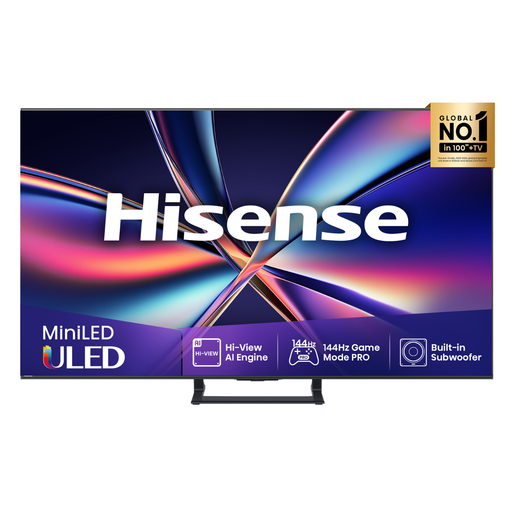
Hisense 75E8Q 75-inch 4K Mini LED
A 75-inch model to compare if you’re considering a large screen for your seating arrangement.
4K Ultra HD; 144Hz; the product description lists a wide viewing angle and 20 W RMS sound.
View at Joybuy
Frequently asked questions
How do you choose a screen size for your seating position?
Measure the distance from your eyes to the TV and check the available space. The Consumentenbond suggests around 2.4 times the screen diagonal as a comfortable viewing distance, but presents this as a starting point rather than a fixed rule.
Do you need Dolby Atmos for great concert sound?
Not necessarily; start with the source and the audio setup you want to use. Check that the source, TV and soundbar or receiver support the connections and formats you need. A format label doesn’t guarantee that the soundtrack uses that format.
What should you check when connecting a soundbar?
Check which TV connection supports ARC or eARC, and whether the soundbar or receiver works with it and the audio formats you need. The HDMI Licensing Administrator states that eARC is not necessarily backwards compatible with ARC.
How can you factor energy use into your viewing?
Compare the energy labels of TVs with the same screen size, and check the HDR information too. The European Commission provides energy class information for electronic displays; according to Milieu Centraal, settings and other equipment also affect energy use.
What guarantee applies to a TV bought in the Netherlands?
You’re entitled to a product that meets the terms of the sales agreement; in the Netherlands, there is no fixed statutory guarantee period. The Rijksoverheid distinguishes between the statutory guarantee and an additional manufacturer’s guarantee. If there’s a problem, contact the seller.
Can you return a TV bought online after it arrives?
For online consumer purchases, you generally have a statutory 14-day cooling-off period after delivery. ACM ConsuWijzer gives a newly purchased TV as an example; also check the seller’s returns information in advance.


