
Vandaag of morgen in huis

Kwaliteit gegarandeerd

Welkomstaanbiedingen ontgrendelen: GRATIS bezorging | Tot 80% korting | Gratis 30 dagen JoyPlus-proefperiode
Download de app
A computer desk may seem straightforward to choose, but small design details often determine whether you can work comfortably at it every day. A top that is too narrow, wobbly legs or unclear load capacity can quickly become frustrating after purchase. This applies to home office desks, study desks, writing desks and gaming desks.
The product information below is based on the dimensions, materials and specifications provided in the product listings. Always check the current product page, available colours, delivery time and returns policy before buying.
A large desktop is not automatically practical. Also check the legroom, cable positioning and distance from the wall. A large 160 x 80 cm desk provides space for several monitors and accessories, but it will not fit in every bedroom or study.
For a laptop, a single monitor and schoolbooks, a compact 80 x 50 cm desk may be sufficient. Measure the available space, including skirting boards, office chair and room to move, before placing your order.
A stated maximum static load capacity is a technical limit for a stationary load. It is not a guarantee that the desk is suitable for standing on, moving heavy equipment or placing weight unevenly across the desktop. Position monitor arms, a PC and speakers as evenly as possible.
With a desk made from chipboard and steel, the quality of the joints is also important. Look at the frame, additional reinforcements and adjustable feet, not just the colour or design.
A desk with adjustable feet is not the same as an electric sit-stand desk. Adjustable feet are primarily designed to compensate for minor differences in the floor. A height-adjustable table with several fixed height settings offers greater flexibility, but always check which heights are actually available.
With a folding table, the locking mechanism, weight and storage requirements are important purchasing criteria. A table that is easy to transport does not necessarily offer the same stability as a fixed desk.
Use these practical guidelines:
Do not focus only on the external dimensions. The leg design may restrict legroom. Also check whether drawers, cable trays or a PC bracket reduce the available space.
Chipboard is a commonly used material for desktops. It is generally easy to clean, but prolonged exposure to moisture and damaged edges can affect the material. A steel frame can provide additional support. Check whether the frame has reinforcements and how the legs are attached to the desktop.
Adjustable feet are useful on an uneven floor. They can reduce wobbling and help limit scratches on the floor, but they do not automatically make a tilted or overloaded desk safe. Place the desk on a flat, stable surface and follow the assembly instructions.
According to the product listing, a product with a stated maximum static load capacity of 50 kg is intended for a total stationary load of up to that weight. Distribute the load across the desktop and do not exceed the stated limit.
Before assembly, check that all parts and screws are included. Tighten connections by hand initially, and only fully secure the frame once the desktop is positioned correctly. After a few weeks of use, you may need to check the screws again.
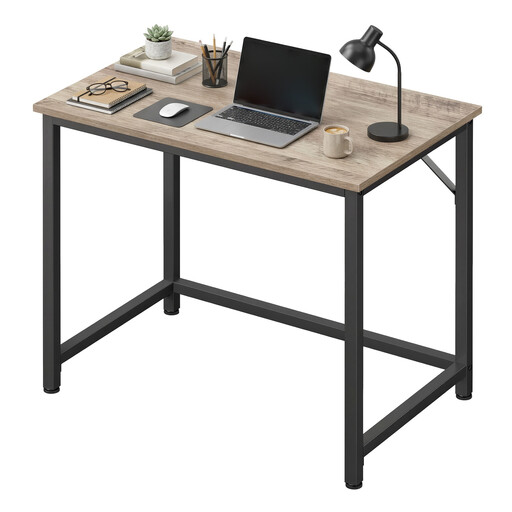
Why it suits this profile: The size is well suited to a small workspace in a bedroom, student room or home office. The combination of greige and black is neutral and works well for working, studying or light gaming.
The product listing mentions adjustable feet, a steel frame and a maximum static load capacity of 50 kg. This means the key stability specifications can be checked in advance.
80 x 50 x 75.5 cm; chipboard with steel frame; adjustable feet; assembly components with labelled instructions.
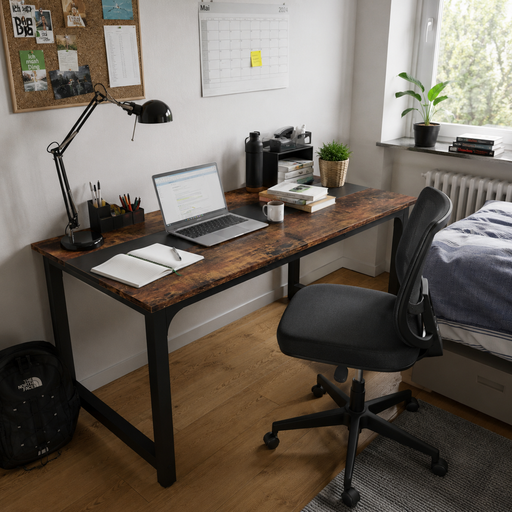
Why it suits this profile: This spacious desk is designed for users who want to accommodate several monitors, a printer and documents at the same time in a home office or study.
The listing specifies additional steel supports, a triangular connection, adjustable feet and a 5 x 5 cm frame. The stated load capacity of up to 400 kg is a product claim; use the table in accordance with the supplied instructions.
160 x 80 x 75 cm; 26 kg; additional frame reinforcements; adjustable metal feet; spacious work surface.
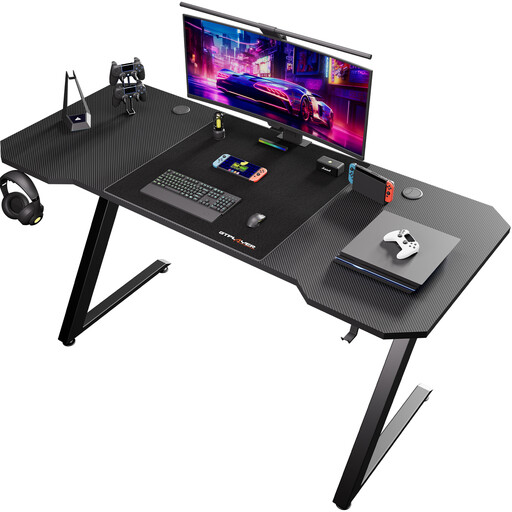
Why it suits this profile: The dimensions are designed for a gaming setup with one main monitor. The headphone hook helps keep accessories beside the desktop.
The carbon-look surface and accessory hook are clearly described. Before buying, however, check the full assembly and load-capacity information on the product page.
120 x 60 cm; carbon-look surface according to the product name; headphone hook; suitable as a PC table for a compact gaming space.
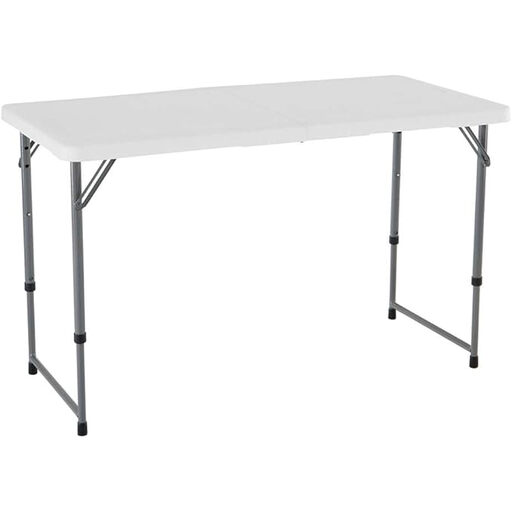
Why it suits this profile: This table is intended for anyone who wants to set up, move or store a work table temporarily and compactly. The fixed height settings offer more choice than a standard table.
According to the product listing, the table has a lockable frame, manual height adjustment and a folding design. Check the selected height before using the table as a desk.
122 x 60 cm; four stated height settings from 55.9 to 86.4 cm; foldable; handle; steel frame and HDPE top.
We have put together a complete, up-to-date list of products that fully meet these strict selection criteria and the applicable European safety regulations.
First position the computer desk where you intend to use it. Check that doors, windows and cables remain unobstructed. Do not place a heavy desktop computer on a narrow edge, and use cable clips where cords could catch on the frame.
For a home office desk, a stable surface is more important than extra accessories. After assembly, check that the desktop is level and that all the feet are in contact with the floor. Use a coaster for drinks and wipe up spills immediately, especially with a chipboard top.
Only store a folding table once the frame has been fully locked or unlocked according to the instructions. Do not force the hinges, and have two people lift the table when its weight or size requires it.
For a laptop or one monitor, 80 x 50 cm may be sufficient. If you use several monitors, a PC and writing materials, 120 x 60 cm or 160 x 80 cm will usually be more suitable. Also measure the available legroom and space to move around.
Many fixed desks are approximately 75 to 76 cm high. The right choice depends on your chair, height and preferred working posture. A desk with fixed height settings can offer greater flexibility, but check that the settings suit your chair and intended use.
Its service life depends on assembly, load, moisture and everyday maintenance. A sturdy frame, securely tightened connections and evenly distributed weight can help limit wear. Check the screws periodically and do not exceed the stated maximum static load capacity.
