
Vandaag of morgen in huis

Kwaliteit gegarandeerd

Welkomstaanbiedingen ontgrendelen: GRATIS bezorging | Tot 80% korting | Gratis 30 dagen JoyPlus-proefperiode
Download de app
Buying a desk seems straightforward until you compare the size, stability and connectivity. A model may look spacious in photos, yet take up too much floor space in a small bedroom. A gaming desk may offer useful extras but not enough room for multiple monitors. An electric height-adjustable desk, meanwhile, requires careful consideration of cables, clearance and power supply.
The most common purchasing pitfalls are:
For a compact study desk, bedroom desk or simple home office, 80 × 50 cm may be sufficient for a laptop, notebook and a single monitor. If you work with a monitor, printer and accessories, a large desk measuring, for example, 160 × 70 or 160 × 80 cm is more suitable.
Don’t just measure the wall. Also take the following into account:
A computer desk for everyday use should be a practical fit for your equipment, not just for the room.
Many desks in this selection combine chipboard with steel. This is a common construction for an office desk or gaming desk. Pay attention to the thickness of the desktop, the shape of the frame and whether additional support bars are included.
Always check whether the stated load capacity is static. This means that the desk is assessed under a stationary load. A computer, monitor arm and speakers exert a different load from someone leaning on the desktop.
Assemble the desk according to the instructions and place it on a level surface. Do not exceed the stated capacity. A CPU stand often has a separate limit.
A height-adjustable desk or sit-stand desk is particularly practical when several people use the same workstation or when you regularly want to change your working position. Check the minimum and maximum height, the controls and the amount of space available around the frame.
Electric models also require extra attention:
A desk with cable management prevents loose cables from collecting on the desktop. Cable grommets, an organiser and a hook are simple features that can make a big difference in a home office.
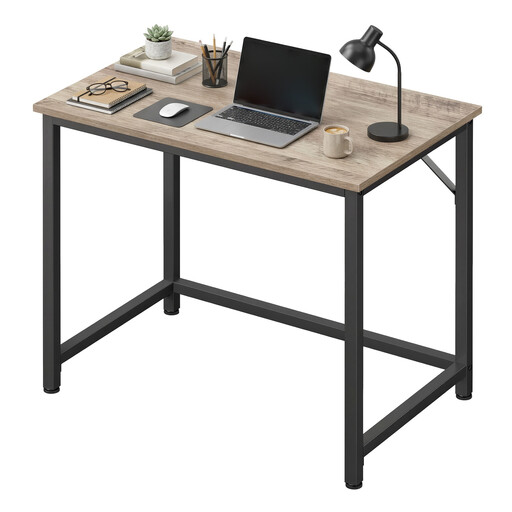
Why it suits this profile: This compact desk is ideal for a student room, bedroom or first home office where space is limited. The 80 x 50 cm desktop provides room for essential equipment.
The dimensions and maximum static load of 50 kg are clearly stated. Adjustable feet help keep the desktop stable on a surface that is not completely level.
Compact size, steel frame, adjustable feet and a stated static capacity of 50 kg.
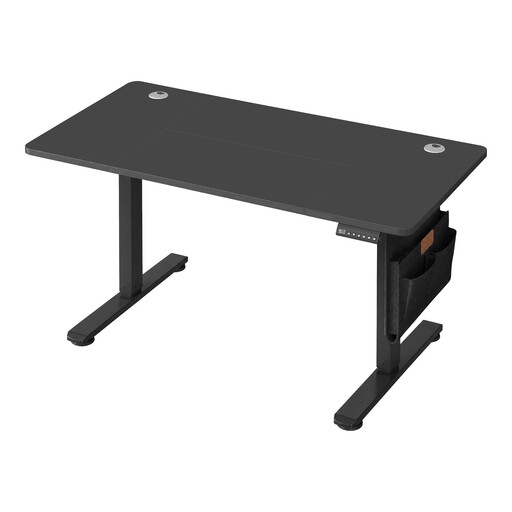
Why it suits this profile: The generous work surface is suitable for a professional home office, multiple monitors or a combination of working and studying.
According to the product specifications, the height adjusts from 72 to 120 cm. Two cable grommets, an organiser and a USB-C connection help keep loose accessories off the desktop.
160 x 70 cm, memory function, USB-C port, steel frame and a stated static load of 70 kg.
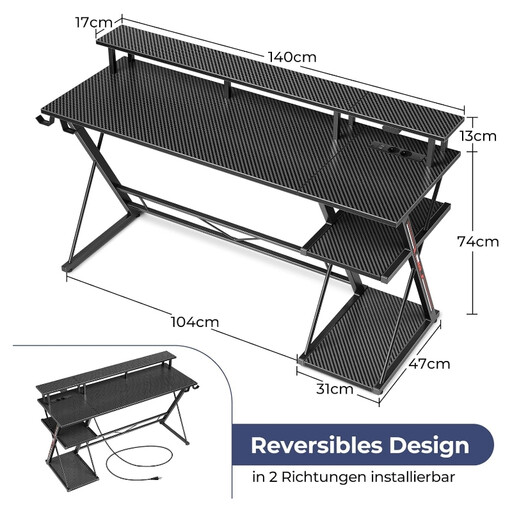
Why it suits this profile: This gaming desk is designed for users who want to combine monitor space, peripherals and a PC setup with additional connections and lighting.
The construction includes a metal frame, monitor stand and CPU stand. However, check the available space before buying and do not connect electronic components near liquids.
140 cm width, CPU stand, built-in RGB lighting, two power sockets and two USB ports according to the product information.
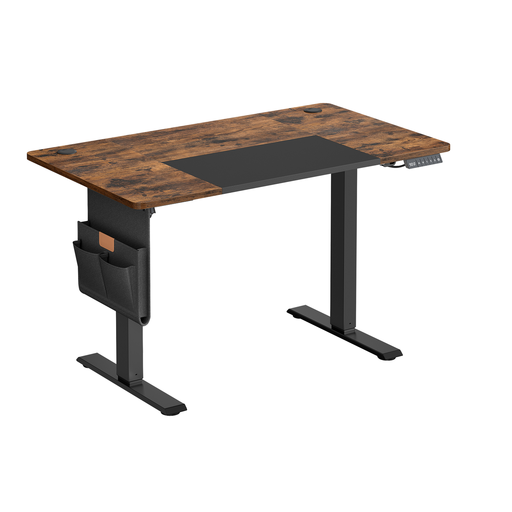
Why it suits this profile: The compact size and memory function are practical when several family members share the same home workstation.
Saved height settings make it easier to switch between users. Cable management, a storage pouch and hooks help keep the limited workspace tidy.
Height range of 72 to 120 cm, USB-C port, memory function, cable management and a stated static capacity of 70 kg.
We’ve put together a complete, up-to-date list of products that fully meet these strict selection criteria and the applicable European safety regulations.
For a laptop, 80 × 50 cm is often suitable. For a monitor, keyboard and documents, 120 × 60 cm is more practical. If you use multiple monitors or a printer, look for a desk between 140 and 160 cm wide and check that it is deep enough.
An electric sit-stand desk uses power while adjusting and, to a limited extent, when operating the controls. Actual consumption depends on how often you adjust the height and on the motor. Switch off extension leads when equipment is not needed and keep moving parts clear of obstacles.
Its lifespan depends on assembly, load, moisture and everyday use. A steel frame and a well-supported desktop can contribute to stability, but always follow the maintenance and safety instructions. Protect chipboard from moisture, retighten the fixings after assembly and do not exceed the stated capacity.
