
Vandaag of morgen in huis

Kwaliteit gegarandeerd

Welkomstaanbiedingen ontgrendelen: GRATIS bezorging | Tot 80% korting | Gratis 30 dagen JoyPlus-proefperiode
Download de app
A quality computer desk is the foundation of any productive workspace, whether you're working from home, studying, or gaming. But buying a desk is often trickier than it seems. Online images can be misleading and specifications unclear. Before you make a decision, it's crucial to know what to look for to avoid a bad purchase. We'll discuss the most common pitfalls and give you practical advice for choosing the right model.
Many desks look great at first glance but prove to be impractical or low-quality in practice. Watch out for these three common problems:
To make the right choice, focus on a few objective specifications. These will determine if a desk is truly suitable for your needs.
The dimensions of the work surface are crucial. A standard home office desk should have a minimum depth of 60 cm. This provides enough room for a comfortable viewing distance to your monitor and sufficient space for your keyboard and wrists. For a dual-monitor setup or creative work, a width of 120 cm or more is recommended. Have limited space? A small desk that's 80 cm wide can suffice, as long as the depth is adequate.
A desk's stability depends on its frame and materials. A steel frame is typically sturdier than one made of aluminium or wood. Pay attention to the thickness of the steel and the presence of crossbars or a T- or K-shaped leg design, which is often used for a gaming desk to provide extra rigidity. The work surface is usually made of MDF or particleboard. Check the maximum load capacity specified by the manufacturer. A value of 50 kg is a reasonable minimum for a standard setup. For an industrial desk with a robust look, you'll often see a combination of a thick wooden top and a heavy metal frame.
Think about how you want to use the space. A corner desk (L-shape) is ideal for utilising an unused corner and separating your work and personal computers. A straight desk is more flexible in its placement. If you have a lot of items, a desk with drawers or built-in shelves is a good consideration. Just make sure the storage space fits what you intend to store. Some models offer the flexibility to mount the drawer unit on either the left or right side.
To help you with your choice, we've matched a few popular models to specific user profiles.
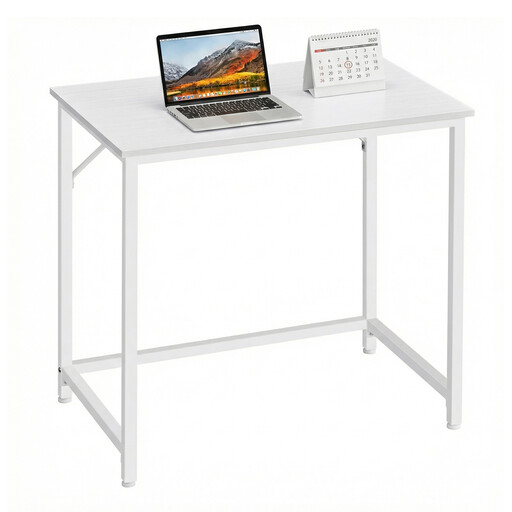
Why This Fits Their Persona: Ideal for a student dorm or a small work corner. This desk provides a functional workspace without taking up unnecessary room. Its minimalist design fits into almost any interior.
The steel frame and adjustable feet provide a stable base, minimising the 'wobble effect'. The design is purely functional, offering a fully usable work surface despite its compact size.
Compact size (80x50 cm) perfect for small spaces. According to the manufacturer, assembly is quick and easy thanks to clear instructions.
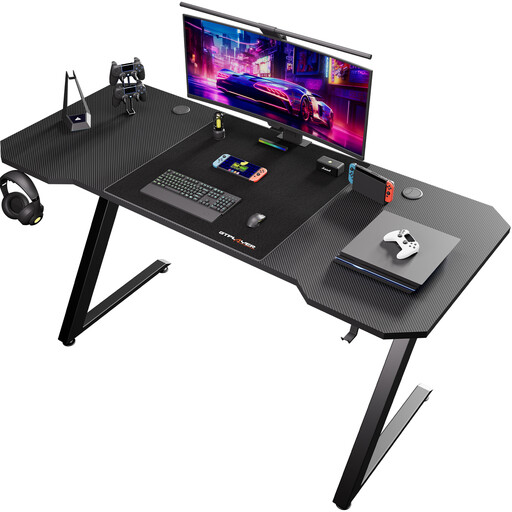
Why This Fits Their Persona: This desk is designed with gamers in mind. It offers a spacious and sturdy surface for a monitor, keyboard, and mousepad, plus handy extras that enhance the gaming experience.
The robust steel frame is specifically designed for stability, preventing the desk from wobbling during intense gaming sessions. The 120x60 cm work surface provides ample depth and width for all your gaming gear.
Features a carbon fibre-look surface and a convenient headphone hook. The construction is focused on durability and stability.
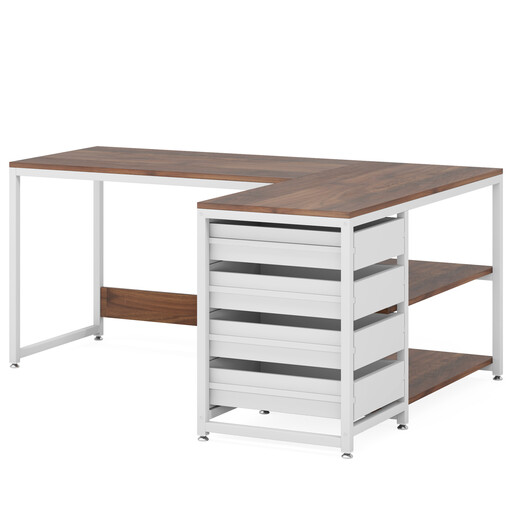
Why This Fits Their Persona: For those who want to combine work and storage. This L-shaped desk maximises workspace and, with four drawers and two shelves, offers plenty of room for documents, office supplies, and personal items.
This desk tackles the pitfall of impractical storage by offering a combination of drawers and open shelves. The L-shape creates an efficient and spacious work surface, making optimal use of the space.
Flexible design: the drawer unit can be assembled on either the left or right side. The combination of a large work surface and integrated storage ensures a tidy workspace.
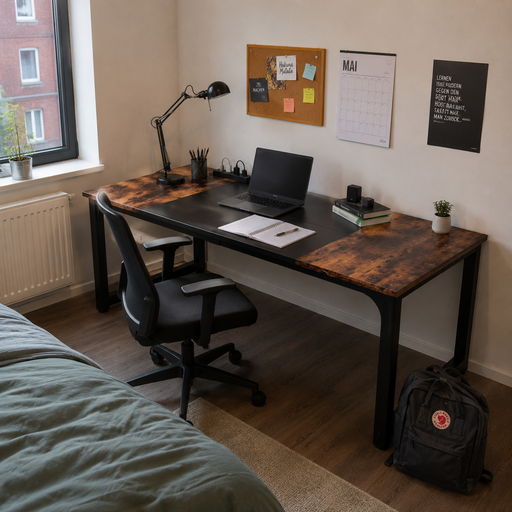
Why This Fits Their Persona: For those who need maximum workspace. At 180x80 cm, this desk is exceptionally large and deep, perfect for multiple monitors, large blueprints, or as a shared workspace.
This desk is the ultimate solution to the 'wobble effect'. According to the manufacturer, the 5x5 cm thick steel tubes and its construction allow for a maximum load of up to 260 kg, guaranteeing extreme stability. It offers a gigantic, uninterrupted work surface.
Very large and deep work surface (180x80 cm). Exceptionally stable and durable construction with a high load capacity. The industrial design is both stylish and functional.
We have compiled a complete, up-to-date list of products that fully meet these strict selection criteria and all applicable safety regulations.
The ideal height for a desk depends on your own height and the chair you use. Most desks have a standard height between 73 and 76 cm. For proper ergonomic posture, your arms should be able to rest on the desk at an approximately 90-degree angle, with your shoulders relaxed. If you are very tall or short, a height-adjustable desk can be a great investment.
This varies greatly by model. A simple, small desk might have a maximum load capacity of around 50 kg, which is sufficient for a laptop and some books. A sturdier home office desk or gaming desk with a steel frame can often support 100 kg or more. Always check the manufacturer's specifications, especially if you plan to place heavy equipment like multiple monitors or a large computer tower on the desk.
A corner desk can be a smart way to use space efficiently in a small room. It occupies a corner that might otherwise remain empty, creating a large work surface without the desk protruding far into the room. However, it can also look a bit bulky. Measure the space carefully and consider whether the L-shape fits with the traffic flow and other furniture in the room.
