
Vandaag of morgen in huis

Kwaliteit gegarandeerd

Welkomstaanbiedingen ontgrendelen: GRATIS bezorging | Tot 80% korting | Gratis 30 dagen JoyPlus-proefperiode
Download de app
Choosing a new computer desk seems simple—until it starts wobbling after a few months, the surface is covered in scratches, or it just doesn't fit your workflow. Many desks look great online but hide design flaws that only become apparent after purchase. Before you make a decision, it's smart to know where the pitfalls lie.
Here are the three most common problems and how you can avoid them:
To avoid buyer's remorse, it's wise to check a few key specifications. These determine the quality and usability of your future desk.
A desk's sturdiness depends on its frame. A steel frame typically offers the best guarantee against wobbling. Pay attention to the thickness of the steel tubes; thicker tubes (e.g., 5x5 cm) provide more stability, especially with a larger desktop. For the surface itself, MDF or particle board are common choices. A thickness of at least 1.5 cm is recommended to prevent sagging. A powder coating on the steel and a scratch-resistant, water-repellent top layer on the surface will significantly extend its lifespan.
The ideal size depends entirely on your space and how you use it. A standard desk height is around 75 cm, which is ergonomically sound for most people. Think carefully about the width and depth:
A corner desk can be a smart solution to make optimal use of an unused corner in the room and maximise your workspace.
A clear desk fosters a clear mind. A desk with storage, such as drawers or shelves, helps keep cables, documents, and office supplies out of sight. Another way to save space is by opting for a mini PC. These compact computers are powerful enough for most tasks and can often be mounted on the back of a monitor, eliminating the need for a bulky computer tower under your desk.
To help you with your choice, we have selected a number of products that suit different needs and styles.
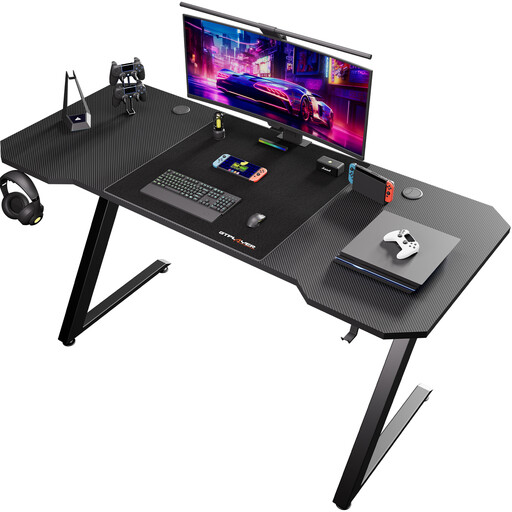
Why This Fits Their Persona: This desk is engineered with the gamer in mind. The 120x60 cm size is ideal for a single or dual-monitor setup, while the carbon-fibre look and convenient extras like a headphone hook complete the gaming experience.
Its sturdy construction is specifically designed to prevent wobbling, even during intense gaming sessions. It provides a stable platform for all your gear.
Functional design featuring a headphone hook and a robust, carbon-fibre textured top. A compact and purpose-built gaming desk.
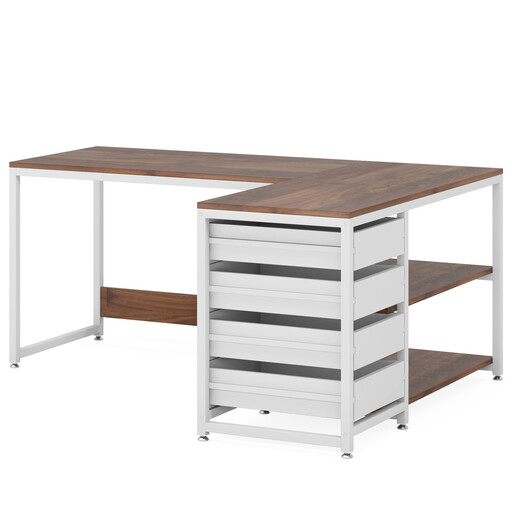
Why This Fits Their Persona: This L-shaped corner desk is perfect for anyone looking to make efficient use of a room's corner. It offers a spacious work surface and ample storage with its integrated drawers and shelves, making it ideal for a complete home office setup.
The reversible design (drawers can be assembled on the left or right) prevents the 'sizing mismatch' pitfall. It adapts to your room, not the other way around.
Combines a large work surface with integrated storage. The sturdy metal frame and adjustable feet ensure stability on any floor.
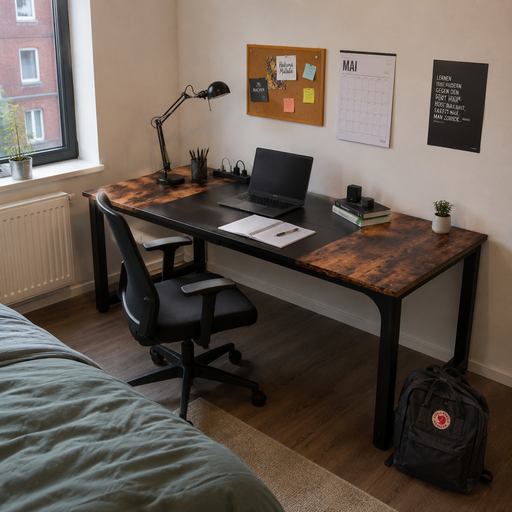
Why This Fits Their Persona: For those who need space. This 180x80 cm desk provides an expansive surface for multiple monitors, laptops, documents, and other equipment. It's ideal as a shared workspace or for professionals working on large-scale projects.
The extra-thick steel frame (5x5 cm tubes) and the 1.5 cm thick desktop guarantee maximum stability. This desk avoids the 'wobble trap', even with a load capacity of up to 260 kg.
A massive work surface and exceptional stability. The top is scratch- and water-resistant, preventing the 'veneer blunder' and ensuring long-term durability.
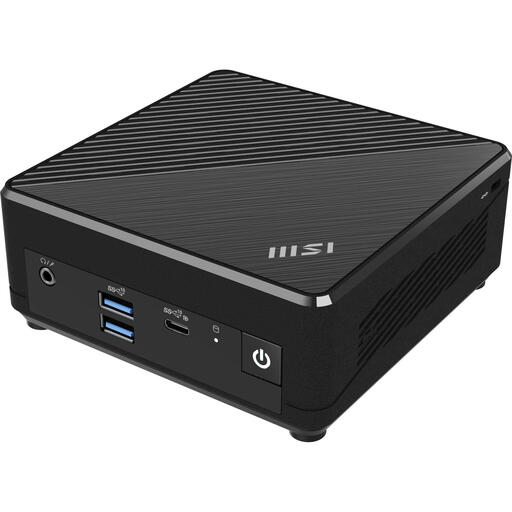
Why This Fits Their Persona: This isn't a desk, but it's the key to a clutter-free workspace. A mini PC replaces a large, bulky computer tower, freeing up maximum space on and under your desk for a clean, minimalist aesthetic.
It solves the 'not enough space' pitfall by minimising the computer itself. Pair it with any desk you like to instantly create a more spacious feel.
Extremely compact (12.4 x 12.4 cm) and lightweight (540g). It can be mounted to the back of a monitor with a VESA bracket for a completely invisible setup.
We have compiled a complete, real-time list of products that fully satisfy these strict selection criteria and UK safety regulations.
What is the ideal height for a computer desk? Most desks have a fixed height of around 75 cm. This is a good standard for the average person. For optimal ergonomics, your arms should form an angle of about 90 degrees when you type. If you are taller or shorter than average, a desk with adjustable legs or an adjustable office chair can be a good solution.
How much weight can a computer desk support? This varies greatly by model. A simple, lightweight desk might support 40-50 kg, which is enough for a laptop and a monitor. Heavier models with a robust steel frame, like the 180 cm LANTINE desk, can support up to 260 kg according to the manufacturer. Always check the manufacturer's specifications if you plan to place heavy equipment on your desk.
How can I keep my desk tidy if I have limited space? Opt for a desk with storage like drawers or shelves. Use the vertical space with wall shelves above your desk. A corner desk can also be an efficient solution. However, the most effective way to save space is to tackle the source of the clutter: the computer tower. A mini PC like the MSI Cubi N can be hidden behind your monitor, instantly creating more work and legroom.
