
Vandaag of morgen in huis

Kwaliteit gegarandeerd

Welkomstaanbiedingen ontgrendelen: GRATIS bezorging | Tot 80% korting | Gratis 30 dagen JoyPlus-proefperiode
Download de app
A computer desk needs to do more than look good in a product photo. People working from home need space for a monitor and keyboard, students often need room for books too, and gamers look for plenty of legroom and a sturdy construction. Yet purchases often go wrong because of unclear dimensions, exaggerated weight capacity claims or assembly that turns out to be trickier than expected.
Use these practical checks to compare a computer desk based on verifiable specifications. Then explore three suitable options for different needs.
An 80 x 50 cm desk may be suitable for a laptop, one monitor and a few accessories. For two screens, a printer or lots of study materials, that size can quickly feel cramped. So pay attention not just to the width, but also to the depth. A shallow desktop leaves less room to position your monitor at the right viewing distance and rest your forearms.
A high maximum load may sound appealing, but stability also depends on the frame, joints, leg design and floor surface. Check whether the capacity is listed as a static load. This usually means a load that’s evenly distributed, without constant shifting or impact. If possible, place heavy equipment as close as you can to the supporting parts.
A desk that’s easy to assemble needs clear instructions and labelled parts. Also check which tools are included and whether assembly requires two people. Loosely tighten the screws first, adjust the frame, then check all the joints once you’re finished. This helps prevent the desk from being uneven or wobbly.
For a small bedroom, student room or compact home office, a desk measuring 80 x 50 cm can be practical. It offers space for a laptop or a simple monitor setup without taking up too much floor space.
If you’re looking for a large desk for multiple screens, a printer and writing, 160 x 80 cm may be a better fit. A desktop this size also works well as a spacious home office desk or a table for shared use. Measure the available wall and legroom before you buy. Also allow for skirting boards, cables and the space needed to move around the desk.
Many desks have a standard height of around 75 cm. Check that your chair fits comfortably underneath and that you can move your legs freely. An adjustable chair can help you adapt your sitting position to the height of the desktop.
A combination of chipboard and steel is common in affordable desks. Chipboard is relatively lightweight and provides an even surface, while a steel frame offers structural support. Check the edge finish and use coasters to protect the desktop from moisture and scratches.
A desk with a metal frame can be a sensible choice when stability matters. Don’t just look for the presence of metal; consider the design too. Extra crossbars, triangular bracing and adjustable feet can all make a difference. The manufacturer’s product information may state a maximum load. Treat this as a guideline for the specified conditions of use, and don’t exceed it.
A stable desk needs more than a sturdy frame: it also needs to be properly adjusted to the floor. Adjustable feet are useful on uneven wooden floors, tiled floors or laminate. They can also help limit direct contact between the metal and the floor.
Check that there’s room to route cables to a socket. Cable management is especially important for a gaming desk with multiple screens, speakers and a computer tower. A tidy setup makes the desk more practical, but cable trays or holders aren’t included with every model.
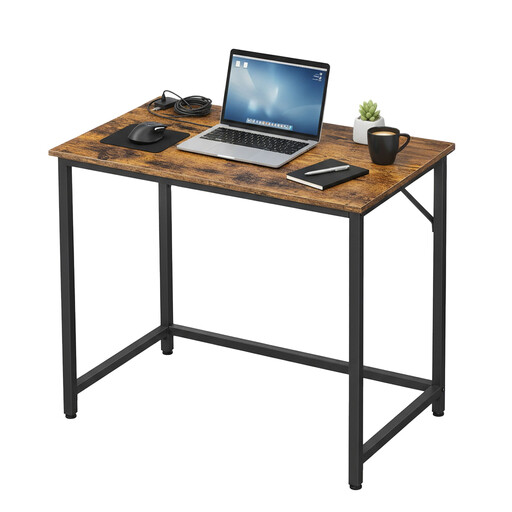
Why it suits this need: This compact 80 x 50 x 76 cm desk works well for a laptop setup, bedroom or simple study space. The brown desktop and black frame suit a modern interior or a room with brown and black furniture.
The exact dimensions make it clear how much workspace is available. According to the product information, adjustable feet help keep the desk supported on an uneven floor. Bear in mind, though, that the 50 cm depth is limited.
Chipboard with a steel frame, a stated maximum static load of 50 kg, labelled parts and clear assembly instructions.
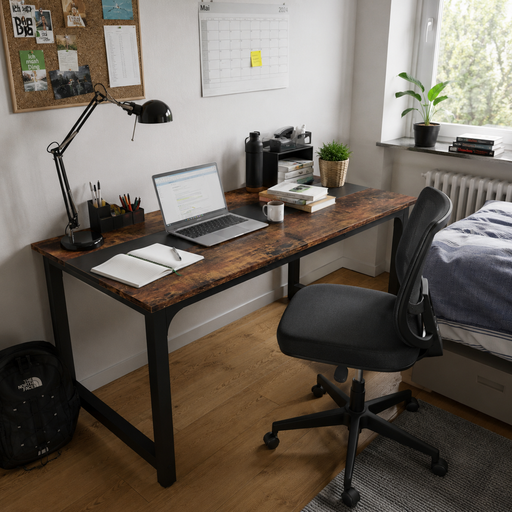
Why it suits this need: At 160 x 80 cm, there’s room for multiple screens, a printer, documents and accessories. This large desk is a good fit for a fully equipped home office or a spacious study.
According to the product description, the steel frame has two extra supports, a triangular brace and adjustable feet. The stated load capacity of 400 kg is a manufacturer’s product specification. Distribute the load evenly and don’t exceed this figure.
Spacious 160 x 80 cm desktop, 75 cm high, with a 5 x 5 cm metal frame according to the product information. An Allen key is included for assembly.
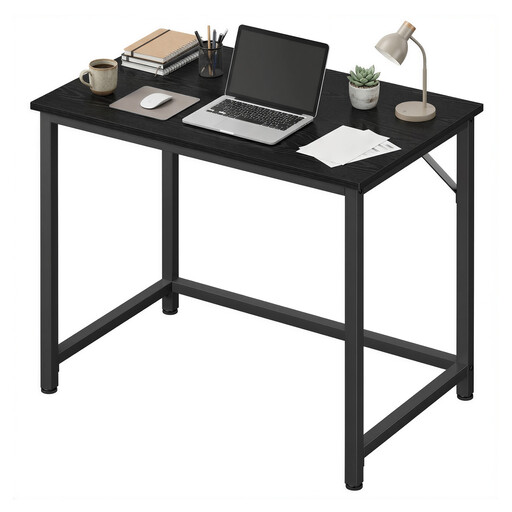
Why it suits this need: This black 80 x 50 cm desk is suitable for working from home, studying or a compact gaming setup. Its minimalist design fits into a bedroom, home office or shared workspace.
The product information lists adjustable feet and a reinforced frame. Place the desk on a flat, stable surface and stick to the stated static load of 50 kg.
Black chipboard desktop, steel frame, dimensions of 80 x 50 x 75,5 cm, and assembly parts with labelled instructions according to the product description.
We’ve put together a complete, up-to-date list of products that meet these strict selection criteria and the applicable European safety regulations.
It depends on your equipment. An 80 x 50 cm desk is often suitable for a laptop or one compact screen. For two monitors, a printer and lots of documents, a 160 x 80 cm desk is more practical. You could mark out an area on the floor or table with masking tape first to get an idea of how much space you’ll need.
Place the desk on a level surface, tighten all the joints and use adjustable feet to correct small differences in floor height. Distribute heavy equipment evenly across the desktop. After a few weeks of use, check that the screws are still tight.
Its lifespan depends on the load, moisture, assembly and daily use. A steel frame and a suitable load capacity can help create a stable workspace, but they won’t prevent damage caused by overloading or moisture. Use coasters, lift equipment rather than sliding it across the desktop, and follow the manufacturer’s care instructions.
