
Vandaag of morgen in huis

Kwaliteit gegarandeerd

Welkomstaanbiedingen ontgrendelen: GRATIS bezorging | Tot 80% korting | Gratis 30 dagen JoyPlus-proefperiode
Download de app
A road trip, camping weekend, or a long haul in a truck is on the horizon. In these moments, chilled drinks and fresh food are not a luxury, but a necessity. Yet, many people end up with an electric cooler that fails to meet expectations. Lukewarm drinks after a hot day or, even worse, a dead car battery.
Before you invest in a new portable refrigerator, it's wise to understand the common pitfalls. This will prevent you from wasting money on a model that doesn't suit your needs.
To avoid these problems, there are a few technical specifications you cannot overlook. These determine whether a cooler does its job well or lets you down.
The core of a quality 12v car refrigerator is its compressor. Think of it as the engine of your home refrigerator, but in a compact size.
For anyone serious about their travels, a compressor cooler is the only logical choice.
A portable refrigerator needs to be flexible. Look for models that can run on multiple power sources.
Equally important is the battery protection system. A good system has multiple settings (often H/M/L for High, Medium, Low). The cooler automatically shuts off if the battery voltage drops too low, ensuring you can always start your engine. This is an indispensable feature for a cooler for a camper or car.
Are you camping solo, or are you heading out with the whole family? The required capacity varies greatly. Think in practical terms: how many cans, bottles, or food containers do you need to fit?
Some models offer a dual-zone layout. This allows you to set two compartments to different temperatures independently, for example, one as a fridge and one as a freezer.
Based on these objective criteria, we have selected a few models that cater to different users.
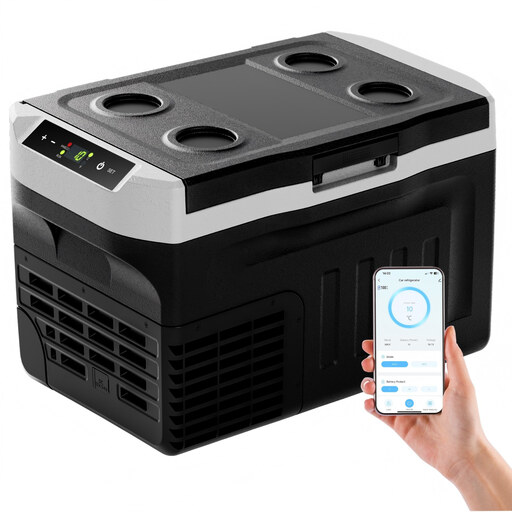
Why This Fits Their Persona: Perfect for those seeking a compact yet powerful solution. Ideal for day trips, use in a passenger car, or for solo travel. It has a small footprint but delivers the performance of a larger model.
This model uses a real compressor, so no more lukewarm drinks. The 3-stage battery protection prevents a dead battery, even in a compact unit.
Supports app control for added convenience. According to the manufacturer, its cooling performance is fast and energy consumption is low thanks to the ECO mode.
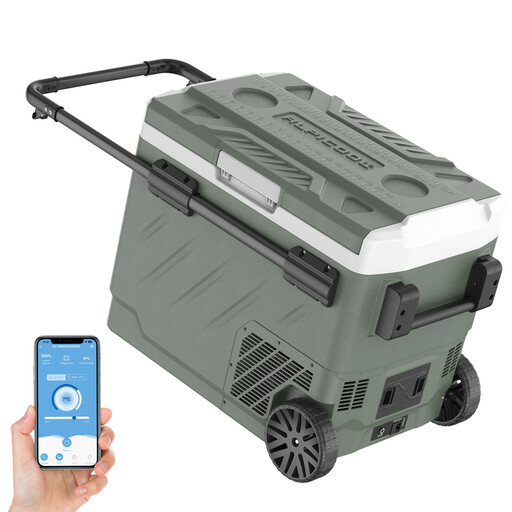
Why This Fits Their Persona: With 49 litres of capacity, there's plenty of room for the whole family. The wheels and retractable handle make moving a full, heavy cooler from the car to the campsite much easier.
The dual-zone layout with separate controls solves the capacity illusion. You can truly utilize the space as both a fridge and freezer compartment without compromise.
Flexible dual-zone control via the panel or the app. The robust wheels and handle are a major plus for mobility.
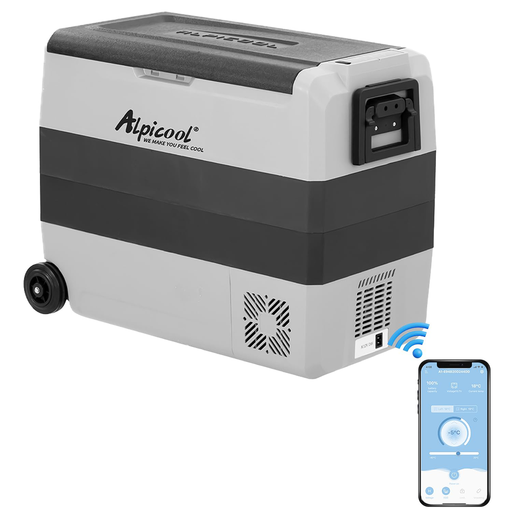
Why This Fits Their Persona: For truck drivers, boat owners, or RVers who are on the road for weeks at a time, maximum capacity and flexibility are crucial. This 60-litre model offers enormous storage space for meals and drinks.
The removable divider makes this model unique: use it as one giant freezer or as a fridge-freezer combo. This gives you complete control over its massive capacity.
Very large 60L capacity. The ability to switch between one or two temperature zones with the divider is a major advantage for long-term use.
We have compiled a complete, up-to-date list of products that fully meet these strict selection criteria and comply with current regulations.
Consumption depends on the size, the set temperature, and the ambient temperature. An average compressor cooler consumes between 45W and 60W when the compressor is running. However, thanks to good insulation and efficient compressors, they do not run continuously. Many models feature an ECO mode that further reduces consumption once the desired temperature is reached.
Yes, that is precisely the advantage of a model with good battery protection. You set the protection to a medium or high level, and the cooler will turn itself off before your vehicle's battery gets too low. Moreover, modern compressors are relatively quiet (often under 45 dB), making it a quiet cooler that is unlikely to disturb your sleep.
The difference is night and day. A thermoelectric box is a "cooler," not a refrigerator. It can only lower the temperature by a limited number of degrees relative to its surroundings. A compressor cooler is a fully-fledged camping refrigerator or freezer. It reaches and maintains a set temperature (e.g., 4°C or -18°C), regardless of whether it's 15°C or 35°C outside. For fresh food and ice-cold drinks, a compressor is the only reliable option.
