
Livraison le jour même et le lendemain

Qualité garantie

Débloquez vos offres de bienvenue: Livraison GRATUITE | Jusqu'à -80 % | 30 jours d'essai gratuits à JoyPlus
Téléchargez l'application
A compartment lunch box sounds simple enough – until fruit juice soaks into your sandwich, a clasp works loose after a few weeks, or the container won’t fit in the school bag. Parents, pupils, students and office workers should therefore pay more attention to construction than just colour or shape.
Three common pitfalls to watch out for:
Compartments without a proper seal
Dividers keep different foods apart, but they don’t automatically stop sauce or yoghurt from seeping between sections. Check that the lid seals all the way round and that a silicone ring is fitted.
A generous capacity that’s awkward in practice
A large bento lunch box may look appealing, but it takes up space in a rucksack. Look at the dimensions, weight and shape. A wide container won’t always fit into a slim lunch bag.
Closures and materials that don’t suit how you’ll use it
A single clip mechanism can be handy for calm everyday use. For children or packed bags, a sturdier fastening may be more practical. With stainless steel, it’s also important to check whether it’s 304 or 316 stainless steel and how the lid seal is designed.
First, think about what you want to take. For a primary school child, separate sections for sandwiches, fruit and a snack are often handy. For work or meal prep, a larger main compartment with one smaller section may work better.
Bear in mind:
A lunch box for school doesn’t need the same layout as one for work. If you prepare several meals in advance, you could also choose meal prep containers or food storage containers with lids in different sizes.
Don’t take the term leakproof lunch box at face value without checking the construction. Look in the product information for:
A product name that includes “leakproof” or “leak-resistant” is a product claim. Don’t present it as a guarantee for every situation. According to the product description of some models, the closure is designed to limit leaks; always follow the usage instructions and test a new container at home with water first.
Plastic lunch boxes are often lightweight and suitable for children. Stainless steel models are generally heavier, but can be a good choice if you’re looking for a sturdy reusable lunch box. The product information for PURECOOK and Maxcook mentions 304 stainless steel and 316 stainless steel respectively on specific models.
Also check:
A stainless steel lunch box should not automatically go in the microwave. An insulated container is also not the same as a fridge. A food container with insulation can, according to the product description of the Maxcook model, help keep hot or cold contents at temperature for several hours, but temperature retention depends on preheating, filling and the surrounding environment.
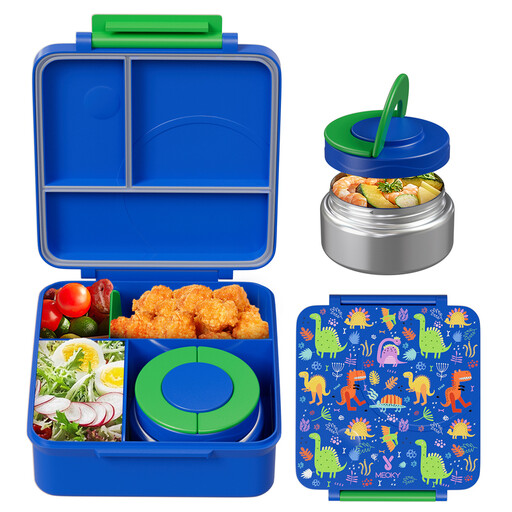
Why it suits this profile: A straightforward entry-level choice for school lunches with several small portions and a recognisable design.
The divided layout stops sandwiches and snacks from moving around loose in the bag. The product name mentions a single closure; therefore, transport liquid contents upright where possible.
Divided lunch box; capacity stated in the product name as 54 oz; suitable for an organised school lunch.
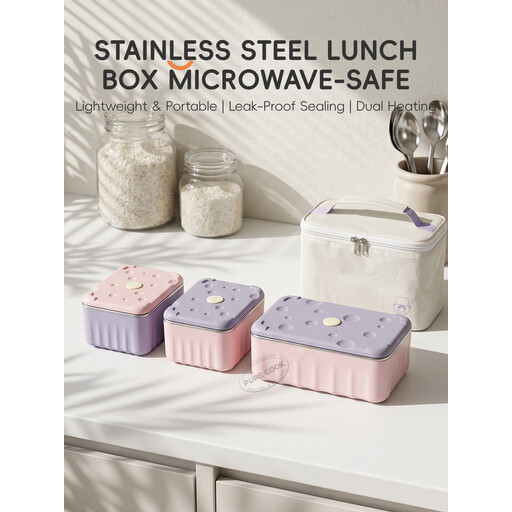
Why it suits this profile: Ideal for anyone who wants to combine reusable containers for school, office and meal prep with a metal construction.
The set consists of three containers and mentions double layers and an insulation bag. Check before purchase what capacity you need per container.
304 stainless steel; set of three; product name states 20.29 oz, 20.29 oz and 40.58 oz.
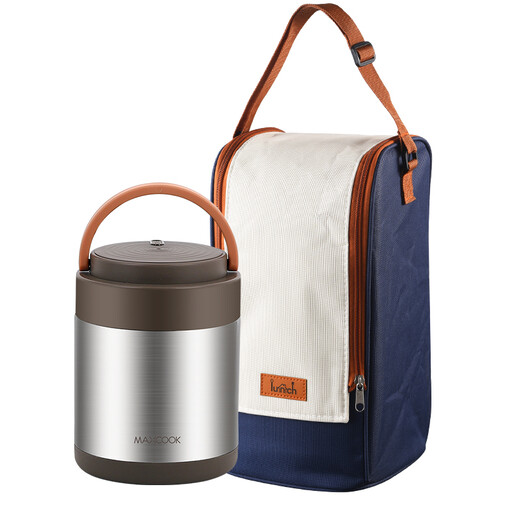
Why it suits this profile: For hot soup, stews or cold meals on the go, when a standard bento lunch box doesn’t offer enough capacity or insulation.
The wide opening makes filling and cleaning easier than a narrow flask shape. According to the product description, the jar is leak-resistant; the manufacturer advises against tipping it over.
304 stainless steel; 1.4 litre capacity; vacuum insulation; wide opening and included storage bag.
We’ve put together a full, up-to-date list of products that fully meet these strict selection criteria and comply with current European safety regulations.
That depends on the seal. Dry items such as sandwiches, fruit and crackers are generally easier to transport. For yoghurt, dressing or sauce, you need a container whose product information mentions a sealing lid edge or silicone ring. If in doubt, take a separate food container.
The lifespan depends on the material, closure and maintenance. Wash the container according to the instructions, let parts dry thoroughly and check regularly for cracks, warping and a dried-out sealing ring. A damaged closure can cause leaks, even if the container was originally described as leak-resistant.
A bento lunch box with fixed compartments is handy when you want to keep portions separate and take everything together. Loose kitchen storage containers or food storage containers are more flexible for different quantities and often fit more easily in the fridge. Choose based on your routine, not just the number of compartments.
