
Vandaag of morgen in huis

Kwaliteit gegarandeerd

Welkomstaanbiedingen ontgrendelen: GRATIS bezorging | Tot 80% korting | Gratis 30 dagen JoyPlus-proefperiode
Download de app
A compartment lunch box helps you take bread, fruit, snacks and vegetables with you in an organised way. But a nice layout isn't everything. In practice, a lunch box can disappoint because of a lid that's difficult to close, compartments that are too small, or material that doesn't suit how you use it.
So look out for these common pitfalls:
A lunch box with multiple compartments is especially useful when ingredients need to stay separate. Think of fruit next to crackers, or bread and raw vegetables in separate sections. A bento lunch box is often designed for portion control, whereas a single food storage container offers more space for pasta, salad or leftovers.
Pay attention to:
For children, a fixed layout can help to pack different types of food. For adults who do meal prep, larger compartments or separate meal prep containers are often more practical.
A closure needs to be simple enough for daily use, but sturdy enough to keep the lid closed. Models with one or two clips are quick to open. A silicone seal can help improve the connection between the container and the lid.
Always check the product description for the exact wording. Does it say "leak-resistant" or "leak-proof"? These are not automatically the same thing. At home, test it first with cold water before taking a new lunch box filled with food in a school bag or work bag. It's best to transport sauces in a separate sealed container if the manufacturer doesn't give clear information about liquids.
Commonly used materials are plastic, glass and stainless steel:
A stainless steel lunch box is not automatically completely leak-proof. The quality of the lid, the silicone seal and the closure are at least as important as the metal itself.
Do you use the lunch box for school, work, travel or meal prep? The right choice depends on portion size, age, bag size and cleaning routine. Below are some popular choices, linked to different user profiles.
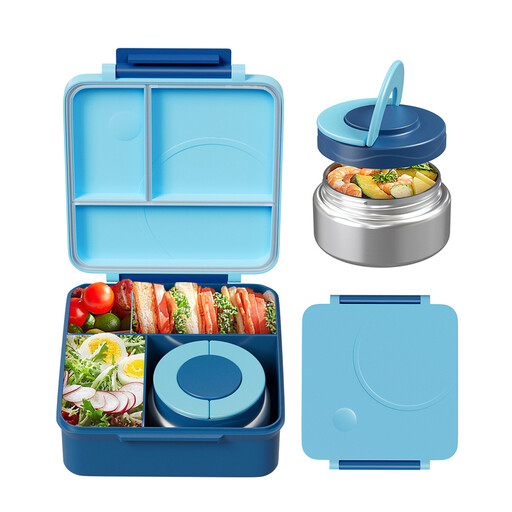
Why this suits the profile: The divided layout is practical for a simple lunch with several components, without needing a full set straight away.
The product name mentions a divided lunch box with one closure. Do check the exact internal dimensions and instructions for liquid foods before purchasing.
Divided design and single latch closure; available in a blue finish.

Why this suits the profile: The set is aimed at those who want to prepare multiple portions at once for work, the freezer or the store cupboard.
The product information mentions four containers of 1600 ml, with lids, and gives explicit instructions: do not use in the microwave and do not place over an open flame.
316L stainless steel, four identical containers of 1600 ml, suitable for dishwasher and freezer according to the product information.
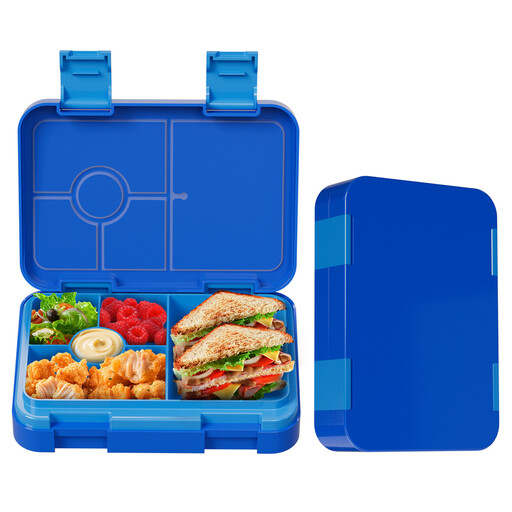
Why this suits the profile: Five compartments and two closures suit varied lunches for school, work or on the go.
The double closure provides an extra check point when closing. According to the product description of the bundle variant, the five compartments keep ingredients separate from each other.
Five compartments and double latches; the blue colour is suitable for anyone looking for a fixed lunch layout.
We've put together a full, up-to-date list of products that fully meet these strict selection criteria and comply with current European safety regulations.
Use these points before you order a lunch box or food storage set:
Yes, a lunch box with fixed compartments can be handy for bread, fruit and small snacks. Choose a model with a closure that the child can operate themselves. Also check the weight and dimensions, especially if the lunch box goes in a school bag every day.
Don't overfill the box, check that the silicone seal is properly in place and close all clips fully. Test a new leak-proof lunch box first with water over the sink. For soup, dressing and other thin liquids, a separate sealed container is often a sensible choice.
The lifespan depends on the material, closure, seal and maintenance. Replace a lunch box when the lid is warped, the closure no longer fastens properly or the silicone seal is damaged. Always follow the manufacturer's cleaning and temperature instructions.
