
Sugar-conscious coffee drinkers
You want to serve crispbreads with coffee and choose primarily by the amount of ‘of which sugars’ per 100 g, rather than by a claim on the front of the pack or the value per crispbread alone.


If you’re choosing crispbreads with less sugar to enjoy with your coffee, start by comparing ‘of which sugars’ per 100 g. Values per crispbread are less useful as a first comparison because portion sizes vary. Then consider what else matters to you, such as fibre, carbohydrates or whether you need a gluten-free option. ‘Low-carb’ doesn’t automatically tell you how much sugar a crispbread contains, and your topping also counts as part of your coffee break.
You want to serve crispbreads with coffee and choose primarily by the amount of ‘of which sugars’ per 100 g, rather than by a claim on the front of the pack or the value per crispbread alone.
Alongside sugars, you want to compare fibre, protein or carbohydrates to find a crispbread that suits your coffee break.
You may need to avoid gluten, for example, or take an allergy into account. In that case, check suitability and the latest allergen information first, before comparing sugar values.
Voedingscentrum recommends comparing nutritional values per 100 g first, so differences in portion size don’t skew the comparison. Then decide which other feature matters most to you. If you have a dietary requirement, check that first, before looking at the nutritional values.
| What to consider | What to check when buying | Who it matters to |
|---|---|---|
| Comparing sugars | Compare ‘of which sugars’ per 100 g, then consider what your chosen topping adds. | I mainly want to choose crispbreads with less sugar to enjoy with coffee, without a small portion affecting my comparison. For around 50% of consumers, comparing sugars comes first. |
| Other nutritional values | As well as sugars, check fibre, protein and carbohydrates per 100 g; also take fat and energy into account. | If I expect more from my crispbread than just a low sugar value, I want to know how the other nutritional values compare. For around 30% of consumers, these values are the top priority. |
| Gluten and allergens | Read the latest ingredients and allergen information, and check the gluten-free label on the pack if necessary. | If a guest needs to avoid gluten or has an allergy, the crispbread must meet that requirement first. This is the main priority for an estimated 20% of consumers. |
Carbohydrates and ‘of which sugars’ are listed separately in the nutritional information. So choosing based on carbohydrates alone won’t tell you how much sugar a crispbread contains.
Compare both values per 100 g. If you’re considering a seed or protein crispbread, check fat and energy too if they matter to your choice.
Crispbreads can vary in size, so a low value per crispbread doesn’t necessarily mean a lower value when comparing products.
Start with the nutritional values per 100 g, then consider how many crispbreads you want to serve.
Your topping is part of what you eat with your coffee. Sweet toppings may add sugars, while savoury toppings can change the amount of salt.
Check the nutritional information for your topping too, and assess the combination you actually plan to eat.
Ingredients and allergen information can change. This is particularly important if someone needs to avoid an ingredient.
Before serving, check the packaging of the product you bought, including any warnings about cross-contamination.
A brand name doesn’t tell you how much sugar every crispbread from that brand contains. So compare the nutritional information for the specific variety you want to buy.
Bolletje offers regular crispbreads and a Protein & Low Carb variety. The latter is worth considering if you want to compare carbohydrates, fibre and protein as well as sugars.
Melba Crackers are worth considering if you’re looking for a thin crispbread to go with a small topping at coffee time.
The own-brand AH Luchtige Crackers Naturel is a useful comparison if you’re considering a light, airy crispbread.
Jumbo offers, among other options, a light, airy plain crispbread and a separate gluten-free variety. These are different products with different nutritional values.
Lidl offers light, airy crispbreads in plain and high-fibre varieties, giving you different packs to compare in store.
The Goud Gebakken range at ALDI includes low-carb, rye and other crispbreads. The type of product can help you choose a texture, but it’s no substitute for comparing nutritional values.
This selection includes rye crispbreads, wholemeal crispbread, a tomato and oregano variety, and a light, airy crispbread to enjoy with coffee. Choose the type you prefer, then compare the latest nutritional information per 100 g and, where necessary, the allergens listed on the pack.
 Image unavailable
A rye crispbread to consider if you’re looking for a base for toppings to enjoy with coffee. Compare sugars per 100 g on the latest packaging, and check the allergen information if you need to avoid ingredients for a guest.
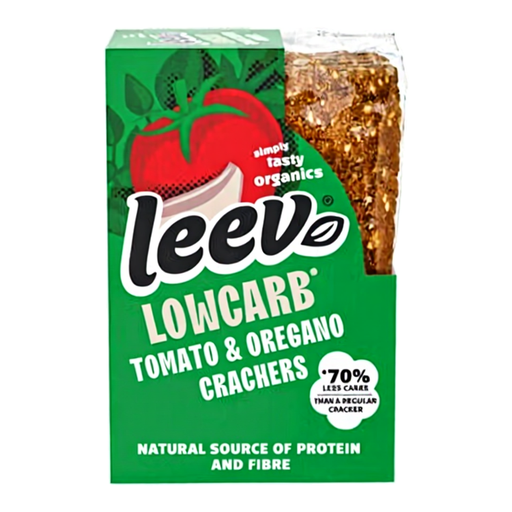 Image unavailable
This tomato and oregano variety is a good fit if you’re looking for a savoury crispbread to enjoy with coffee. Compare carbohydrates and ‘of which sugars’ separately; if you have dietary requirements, also check the latest ingredients and allergen information.
 Image unavailable
This Wasa variety is worth considering if you want to compare fibre as well as sugars. Check both values per 100 g on the pack, and read the allergen information if you have dietary requirements.
 Image unavailable
A wholemeal crispbread to compare if you like having a crispbread with toppings alongside your coffee. Check sugars and fibre per 100 g on the latest packaging; if you have allergies, read the full allergen information too.
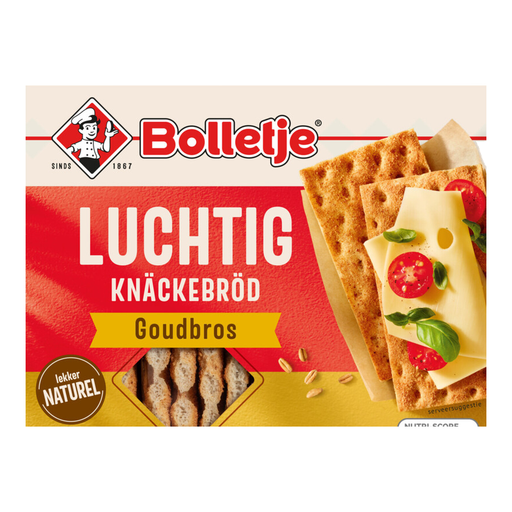 Image unavailable
This light, airy crispbread is an option if you prefer this style as a base for toppings with your coffee. Compare the sugar value per 100 g rather than relying on the word ‘Light’, and read the allergen information before serving it to guests.
Start by comparing ‘of which sugars’ per 100 g. Voedingscentrum recommends comparing nutritional values on this basis because portion sizes can vary. Then consider how much you plan to eat and what toppings you’ll use.
No, you can’t work out the sugar value from ‘low-carb’ alone. Jumbo lists 15 g carbohydrates and 2.8 g sugars per 100 g separately for Bolletje Protein & Low Carb Crackers. Check both values for every variety.
Choose a crispbread that is explicitly labelled gluten-free, and check the latest packaging and allergen information. Jumbo says its Lekker Vrij van Gluten Luchtige Crackers carry the Crossed Grain symbol; this doesn’t tell you whether other crispbreads are suitable.
Yes. If salt matters to your choice, compare that value per 100 g too, and consider your topping. Albert Heijn and Jumbo each list 1.2 g salt per 100 g for the light, airy plain crispbreads reviewed here.
Use terms like these to find products you’d like to look at more closely, but base your sugar comparison on the nutritional information. Check the values that matter to you per 100 g, and if you have dietary requirements, read the ingredients and allergen information on the latest packaging too.