
Vandaag of morgen in huis

Kwaliteit gegarandeerd

Welkomstaanbiedingen ontgrendelen: GRATIS bezorging | Tot 80% korting | Gratis 30 dagen JoyPlus-proefperiode
Download de app
A compact windproof umbrella needs to do more than simply fold down small. For Dutch commuters and travellers, changeable weather, gusts of wind, crammed bike panniers and carrying a wet umbrella in a bag are practical considerations. A model that looks robust in the product photos can still be awkward in practice if the frame is flimsy, there’s no sleeve, or the umbrella doesn’t dry properly.
So pay attention to the construction and the dimensions, not just words like “windproof”, “waterproof” or “storm umbrella”. Below are the key checkpoints and a few suitable choices.
Windproof isn’t a universal technical standard. Without information such as a tested wind speed or a specific frame design, the term says little about what the umbrella can handle. A storm umbrella isn’t automatically suitable for strong winds along the coast or between tall buildings.
A folding umbrella that combines fibreglass and aluminium can offer a practical balance between weight and strength. Even so, it’s wise to close an umbrella in very strong winds. That prevents unnecessary stress on the ribs and hinge points.
A canopy can shed rain without the product being completely waterproof in all conditions. Check whether the description mentions water repellency, a coating or waterproofing. According to the product description for the Beneunder BM525, the fabric is water-repellent and finished with an L.R.C black coating. That’s a vendor specification, not a guarantee that no moisture will get through during prolonged rain.
The seams, closing strap and sleeve also matter. Put away wet, an umbrella can develop odours or material issues. Shake off excess water and let the canopy air-dry fully before you store it.
An umbrella measuring 19 cm fits easily in a rucksack, handbag or laptop bag. That advantage disappears if the sleeve is too tight or you can’t carry the wet umbrella properly. A capsule case can be practical here, especially if it can be carried by hand or worn crossbody.
For commuting, a lightweight umbrella with a short folded length is handy. The Beneunder BM525 has, according to the product information, a folded length of 19 cm. The light grey version weighs about 247 grams based on the stated 8.71 oz; the nude-pink version is listed at 248 grams.
That weight is low enough to carry every day, but always compare whether the stated weight includes the sleeve or packaging. A very light umbrella may also have a smaller open canopy or a simpler frame.
A compact umbrella is usually smaller when open than a standard umbrella. The Beneunder BM525 has an open diameter of around 94,5 cm. That can be sufficient for one person on the walk to the station, but offers less coverage for two people or a rucksack.
For a commuter umbrella, it’s useful to consider in advance whether you mainly walk, cycle or move between buildings. On a bicycle it isn’t safe to hold an umbrella; choose rainwear and use the umbrella when walking.
Take note of:
The description also mentions resistance to wind, wear, rain and high temperatures. According to Beneunder’s own product information, these are characteristics of the model; treat them as guidance rather than a guarantee for use in extreme weather conditions.

Why this suits the profile: The 19 cm length and the stated weight of around 247 grams make this model a good fit if you’re choosing a compact everyday umbrella for the first time.
The product information lists concrete dimensions, materials and a capsule case rather than just generic marketing terms.
19 cm folded, approx. 94,5 cm open diameter, 30D fabric and a fibreglass-aluminium frame.
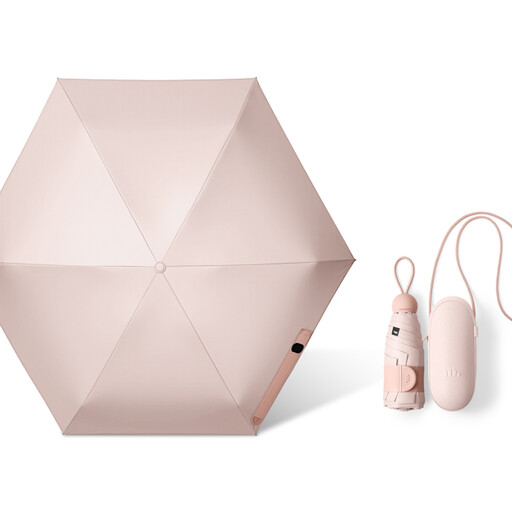
Why this suits the profile: This version combines a compact travel format with a capsule case that, according to the product description, can be carried in hand or worn crossbody.
The sleeve is included among the supplied components, so you don’t have to search separately for a suitable storage case.
Capsule case, 30D fabric, black coating and a frame made of fibreglass and aluminium.
Why this suits the profile: The five-fold folding format is handy for travellers with limited luggage space who want to stow an umbrella between uses.
The stated open diameter of around 94,5 cm makes it clear that this is a one-person umbrella, not intended for broad group coverage.
19 cm folded, suitable for carry-on luggage, with a case that can be carried by hand or worn crossbody.
We’ve put together a complete, up-to-date list of products that fully meet these strict selection criteria and comply with current European safety regulations.
A compact umbrella stays more usable when you handle it properly:
A five-fold folding umbrella is designed primarily for portability. In strong winds, careful use matters more than the label on the packaging.
That depends on the frame, the ribs and the conditions. Check whether the manufacturer states a specific wind rating. Without such a figure, “windproof” is largely a product description. Close the umbrella in heavy gusts to limit damage.
Service life depends on use, storage and wind loads. Dry the umbrella completely, avoid storing it wet for long periods and avoid forcing the frame under tension. An umbrella used daily can wear out faster than a model that only comes out of the bag on trips.
An open diameter of around 94,5 cm generally provides space for one person. That’s practical for walking to and from public transport. If you also want to protect a bag or a second person, you may need a larger umbrella model.
