
Photographers capturing small tool details
You want to capture fine edges, tips or surface texture clearly. Think about the magnification you need, as well as how much room you’ll have left to light your subject.


A compact camera with a close-up mode may be enough if you want to photograph small parts quickly without changing lenses. A mirrorless camera with a suitable lens gives you more choice over magnification and shooting distance. For accurate colour and sharpness under artificial light, you’ll also need a controlled white balance, enough room to light your subject and, if useful, a fixed setup. If you’re choosing a mirrorless camera, always check which lens is actually included in the kit.
You want to capture fine edges, tips or surface texture clearly. Think about the magnification you need, as well as how much room you’ll have left to light your subject.
You photograph coloured handles or finishes under artificial light and want to minimise differences between shots with a controllable white balance and consistent exposure. Nikon USA describes using a white card to assess white balance in mixed lighting.
You regularly photograph complete tools and want to be able to recreate the framing and background. Canon Europe recommends using a tripod to keep your framing consistent.
Start with the smallest detail you need to show clearly. Then choose a camera and lens combination that leaves enough room for your lights and suits the way you want to recreate your shots.
| What to consider | What should you check? | Who is this important for? |
|---|---|---|
| Small details | Check the maximum magnification of the included lens or close-up mode, and see whether the shooting distance works with your lighting. Canon lists a maximum of 0.16× at 45 mm with autofocus for the RF-S 18-45mm; Nikon specifies 1:1 for the separate NIKKOR Z MC 50mm f/2.8. | If I want to show tips, fine edges or surface texture, magnification is crucial; around 36% of consumers in this decision-making context give small details top priority. |
| Colour under artificial light | Check the white balance settings and take a test shot with a neutral reference under your own lights. Nikon USA describes using a white card in mixed lighting; Canon Europe notes that some LED and fluorescent lights can cause banding with an electronic shutter. | For coloured handles or finishes, I want to be able to assess colour differences between shots; around 29% of consumers in this decision-making context prioritise colour accuracy. |
| Sharpness across the whole subject | Decide whether one shot will be enough or whether you’ll need focus stacking, and check the lens requirements. OM SYSTEM lists Focus Stacking for the OM-5 Mark II; the technique combines sharp areas from several shots of a stationary subject. | When a tool has a textured surface and I want it sharp from front to back, the approach I choose matters; around 21% of consumers in this decision-making context focus on depth of field. |
| A repeatable setup | Check whether the offer is for a camera body or a complete kit, which lens is included, and whether a tripod and suitable lighting will fit into your setup. Canon Europe recommends a tripod for consistent framing. | For regular overview shots, I want to be able to use the same framing without having to choose a macro lens straight away; around 14% of consumers in this decision-making context mainly value a simple, repeatable setup. |
A camera kit doesn’t automatically include a lens for extreme close-ups. Magnification varies from lens to lens, so the camera name alone won’t tell you how large a small part will appear in the frame.
Before you decide, check the full lens model and the maximum magnification of the set on offer.
You may need to adjust your lighting setup or buy a separate light guide.
Auto white balance can produce a different colour impression under artificial or mixed lighting. Some LED and fluorescent lights can also cause banding when you use an electronic shutter.
Take test shots under your own lights and check the colour as well as for any banding. Adjust the white balance or shutter setting if needed.
The EOS R50 has an RF mount; the lens you choose also affects how close you can get to tool details.
The Z50II can be paired with a separate NIKKOR Z macro lens for close-ups.
The TG-7 offers a fixed-lens option for close-ups; the OM-5 Mark II is a mirrorless camera with interchangeable lenses.
These picks include compact cameras and a mirrorless camera for a range of photography setups. Check which lens is included with each version and whether the magnification suits the details you want to photograph.
 No image available
The listed optical zoom lets you adjust the framing at different distances; the product name doesn’t specify macro magnification.
12× optical zoom; 4K; Wi-Fi; 64 MP.
 No image available
The product name lists autofocus; for small tool details, check whether the camera can focus at the distance you need.
4K; 44 MP; 16× digital zoom; autofocus; pink finish.
 No image available
The listed zoom lens is designed for flexible framing; check separately whether its magnification suits the smallest details you want to capture.
APS-C sensor; 16–50mm kit lens; Product Showcase setting that shifts focus from your face to an object. An SD memory card and adapter/charger aren’t included.
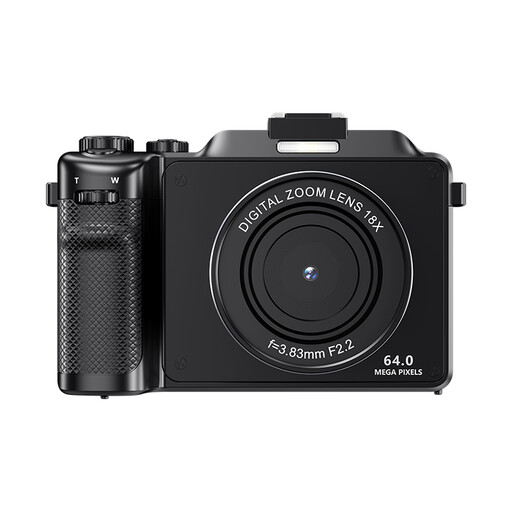 No image available
The product name lists autofocus, but digital zoom isn’t the same as optical magnification; the product description warns that digital zoom reduces image quality.
4K; 64 MP; autofocus; 18× digital zoom; flash and image stabilisation listed in the product name.
Take a test shot with a neutral card under your own lighting and compare auto white balance with a manual setting. Nikon USA explains that using a white card in mixed lighting can help you assess neutral colour reproduction; the result depends on your lighting setup.
Not for every overview shot. First check how large the smallest detail you want to show will appear with the included lens. For the RF-S 18-45mm at 45 mm, Canon specifies a maximum of 0.16× with autofocus, compared with 0.5× for the separate RF 85mm F2 Macro IS STM.
A tripod can help keep the framing consistent between shots and reduce camera shake. Canon Europe lists consistent framing as a reason to use a tripod; also make sure your subject, lens and neutral colour reference are ready.
When you buy online from a business, you usually have 14 days to change your mind, subject to legal exceptions, according to the Dutch government. You’re also entitled to a product that works properly; there’s no fixed statutory warranty period in the Netherlands, and the retailer is your point of contact if a product is faulty. This is separate from any manufacturer’s warranty.
Not without permission: according to the Dutch government, you may only publish a copyrighted photo with the creator’s consent. You can’t share or publicly publish a copy made for personal use.