What should you consider when choosing?
First decide whether you want to take photos quickly with fewer separate components, or whether greater magnification and control over individual floral details matter more to you.
| What to consider |
What to look for |
Who should pay particular attention? |
| Magnifying small details |
Compare the magnification of the specific lens or macro mode. Nikon specifies 1:1 for the Z MC 50mm f/2.8; Canon states a maximum of 0.5× for the RF 85mm F2 Macro IS STM. |
If I want to capture stamens and small floral structures at a larger scale, I check the lens and camera together. Around 33% of consumers give floral details top priority. |
| Taking photos in the shade |
Check the sensor and the maximum aperture of the lens you use. The Consumers’ Association notes that low light can affect image quality. |
If I’m taking photos beneath trees, I want to know whether the complete set-up is suitable for the available light. Around 25% of consumers prioritise light and image quality. |
| Taking your camera with you and using it outdoors |
Compare the weight of your complete kit and the stated protection of the exact model. OM SYSTEM describes the TG-7 as water- and dust-resistant. |
If I’d rather not carry separate lenses on a walk, I look for convenience and protection. Around 25% of consumers make portability and weather resistance their main priority. |
| Taking photos from the path |
Check the rules for the specific route and whether you can frame your subject from the path with your chosen lens. Staatsbosbeheer states that most of its areas can only be accessed via roads and paths, with some local exceptions. |
If I want to photograph flowers without leaving the route, I need to be able to achieve the composition I want from the permitted path. Around 17% of consumers prioritise this reach. |
Camera options at Joybuy
The Joybuy cameras below may suit this subject. For each model, check whether it is suitable for flower close-ups and what moisture protection applies to the complete set-up.
 No image available
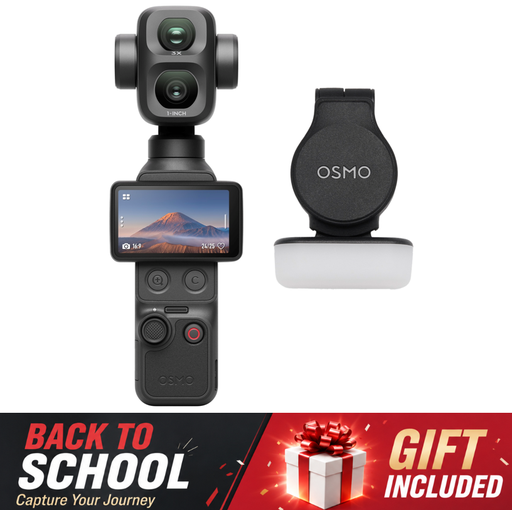
Osmo Pocket 4P Standard Combo, black
The product name identifies this as an Osmo Pocket 4P Standard Combo. Check whether its focusing is suitable for the floral details you want to capture.
The product description warns against exposing the camera to moisture.
Joybuy
 No image available
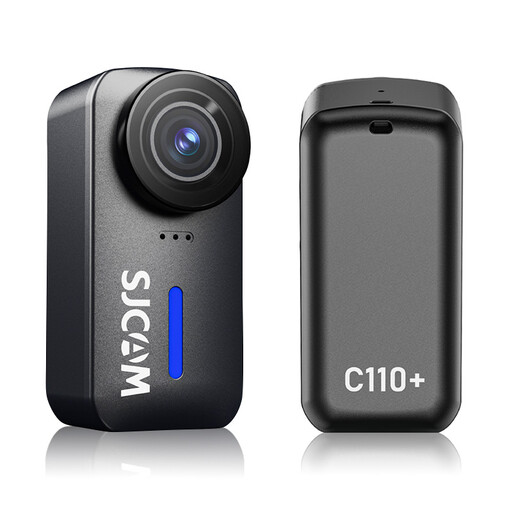
SJCAM C110+ 4K action camera
According to the product name, this action camera has a 170° ultra-wide-angle lens. Check whether it can focus on flowers at close range.
The product name specifies 20 MP photos and an f/1.8 aperture. The stated waterproof rating of up to 30 m applies when using the supplied housing.
Joybuy
Frequently asked questions
Is a short focusing distance the same as 1:1 macro?
No. The focusing distance tells you how close a camera can focus; magnification describes how large the subject appears on the sensor. Compare both specifications for the specific lens or macro mode.
Which lens do I need for floral details with a mirrorless camera?
Check the mount and the maximum magnification of the specific lens. Canon states that the RF 85mm F2 Macro IS STM is compatible with the EOS R50 and achieves up to 0.5× magnification; Nikon specifies a maximum magnification of 1:1 for the Z MC 50mm f/2.8. These are lens specifications, not features of the camera body alone.
How can I take a sharp photo of a flower in the shade?
Focus on the floral detail you want to show and assess whether there is enough available light. The Consumers’ Association notes that the lens and sensor work together to determine image quality, and that low light can affect it. If you use support or stabilisation, also bear in mind that the flower may move.
Can I leave the path to take a photo in the woods?
It depends on the area. Staatsbosbeheer states that most of its areas can only be accessed via roads and paths, with some local exceptions. Check the signs at the entrance; this does not mean that the same rules apply to every woodland route in the Netherlands.
What should I check after a wet woodland walk?
Follow the cleaning and drying instructions for your exact camera model, and check the stated protection for your complete kit, including the lens. OM SYSTEM describes the TG-7 as water- and dust-resistant; this does not mean that every mirrorless camera or attached lens has the same protection.
Can I return a camera bought online if I don’t like the controls?
According to ACM ConsuWijzer, online consumer purchases generally come with a statutory cooling-off period of up to 14 days after delivery, subject to exceptions. Check the conditions for trying the camera carefully and returning it before you use it.


