
The quick skyline photographer
You only have a short time at a viewing spot and want to frame your shot without changing lenses. Compare the built-in zoom and check the wide-angle view from the distance you’ll actually be shooting at.


If you want to take photos quickly without having to fit a lens on location, start by looking at a compact camera and check that its built-in lens offers a wide enough field of view from your chosen spot. A mirrorless camera is a better fit if you want to use a different lens or expand your options later, but take it with the right lens already fitted. Image stabilisation helps reduce camera shake, not movement from passing ships or a boat rocking beneath you.
You only have a short time at a viewing spot and want to frame your shot without changing lenses. Compare the built-in zoom and check the wide-angle view from the distance you’ll actually be shooting at.
You want to capture the entire harbour skyline in one shot from a fixed position, and a wide field of view matters more to you than extra telephoto reach. An interchangeable wide-angle lens could be an option if the standard lens isn’t wide enough.
You also take photos at dusk or in changeable weather and want to know what stabilisation and weather protection the exact camera-and-lens combination offers.
First, check whether the built-in lens gives you the framing you want from your chosen position. Then consider how much flexibility you need to use other lenses and how the camera performs in low light.
| What to consider | What to check before buying | Who is this more important to? |
|---|---|---|
| Ready to shoot quickly | Check whether the kit includes a lens and whether you can switch on, frame your shot and zoom quickly from your chosen spot. | If I only have a short time at a viewing spot, I want to start shooting straight away without fitting a lens first. Around 33% of consumers prioritise being ready to shoot quickly. |
| Capturing the whole skyline | Compare focal lengths on the same full-frame equivalent basis and check your framing from the distance you plan to shoot at. | When I want to capture the entire harbour skyline from a fixed position, the widest field of view is the deciding factor. Around 27% of consumers prioritise having a sufficiently wide field of view. |
| Sharpness in low light | Check the maximum aperture at the zoom setting you’ll use and whether stabilisation is built into the camera or lens. | I want to take handheld photos at dusk, so I pay attention to camera shake and the zoom setting I’m using. Around 20% of consumers prioritise taking photos in low light. |
| Using different lenses later | Check what’s included in the kit and the lens mount; a separate wide-angle lens may mean an additional purchase. | If I want to use a different field of view later, the option to change lenses matters to me. Around 20% of consumers prioritise having a choice of lenses in the future. |
When you want to capture the whole skyline, the widest field of view may be what matters most; zooming in further narrows your framing.
Compare wide-angle views using full-frame equivalent focal lengths and check your framing from a permitted photography spot.
Kit contents vary between mirrorless cameras. A wide-angle lens you want isn’t necessarily included in a standard kit.
Check which lens comes with the exact kit before comparing a camera body with a complete set.
You may need to buy a suitable lens separately; the kit you choose determines what else you’ll need to purchase.
Stabilisation is designed to reduce camera shake, but it won’t freeze a moving ship or compensate for a shooting position that’s rocking beneath you.
When you’re on location, also consider how your subject is moving and whether you can stand still safely.
A camera’s specifications don’t change the rules on access or photography. The Port of Rotterdam Authority sets photography conditions for the harbour, which vary by location.
Check the rules for your specific shooting location before choosing your camera or setup.
The RX100 VII is a compact camera with a built-in zoom, designed for anyone who wants to capture both a wide view and a cropped shot without changing lenses.
Canon offers both compact cameras with built-in zooms and mirrorless cameras where your choice of lens determines the field of view.
The GR IV is designed for photographers who deliberately choose a single, fixed wide-angle field of view.
The Z50II kit with standard zoom is a mirrorless option for anyone who wants to take their camera with the lens already fitted.
The OM-5 Mark II with 12-45 mm F4.0 PRO lens kit is a mirrorless option for anyone who also needs to consider changeable weather.
This selection includes compact cameras and a mirrorless camera with a 16–50mm zoom lens, according to the product name. For each model, check whether its field of view is suitable for capturing the whole skyline from your chosen position.
 No image available
The product name describes a pocket gimbal camera for photography; check whether its fixed camera format and field of view suit the skyline framing you want.
The product name lists a 1-inch CMOS sensor, 3-axis stabilisation, 2× lossless zoom and a 2-inch rotating screen.
 No image available
The built-in zoom can be useful if you want to reframe your shot from a single position; first check that the wide-angle setting captures the whole harbour skyline.
The product name lists 12× optical zoom.
 No image available
This pocket camera is described in the product name as being for photography and video; check whether its field of view is suitable for the panorama you want.
The product name lists a 1-inch CMOS sensor, 3-axis stabilisation, fast focusing and a 2-inch rotating touchscreen.
 No image available
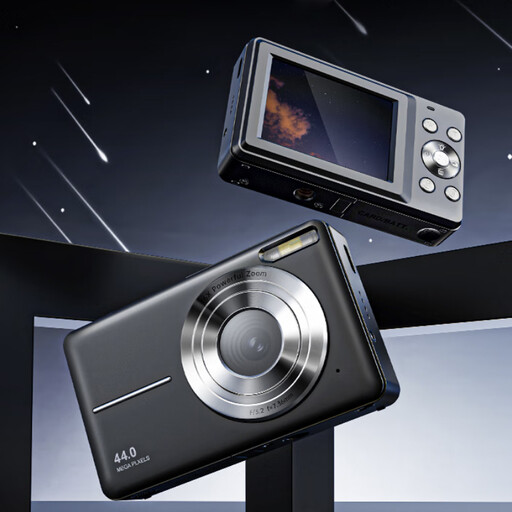
A pocket camera could be a good choice for a quick setup; check whether the wide-angle setting gives you the skyline framing you want.
The product name lists 4K, 44MP and 16× zoom, but doesn’t specify whether the zoom is optical or digital.
 No image available
This mirrorless camera kit could be a good fit if you want to take it with the lens already fitted and consider using other lenses in the future.
The product name lists a 16–50mm zoom lens. Check whether the wide-angle end offers a wide enough field of view from your chosen spot.
No, it depends on how far away you are from the skyline and the framing you want. According to Sony Netherlands and Canon Netherlands, the zoom compact cameras mentioned start at 24 mm in full-frame equivalent terms; Ricoh lists around 28 mm for the GR IV. If that isn’t wide enough from your chosen spot, you could consider the separate RF-S 10-18mm ultra-wide-angle lens for a compatible Canon EOS R camera with an APS-C sensor.
Not necessarily. Image stabilisation is designed to reduce camera shake and can be useful when a tripod isn’t practical. At dusk, movement from a ship or a shooting position that’s rocking beneath you can still be an issue, as stabilisation won’t eliminate that movement.
Check which lens actually comes with the kit and fit the lens you want to use at your shooting location before you set off. Nikon Netherlands lists the 16-50mm VR lens in the Z50II kit; Canon Netherlands lists the RF-S 18-45mm lens in the EOS R50 kit. Also make sure your battery and memory card are ready.
Compare the cost of a complete kit with that of a camera body and a separate lens. According to ACM ConsuWijzer, if a product is faulty, you’re entitled to a legal guarantee through the retailer; the manufacturer’s warranty period doesn’t automatically determine how long that right applies. Online purchases generally come with a 14-day cooling-off period; check the terms that apply.