
Photographers of light and reflections
You want to capture bright skies, leaves and dark façades in a single canal-side image, and set the exposure with care. Nikon describes exposure bracketing as a way to capture different brightness levels.


For a walk where you want to frame shots quickly without changing lenses, a compact camera with a fixed zoom lens suits this way of working. A mirrorless camera gives you more choice of lenses, but you’ll need to consider the weight and size of the complete kit. In changeable daylight, exposure settings and the right lens matter: Nikon explains exposure bracketing for scenes with different brightness levels, while moving leaves or water can make combining images more difficult.
You want to capture bright skies, leaves and dark façades in a single canal-side image, and set the exposure with care. Nikon describes exposure bracketing as a way to capture different brightness levels.
You switch between a wide view of a row of trees and close-up details. The Consumers’ Association recommends considering the zoom range when choosing a camera; with a mirrorless camera, the lens and desired angle of view also matter.
You want a camera that’s easy to carry and lets you take photos quickly as you walk. The Consumers’ Association lists size and ease of use among the points to consider when choosing a camera.
First decide whether you’d rather take one camera with a fixed zoom lens or have the option to choose between lenses. Then compare the exposure options, angle of view, weight of the complete kit and protection that suit the way you’ll use it.
This table is for consumers looking for a camera to photograph autumn trees along Dutch canals; each row describes a different main buying priority.
| What to consider | What to look for when buying | Who is this important for? |
|---|---|---|
| Exposure in changing light | Check RAW, exposure compensation and, if you want to use this technique, exposure bracketing on the exact model. | If I want to capture both a bright sky and dark riverbanks well, I look at how much control I have over the exposure. Around 36% of consumers make exposure their top buying priority. |
| Angle of view and zoom | Compare the wide-angle and telephoto settings of the supplied lens, and check the lens mount if you’re buying a mirrorless camera. | If I want to switch between a wide view of a row of trees and close-up details, lens choice is a major consideration. Framing comes first for around 29% of consumers. |
| Portability | Compare the weight and dimensions of the complete camera-and-lens kit, not just the camera body. | On a walk, I want to take a camera that suits the way I stop to take photos. Around 21% of consumers give portability top priority. |
| Protection in wet weather | Read the usage limits for the exact camera body and lens; check that any rain protection is suitable for both. | If I want to take photos in wet autumn weather too, I look at how I can protect my equipment. For around 14% of consumers, protection from the elements is the top priority. |
The camera body isn’t the only thing that determines how much of a row of trees fits in the frame; the lens you use and its angle of view matter too.
Check the exact kit contents, lens mount and angle of view before comparing complete kits. A suitable lens, memory card or spare battery may be part of the overall equipment you need.
Stabilisation helps with camera shake. Moving leaves can still come out blurred with a slow shutter speed.
In windy conditions, consider the shutter speed and the lens’s maximum aperture as well as stabilisation.
A polarising filter can reduce reflections on water, but the reflection of autumn trees may be the subject of your photo.
First decide whether you want to keep the reflection, then check that the filter fits the lens you’ve chosen. A compatible polarising filter is a separate purchase.
Canon describes the EOS R50 as an APS-C mirrorless camera and lists the EOS R7 as a landscape option with a panorama function and built-in stabilisation. These are different models.
The Nikon Z5II is a full-frame option for anyone looking for a mirrorless camera with built-in stabilisation. Nikon also explains exposure bracketing for high-contrast scenes.
Sony offers several camera options: the RX100 VII with a fixed zoom lens and the α6700, an APS-C mirrorless camera with interchangeable E-mount lenses.
The X-T5 is a mirrorless camera for anyone who places a strong emphasis on framing and direct control over photographic settings.
This Joybuy selection includes pocket and compact cameras, as well as Sony cameras with interchangeable lenses. For each model, check that the supplied lens and controls suit taking still photos of autumn scenes along the canal.
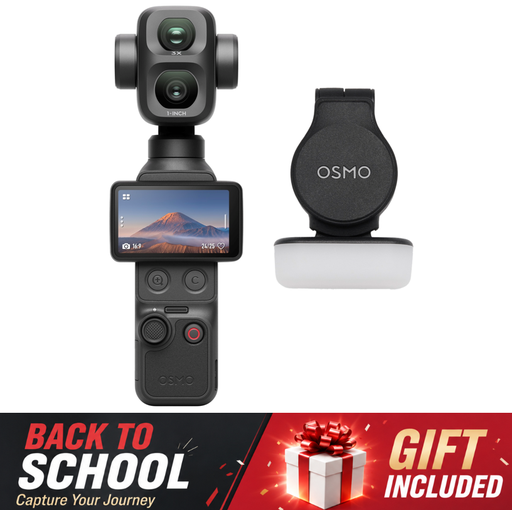 Image unavailable
The product title describes a pocket camera; check that its controls and angle of view suit photographing trees and reflections.
Version: Standard Combo, Black.
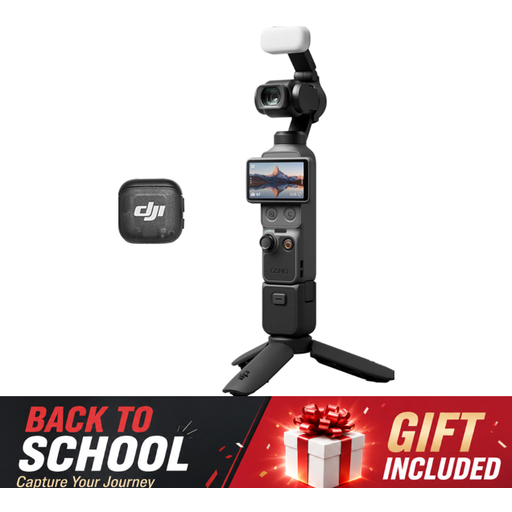 Image unavailable
This pocket camera could suit anyone looking for a small camera to take on a walk; check that its still photography features meet your needs.
The product title lists a 1-inch CMOS sensor, 4K/120fps video and 3-axis stabilisation.
Version: Creator Combo; the title also mentions an included microphone.
 Image unavailable
The product title describes a point-and-shoot camera; check that the wide-angle view and zoom suit both a wide row of trees and close-up details.
The title lists 56MP, 5K and 10× optical zoom.
The title mentions front and rear cameras.
 Image unavailable
This kit with an interchangeable lens could suit anyone who wants to switch between wider framing and close-up details while taking photos.
Kit with 16–50mm zoom lens.
 Image unavailable
The supplied zoom lens gives you framing options; check that its range suits the spots where you’ll be taking photos along the canal.
Kit with 16–50mm f/3.5–5.6 OSS II lens.
Check the exposure where you’re taking the photo. If the scene is mostly still, you can take shots at different exposures and combine them later, if your camera supports it. Moving leaves and water can make this more difficult.
That depends on whether you choose a body on its own or a kit with a lens. For the Canon EOS R50, Canon lists RF and RF-S lenses as compatible; the angle of view you get depends on the lens you actually use.
Follow the care instructions for your camera and lens before putting your equipment away. Don’t rely solely on a general claim about weather resistance: Canon’s published usage limits for the EOS R50 include humidity, among other things, but that doesn’t make the body waterproof.
Contact the seller. ACM ConsuWijzer explains that your statutory guarantee rights apply in addition to any manufacturer’s warranty, and that the seller must provide an appropriate free solution if a product is faulty. There isn’t simply one fixed statutory guarantee period for every camera.
First consider the privacy rules that apply to the specific use. According to the Dutch Data Protection Authority, identifiable people in images count as personal data. The exception for personal or household use applies when you keep the image private or share it with a very limited group; it doesn’t automatically apply to public posts.