
For atmospheric, dark-background shots
You mainly photograph full plates or table settings and want to direct light onto the crockery without losing the dark atmosphere. Canon Netherlands explains the role of lighting in food photography.


For full plates and table settings, a compact camera with a fixed zoom lens may be enough. For small details such as glaze or maker’s marks, a mirrorless camera with a suitable close-up or macro lens is often the more practical choice. When photographing crockery against a dark background, controlled lighting and a stable setup are just as important: a different camera body won’t replace them. So check the included lens, focusing options and overall kit before you choose. Canon Netherlands explains how controlled lighting can preserve a dark atmosphere.
You mainly photograph full plates or table settings and want to direct light onto the crockery without losing the dark atmosphere. Canon Netherlands explains the role of lighting in food photography.
You want to capture glaze, rims or small maker’s marks up close. Focusing distance and your choice of lens both play a part; Canon Netherlands discusses both macro photography and wider overhead shots.
You photograph different pieces and want to reproduce the colour and framing from shot to shot. A consistent camera and lighting setup helps you keep your approach uniform across a series.
Choose this if: you mainly photograph full plates or small table settings and don’t want to change lenses.
Bear in mind: you can’t replace the fixed lens with a separate macro lens later.
Choose this if: you want to switch between wide shots and angled views, with the option to choose a different lens later.
Bear in mind: a standard zoom isn’t automatically a macro lens; you may need an additional lens for small details.
Choose this if: you often need to capture small details, such as maker’s marks or glaze, close up.
Bear in mind: an additional lens means another purchase, and the working distance may affect where you can place your light.
| What to consider | What to look for | Who is this important for? |
|---|---|---|
| Controlled lighting and stability | Check whether you can set the exposure manually and position the camera securely; also leave enough room for a light source. | If I want the crockery to remain visible without losing the dark atmosphere, I prioritise lighting and stability. Around 33% of consumers put this combination first. |
| Small details | Compare the magnification and working distance of the exact lens, and check that it fits your camera’s mount. Nikon lists 1:1 magnification for the Z MC 50mm f/2.8; Sony lists 1:1 for the E 30mm F3.5 Macro. The minimum working distance for that Sony lens is 2.4 cm from the front of the lens, according to Sony Netherlands. | If I want to fill the frame with small maker’s marks or glaze, I look at the lens and how much room will be left for lighting. Around 27% of consumers prioritise detailed shots. |
| Consistent colour and framing | Check that the exact camera model supports RAW shooting and offers white balance and exposure settings; also make sure the lens suits the space available on your table. | When photographing several pieces of crockery, I want to keep the colour and framing as consistent as possible. Around 20% of consumers prioritise consistent series. |
| Simplicity and overall kit | Check what’s included in the kit and whether the supplied lens can handle your smallest subject; factor in any additional lens and a stable setup when making your choice. | If I want to get started with everything I need and avoid unnecessary lens choices, I weigh ease of use against the option to expand. Around 20% of consumers prioritise simplicity and the overall kit. |
A mirrorless camera with a standard zoom doesn’t automatically give you a macro setup. The Nikon Z50II kit includes a 16-50mm zoom; Nikon lists the Z MC 50mm f/2.8 as a separate macro lens.
Start with the smallest subject you want to photograph, then assess the camera body and a suitable lens together.
For small details, you may need a separate, compatible macro or close-up lens.
The position and direction of the light affect how the crockery and background appear in the shot. When photographing crockery that isn’t moving, a stable setup can give you the option of using a slower shutter speed and lower ISO; Canon Netherlands describes using a tripod for this.
Plan where to position the camera, light and background before treating camera features as a solution for the whole setup.
The minimum working distance for the Sony E 30mm F3.5 Macro is 2.4 cm from the front of the lens, according to Sony Netherlands. When you’re this close to the subject, there may be limited space for lighting beside reflective crockery.
Check the working distance of the specific lens and consider where you can position your light source next to the subject.
Sony describes the ILCE-6400 version ILCE6400AB.CEC as body only. So the presence of a camera body doesn’t mean that a lens is also included in the box.
Read the exact list of what’s in the box and check which lens you still need. Report any fault to the seller; according to the Government of the Netherlands, there is no fixed statutory guarantee period in the Netherlands, and your protection depends on what you can reasonably expect from the product.
The Canon models discussed include both mirrorless cameras with interchangeable lenses and a compact camera with a fixed zoom lens.
The Z50II kit discussed pairs an interchangeable Z mount with a standard zoom lens.
The α6400 discussed has an E mount; Sony documents separate lenses for different image sizes.
The X-S20 is a mirrorless camera with RAW shooting and in-body image stabilisation.
The Lumix G97 is a Micro Four Thirds mirrorless camera with a tilting screen and a lens you choose separately.
This selection includes cameras described in their product titles as being for photography or vlogging. For crockery against a dark background, it’s also important to assess the lens, focusing options and space for a stable setup with controlled lighting.
 No image available
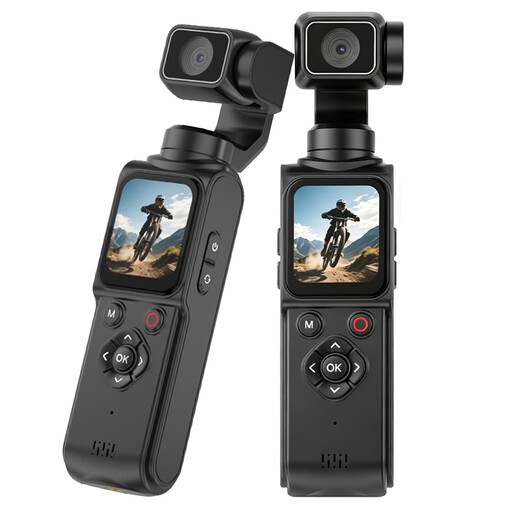
The product title describes this model as a mini vlog camera; for crockery photography, check whether the lens and focusing options suit your subjects.
The title lists 64 MP, a 330° rotating lens, a 1.72-inch touchscreen, Wi-Fi, Type-C and a tripod.
 No image available
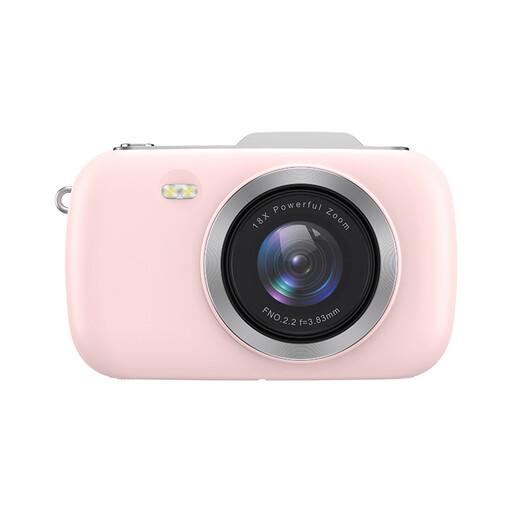
The product title describes this as a portable point-and-shoot camera; check whether the lens is suitable for the crockery shots you want to take.
The title lists 80 MP, 4K and 18× zoom. These are product claims, not the result of an independent performance test.
 No image available
The product title lists photography as one of its uses; for small details on crockery, also check this model’s focusing options.
The title lists 12× optical zoom, 4K, Wi-Fi and 64 MP. These are product claims, not the result of an independent performance test.
 No image available
The product title focuses on vlogging and video. If you mainly want to take still photos of crockery, check whether the photo features suit that purpose.
The title lists a 1-inch CMOS sensor and 4K/120fps video.
 No image available
The product title describes this model as a video camera for uses including vlogging. Check whether its still-photo features suit your crockery setup.
The title lists a 1-inch CMOS sensor, 4K/120fps video and a 2-inch rotating touchscreen.
Not necessarily. If the crockery isn’t moving and you can position the camera securely, a slower shutter speed may give you the option of using a lower ISO. Canon Netherlands describes using a tripod for this; first direct the light onto the crockery, then consider whether the camera or lens is still a limitation.
Not necessarily. Check how close the lens can focus and how large the detail will appear in the frame. For very small details, you could compare suitable macro lenses; Nikon and Sony list 1:1 magnification for the macro lenses mentioned.
Keep the camera and lighting in the same positions, and set the exposure and white balance deliberately. If you want to adjust colours afterwards, check that the exact camera model supports RAW shooting.
Report the fault to the seller. According to the Government of the Netherlands, there is no fixed statutory guarantee period in the Netherlands; what matters is what you can reasonably expect from the product. A manufacturer’s guarantee is in addition to your statutory rights.
For an ordinary online consumer purchase, you generally have a statutory cooling-off period of 14 days after delivery. The applicable terms and conditions may be relevant; this statutory cooling-off period is different from a longer returns period offered voluntarily.