
Photographers focusing on leaf details
You want to capture veins, dew or small parts of a leaf in close-up. The close-focusing capabilities of the specific camera and lens combination will influence your choice.


If you want to photograph leaf details on a walk without changing lenses, consider a compact camera and check whether its close-focusing capabilities give you the framing you’re after. A mirrorless camera is a better fit if you want to choose your own lenses; compare the weight of the complete setup, the lens included and the protection offered for both camera and lens.
You want to capture veins, dew or small parts of a leaf in close-up. The close-focusing capabilities of the specific camera and lens combination will influence your choice.
You want to switch between photographing the path and the leaves as you go, without carrying unnecessary kit. Size and zoom range are worth considering.
You head out even when it’s raining and want to know what protection is specified for both the camera and the lens.
Best for: anyone who wants to take photos quickly on a walk without changing lenses.
Trade-off: your lens choice is fixed, so check whether the close-focusing capabilities and framing suit the details you want to capture.
Best for: anyone who wants to choose a lens for different subjects and framing.
Trade-off: a camera body isn’t a complete setup; factor the lens into the carrying weight and check the protection offered by your chosen combination.
| What to consider | What should you check? | Who should consider this most? |
|---|---|---|
| Close-up leaf details | Check the minimum focusing distance, magnification and framing you want from the specific camera and lens. | If you want veins or dew to fill the frame, the actual level of detail matters more than the word ‘macro’ alone. Around 33% of consumers make leaf details their top priority. |
| Weight on the go | Compare the weight of the complete setup, including the lens and anything else you want to take with you. | If you want to grab your camera quickly during a walk and keep your kit light, pay particular attention to the total weight. Carrying comfort comes first for around 25% of consumers. |
| Shade in the forest | Check the exposure and stabilisation options of the specific model and lens. | If you mainly photograph still leaves beneath a dark canopy, consider how you can control exposure and camera movement. Forest light is the main consideration for around 25% of consumers. |
| Rain protection | Check the protection offered for both the camera body and your chosen lens. | If you often take photos in wet weather, find out what protection applies to the complete combination. Around 17% of consumers prioritise protection from rain. |
The stated weight of the Canon EOS R50, approximately 375 g, applies to the black body with battery and card. The lens is extra, according to Canon Netherlands.
Compare the weight and contents of the complete setup you actually plan to take with you.
The minimum focusing distance alone doesn’t tell you how large a small part of a leaf will appear in the frame.
Check the maximum magnification of the specific lens and whether the framing works for you; a test shot can help.
A protection rating for a camera body doesn’t automatically tell you anything about the protection offered for the lens you attach to it.
Check the specifications for both the body and your chosen lens before taking photos in wet weather.
The Tough TG-7 has a fixed lens and a microscope mode; the OM-5 Mark II is a mirrorless camera for anyone who wants to choose their own lenses.
The EOS R50 is an APS-C mirrorless camera for anyone who wants to choose a lens to suit the subject.
The Z50II is available with, among other options, an NIKKOR Z DX 18-140mm VR zoom lens; a 16-50mm VR zoom is another lens option.
The RX100 VII is a compact camera with a fixed zoom lens equivalent to 24–200 mm, giving you different framing options without changing lenses.
These Joybuy cameras are suited to photography on the go or changing your framing. Check whether each model’s lens, controls and stated features suit close-up photography of autumn leaves.
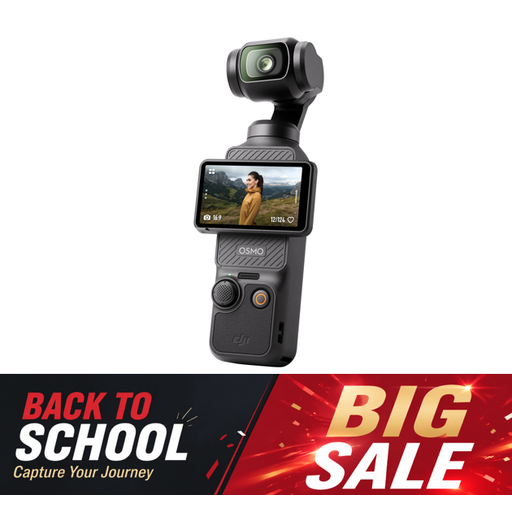 Image unavailable
The product name positions this model as a vlogging camera; if photography is your main goal, check whether its features are suitable for still photos of leaves.
The product name lists a 1-inch CMOS sensor, 4K/120fps video, 3-axis stabilisation and a 2-inch rotating touchscreen.
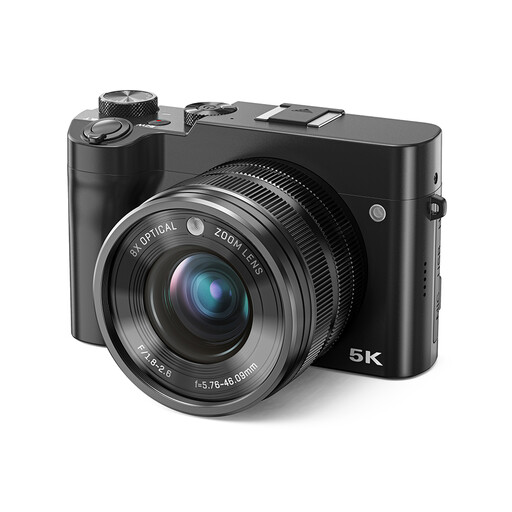 Image unavailable
The stated zoom may be useful if you want to frame subjects at different distances on a walk; check whether the focusing and close-up framing suit your subject.
The product name lists 8× optical zoom, 5K, 64MP and a dual lens.
 Image unavailable
A mirrorless camera supplied with a zoom lens may suit you if you want different framing options on a walk; check whether the lens is suitable for the close-ups you want to take.
The product name lists a 16-50mm zoom lens. A compatible SD card is required; check whether one is included with the kit.
 Image unavailable
The supplied zoom lens can be useful for changing your framing on the go; check its close-focusing capabilities for small leaf veins.
The product name lists a 16-50mm f/3.5-5.6 OSS II lens. The product description warns against exposing the camera to rain or moisture.
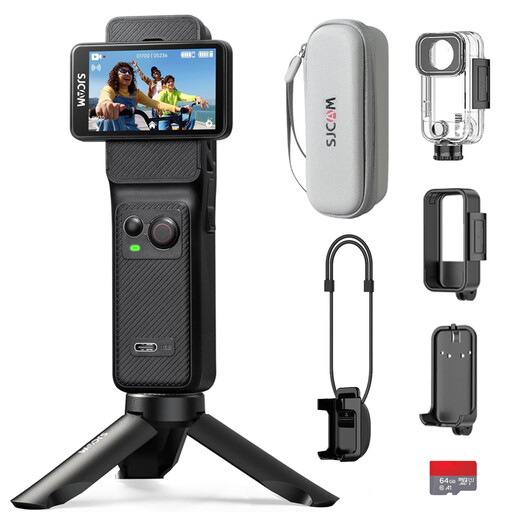 Image unavailable
If you’re considering an action camera for taking photos on the go, check whether its controls and photo modes suit the way you like to photograph leaves.
The product name lists an accessory kit and a 64GB card. The camera body itself isn’t waterproof; the supplied waterproof housing is required for use in water. This isn’t a general rain-protection rating for use on a forest walk.
You can’t tell from the term ‘kit zoom’ alone. Nikon gives the NIKKOR Z DX 16-50mm VR a minimum focusing distance of 0,2 m, but that doesn’t tell you how large a vein will appear in the final image. Check the maximum magnification of the specific lens or take a test shot.
Start by holding the camera steady and checking the exposure and shutter speed. For a still subject, you can also use a support or tripod; landscape photographer Bas Meelker recommends using a tripod and choosing your shutter speed carefully for autumn photography. Moving leaves are a separate source of movement.
Follow the manufacturer’s instructions for your specific camera model and chosen lens; don’t assume every combination offers the same water protection. OM SYSTEM publishes different protection ratings for the fixed-lens TG-7 and the OM-5 Mark II body.
No, your statutory guarantee already applies when you buy the camera. According to the Dutch government, the retailer must provide a solution if a product is faulty. Consider what additional rights an extended warranty actually gives you.
Check the signs and rules for the nature reserve before leaving the path; Staatsbosbeheer points out that local rules may apply. Publishing a photo of recognisable people may raise privacy issues, as explained by the Dutch Data Protection Authority. These sources don’t give general permission to leave paths or publish images of identifiable people.