Who is this buying guide for?

Photographers looking to capture fine details

If you want to show ridges, patterns or small imperfections clearly, compare the magnification and the space in front of the lens for lighting. OM Digital Solutions describes the OM SYSTEM Tough TG-7 as having a mode for shooting from as close as 1 cm; Nikon specifies 1:1 magnification for the NIKKOR Z MC 50mm f/2.8.

Photographers with little room to capture the whole shell

If you want the whole shell to fit clearly in the frame, while still being able to capture details, the framing from the available camera-to-subject distance matters. Canon specifies different minimum focusing distances at wide-angle and telephoto for the PowerShot G7 X Mark III.

Photographers who want consistent shell photos

When photographing several shells, you may want to consider consistent framing, recognisable colours and enough sharpness across the surface. Nikon describes focus stacking as combining photos taken with different focus points; Canon explains white balance settings for difficult lighting conditions.

What should you look for when choosing?

Compact camera with a close-up mode

Ideal for: anyone who wants to capture small details with a single camera and fixed lens. OM Digital Solutions describes the Tough TG-7 as capable of shooting from as close as 1 cm; Ricoh Imaging lists a digital microscope mode from 1 cm and six macro LEDs for the PENTAX WG-90.

Bear in mind: the stated shooting distance does not tell you how much room you will have for lighting or whether a larger shell will fit entirely in the frame.

Compact camera for wide shots and close-ups

Ideal for: anyone who switches between a full view and close-up details. Canon specifies a minimum focusing distance, measured from the front of the lens, of 5 cm at wide-angle and 40 cm at telephoto for the PowerShot G7 X Mark III.

Bear in mind: the minimum focusing distance varies with the zoom setting, so check whether you can achieve the framing you want on your table.

Mirrorless camera with your chosen lens

Ideal for: anyone who wants to choose lenses for different types of framing. Canon states that the EOS R50 supports RF and RF-S lenses; Nikon specifies 1:1 magnification for the Z MC 50mm f/2.8 on a compatible Z camera.

Bear in mind: according to Canon, the RF-S 18-45mm kit zoom achieves a maximum magnification of 0.14–0.26×, depending on the setting and focusing method. Check which lens comes with the camera and whether there is room for lighting.

What to consider What should you check? Who is this important for?
Fine details Compare the maximum magnification, the setting it applies to and the working distance from the front of the lens. If small ridges are your main focus, you’ll want to know how much room there is in front of the lens for lighting. Around 33% of consumers say fine details are their top priority.
The whole shell in the frame Measure the shell and the available camera-to-subject distance; try the framing you want at the relevant zoom settings. If the whole shell needs to be clearly visible on a small table, the angle of view from your shooting position matters. Around 27% of consumers prioritise the full view.
Sharpness and colour Check the white balance and focusing options, and whether there is room on the table for a tripod and lighting. For textured shells and repeat photo sessions, you’ll want consistent framing and recognisable colours. Around 20% of consumers say consistent sharpness and colour are their main reason for choosing.
Complete kit Check exactly what is included and whether you need a different lens or extra support for the details you want to capture. If you prefer to work with one manageable set-up, it’s worth checking whether the fixed lens suits your plans. Around 20% of consumers prioritise a simple, complete kit.

Common pitfalls

  • Confusing the minimum focusing distance with the space in front of the lens

    The distance may be measured from the sensor, so it doesn’t necessarily tell you how much room there is between the lens and the shell. Sony specifies a focusing distance of 9.5 cm from the sensor for the SEL30M35, and a working distance of 2.4 cm from the front of the lens at maximum magnification.

    Check the reference point and working distance for the exact lens. If needed, draw the camera, shell and light source to scale on the table.

  • Assuming every mirrorless camera kit offers 1:1 macro straight away

    A mirrorless camera body and its supplied lens are separate parts of the decision. Canon specifies a maximum magnification of 0.14–0.26× for the RF-S 18-45mm kit zoom, depending on the setting; Nikon lists 1:1 for the separate Z MC 50mm f/2.8 lens.

    Compare the magnification of the lens you’re actually buying with the smallest details you want to photograph.

    You may need a separate, compatible macro lens to achieve higher magnification.

  • Assuming a close-up mode also gives you the best framing for the whole shell

    The closest focusing setting and the framing for the whole shell are two different things. For the Canon PowerShot G7 X Mark III, Canon lists 5 cm at wide-angle and 40 cm at telephoto, measured from the front of the lens.

    Take separate test shots of the whole shell and a detail, using zoom settings and distances that work on your table.

Camera brands to compare

OM SYSTEM

The Tough TG-7 is a compact camera with a fixed lens and a mode for taking photos at very close range.

  • OM Digital Solutions says in the manual that this specific mode can shoot from as close as 1 cm.
  • That distance doesn’t indicate how much room there is for lighting or how a larger shell will fit in the frame.

PENTAX

Ricoh Imaging describes the WG-90 as having a digital microscope mode and built-in macro LEDs.

  • Ricoh Imaging specifies a shooting distance from 1 cm and six macro LEDs for this model.
  • Check the set-up and lighting with your own shell; these features alone don’t determine the colour reproduction of every photo.

Canon

The PowerShot G7 X Mark III is a compact alternative; the EOS R50 offers a choice of compatible RF and RF-S lenses.

  • Canon specifies a minimum focusing distance, measured from the front of the lens, of 5 cm at wide-angle and 40 cm at telephoto for the G7 X Mark III.
  • The specifications for the RF-S 18-45mm kit zoom don’t automatically apply to other Canon lenses; this zoom’s maximum magnification depends on the setting and focusing method.

Nikon

The NIKKOR Z MC 50mm f/2.8 is a separate macro lens for a compatible Nikon Z camera.

  • Nikon specifies 1:1 magnification and around 5 cm between the front of the lens and the subject when focusing at very close range.
  • A camera body isn’t included with a standalone lens; leave room for lighting when working at the short working distance.

Sony

The E 30mm F3.5 Macro SEL30M35 is a separate 1:1 macro lens for a compatible Sony E-mount camera.

  • Sony specifies a focusing distance of 9.5 cm from the sensor.
  • At maximum magnification, the working distance from the front of the lens is 2.4 cm; don’t confuse this with the focusing distance.

Cameras at Joybuy

This selection includes compact cameras, action cameras and a pocket camera for photography. For shell photography, check that the camera can focus closely enough from your table and capture the framing you want; a compact size or rotating lens doesn’t in itself indicate macro magnification.
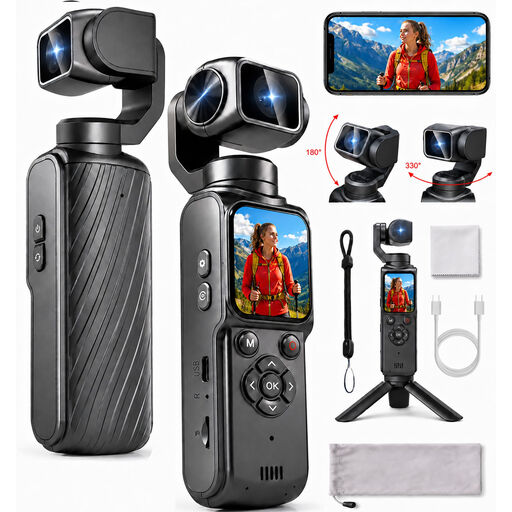
4K action camera with a 330° rotating lens and 1.72-inch touchscreen

4K action camera with a 330° rotating lens and 1.72-inch touchscreen

The product title describes a compact camera for vlogging with a rotating lens; check the focusing distance and framing you want for still photos of shells.

Joybuy
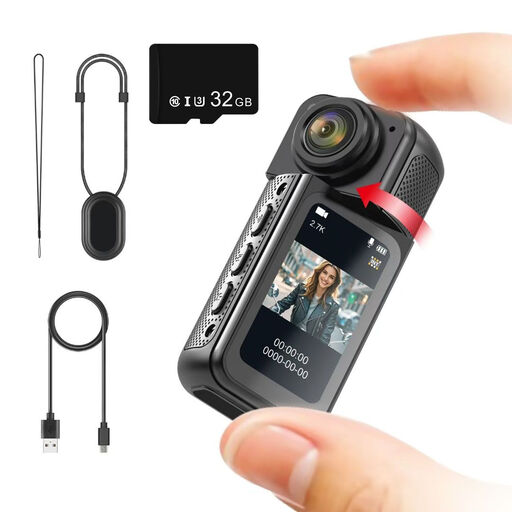
NAXSIR Mini Action Camera 2.7K with a 180° rotating lens and 32GB memory card

NAXSIR Mini Action Camera 2.7K, 180° rotating lens, magnetic mount, 1.47-inch IPS screen and 32GB memory card

The product title describes a mini action camera with a rotating lens and a memory card included; check whether the minimum focusing distance suits the size of your shells.

Joybuy
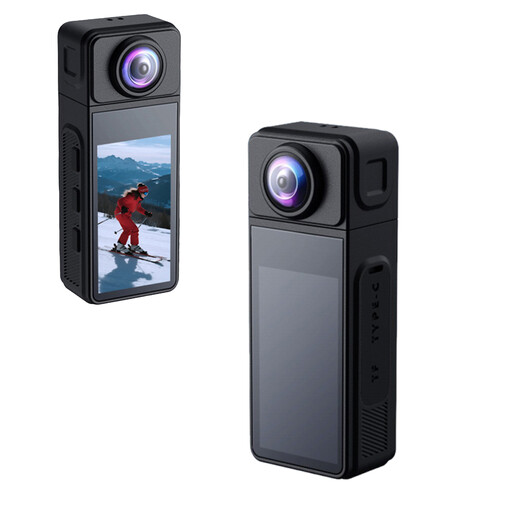
NAXSIR 2K Mini Action Camera with a 270° rotating wide-angle lens

NAXSIR 2K Mini Action Camera with a 270° rotating wide-angle lens

The product title describes this model as a mini action camera with a rotating wide-angle lens; take a test shot and check the focusing distance for shell close-ups.

Joybuy

DJI Osmo Pocket 4 Standard Combo with a 1-inch CMOS sensor and 2× zoom

DJI Osmo Pocket 4 Standard Combo, 1-inch CMOS sensor, 2× zoom and 107GB built-in storage

The product title describes a pocket gimbal camera with zoom; check that the close-up distance and framing you want are suitable for photographing shells on your table.

Joybuy
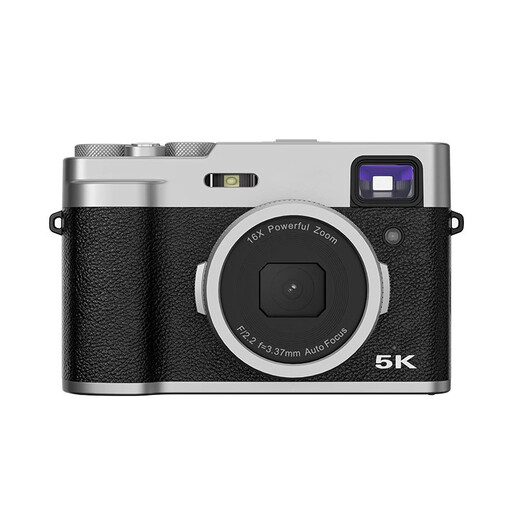
Songdian digital camera with 48MP, autofocus and 5K video, black

Songdian digital camera, 48MP, autofocus, 5K, 2.8-inch LCD screen and optical viewfinder, black

The product title lists autofocus and an optical viewfinder; check the minimum focusing distance and framing before choosing this model for small shell details.

Joybuy

Frequently asked questions

Is a focusing distance of 1 cm automatically better on a small table?

No, not necessarily. Check which camera mode the distance applies to, how much room there is in front of the camera for lighting and whether the whole shell fits in the frame from your position.

How can I get more of a deeply textured shell in focus?

Adjust the focus and aperture settings, then take some test shots. If a single photo doesn’t give you the depth of field you want, you can combine a series of photos taken with different focus points. Check whether your camera supports this and what post-processing is required. Nikon describes this technique as focus stacking.

How can I keep shell colours and framing consistent between shots?

Keep the lighting set-up as consistent as possible, check the white balance under the lighting you’re using, and consider using a tripod to repeat the framing. Start with a test shot of a light-coloured shell.

What are my rights as a consumer when buying a camera online from a business in the Netherlands?

According to the Dutch government, distance purchases usually come with a 14-day cooling-off period, although you should check which exceptions apply. You’re also entitled to a product that meets reasonable expectations. The Dutch government explains that the Netherlands has no fixed statutory guarantee period: what you can expect from a product depends, among other things, on the product and the information provided at the time of sale. These consumer rules don’t necessarily apply to business purchases.
