
Photographer with limited table space
You want to capture the whole basket and its details without a large set-up. Sony’s ZV-1 specifications and Canon’s information on close-up photography can help you compare focusing distances and framing.


Choose based on how far away the camera can be positioned and whether you can use it to photograph both the whole basket and details of the weave. A compact camera with a suitable zoom means less separate equipment; a mirrorless camera gives you a choice of lenses, but factor in the lens you need and the space required to set it up.
You want to capture the whole basket and its details without a large set-up. Sony’s ZV-1 specifications and Canon’s information on close-up photography can help you compare focusing distances and framing.
You want to show the texture and finish in separate detail shots. Nikon explains the close-up options offered by the NIKKOR Z DX MC 35mm f/1.7.
You often photograph similar products and want a manageable camera position and lighting set-up. Canon’s product photography guide discusses using a tripod to keep the framing consistent across a series of photos.
Start with the available distance and the framing needed to capture the whole basket. Then check whether the camera can also capture the woven details you want, while leaving room for lighting and support.
| What to consider | What should you check? | Who is this most important for? |
|---|---|---|
| Fitting the whole basket in the frame | Try framing the whole basket from the available distance and check focus at the zoom setting you want to use. | If I have little space to position the camera, I want to know whether the whole basket will fit in the frame. Around 33% of consumers prioritise this framing. |
| Details of the weave | Compare a close-up at the size you plan to publish it and check whether the lens can focus from your position. | For separate photos of the fibres and finish, I want to know whether the details will remain clear. This is the main priority for around 27% of consumers. |
| Lighting and repeatability | Check that there is room for lighting and a support, and compare photos taken under the same lighting conditions. | When taking several product photos, I want to keep the camera and composition in a fixed position. Around 27% of consumers prioritise a repeatable set-up. |
| Complete purchase | Check whether you are buying a body, a kit with a lens or a separate lens, and what else you need for your close-ups. | If I want to get started without choosing a separate lens, I check carefully what’s included in the kit. A complete, straightforward purchase is the main consideration for around 13% of consumers. |
The focusing distance can vary depending on the zoom setting. A short distance alone doesn’t tell you whether the whole basket will fit in the frame.
From the camera position available to you, try taking both a full-view photo and a close-up crop.
The Nikon Z50II body and NIKKOR macro lens included in this comparison are separate products; the Canon EOS R50 kit included in the comparison, on the other hand, lists an RF-S 18-45mm lens.
Check what’s in the box and compare complete combinations before choosing.
For close-up work, you may need to buy a suitable lens separately.
Stabilisation won’t keep the camera in the same place when you photograph several products with a similar composition.
Consider where a support could go without taking up your limited workspace.
The ZV-1 is a compact camera with a built-in zoom; the ZV-1F has a fixed angle of view. They’re therefore not simply different versions of the same camera system.
The EOS R50 was assessed as a mirrorless camera with an RF-S 18-45mm zoom kit. The kit lens and a separate macro lens are different purchases.
The Z50II can be paired with the separately available NIKKOR Z DX MC 35mm f/1.7 if close-up details are important to you.
A smartphone you already own could be a good way to see whether you need a separate camera for this type of photography.
This Joybuy selection includes compact cameras and cameras with a zoom lens, so you can explore framing options for photos of a small basket. Check on your table whether your chosen camera can capture both the whole basket and the details you want.
 No image available
The product name lists 18X zoom; check on your table whether the whole basket and the details you want are clearly in the frame.
The product name lists 4K, 80MP and the colour Pink.
 No image available
The product name describes a pocket camera with 16X zoom; check the framing from the position where you can place the camera on your table.
The product name lists 4K, 44MP and the colour Pink.
 No image available
The listed 16–50mm zoom lens gives you different framing options to try; check how much distance you need for both a full view of the basket and a close-up.
The product name lists a Sony ZV-E10 with a 16–50mm zoom lens, in black.
 No image available
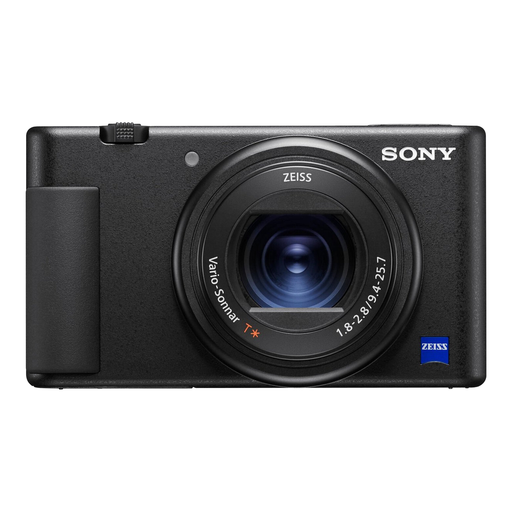
The built-in zoom makes the ZV-1 an option for trying both a full view and a close-up without changing lenses.
Sony specifies a 24–70mm-equivalent zoom. According to Sony, the focusing distance is approximately 5 cm at the wide-angle end and approximately 30 cm at the telephoto end, measured from the front of the lens; so check both compositions from the distance available to you.
Not just because the table is small: first check whether the whole basket fits in focus from your camera position. A macro lens is mainly a specific choice for individual details; Canon also describes a close-up option for the RF-S 18-45mm kit lens.
Try placing a fixed camera support outside your work area and keep the background simple. Canon’s product photography guide recommends a tripod to maintain the same framing; measure beforehand to check that your set-up will physically fit.
Keep the camera, background and lighting in the same place as far as possible, and review the images as you go. Canon’s product photography guide links the use of a tripod with consistent framing, but this doesn’t guarantee identical colours.
According to the Dutch government, when you buy from a business online as a consumer, you generally have 14 days to change your mind; the same distance-selling rules don’t apply when buying from a private individual. You’re also entitled to a product that works as it should, and you can contact the seller if there’s a fault. The Dutch government states that the Netherlands has no general, fixed statutory guarantee period.
Don’t use other people’s copyright-protected photos without the creator’s permission, unless an applicable exception applies, as explained by the Dutch government. The Dutch Data Protection Authority points out that identifiable people in photos are personal data; therefore, consider separately whether you’re allowed to publish the photo.