For one speaker sitting close by, a directional cardioid microphone is a good fit. For two people sitting on opposite sides of a quiet table, a model with a switchable omnidirectional mode is more practical. This pattern doesn’t guarantee that both voices will be equally clear, so test your setup and check that the connection is compatible with your recording device.
Who is this guide for?
Practising with a conversation partner
If you practise at a table with a language partner, you’ll want to listen back to both voices. Positioning and a recording pattern that picks up sound from several directions are important; Samson and Logitech G describe these modes for the models mentioned.
Practising your own pronunciation
If you’re mainly recording one voice close up, look for a directional cardioid pattern. Samson, RØDE and HyperX describe this pattern or directional models for the products mentioned.
Practising in different locations
If you practise at a small desk or in different places, think about how the microphone stands or how you’ll carry it. Samson describes the Go Mic as foldable, Logitech G mentions a compact desktop stand for the Yeti Nano, and RØDE describes a removable stand for the NT-USB Mini.
What should you look for?
Start with where you’ll be sitting. Then choose a recording pattern and check that the connection and monitoring options suit your practice routine.
| What to consider |
What should you look for? |
Who is this important for? |
| Recording both voices clearly |
Check for switchable cardioid and omnidirectional modes, and make a test recording from both seats. |
If I’m practising with someone opposite me, I want to be able to hear both voices clearly when I listen back. Around 36% of consumers prioritise recording both voices. |
| Listening back to your own pronunciation |
Look for a directional cardioid pattern and point the microphone towards where you’ll be speaking. |
When I’m mainly assessing my own pronunciation, I want to record my voice close up. Around 29% of consumers prioritise directional recording of their own voice. |
| Taking up less space and being easy to carry |
Consider the shape, stand or mount, and how the cable will run across your workspace. |
If I practise in different places or have little desk space, the setup needs to work practically in those surroundings. Around 21% of consumers prioritise portability and saving space. |
| Connecting and monitoring |
Check the USB port, the cable supplied and whether you want to monitor the recording as you go. |
If I want to hear my voice while recording, the connection needs to suit my device and workflow. Around 14% of consumers prioritise connectivity and monitoring. |
Things to watch out for
-
Choosing a microphone for one voice when you’re talking across a table
A cardioid pattern focuses on sound in front of the microphone. This can make the voice of someone sitting opposite less clear in the recording.
Match the pattern to your seating arrangement and make a test recording with both speakers before choosing.
-
Assuming that recording from all directions removes background noise
An omnidirectional mode picks up sound from several directions. That doesn’t mean it filters out background noise.
Record in a quiet room and, if the model offers both modes, compare a short recording in omni and cardioid mode.
-
Only checking the USB plug
A plug that fits doesn’t, by itself, confirm that your recording device supports the microphone.
Check which cable is supplied and whether it’s suitable for your device.
Brands to consider
Samson
Samson says the Go Mic is designed for a compact setup that can switch between solo practice and conversations at a table.
- Samson describes the Go Mic as offering cardioid and omnidirectional recording, with a foldable design.
- The recording patterns don’t guarantee that two voices from different seats will be equally clear; this doesn’t automatically apply to other Samson models.
Logitech G
According to Logitech G, the Yeti Nano combines a compact desktop stand with two recording patterns.
- Logitech G describes cardioid recording for sound in front of the microphone and omni for sound all around it.
- Logitech G says that G HUB must be installed to use BLUE VO!CE features. Check which features you actually want to use for your recording.
RØDE
RØDE describes the NT-USB Mini as a compact setup for a nearby speaker who wants to monitor their recording.
- For this model, RØDE describes directional recording, a removable stand, a pop filter and direct headphone monitoring.
- The model isn’t described as a microphone with switchable omnidirectional recording.
HyperX
According to HyperX, the SoloCast 2 is a compact cardioid USB option for focused solo recording.
- HyperX lists an internal shock mount and pop filter for the SoloCast 2.
- A cardioid pattern may be less suitable if a second speaker is sitting opposite the microphone. Don’t confuse the SoloCast 2 with the SoloCast 2 Pro.
Shure
Shure positions the MV5C for computer-based conversations at home.
- Shure’s Dutch product page lists USB cables for Mac or Windows, a speech mode and an adjustable desktop stand.
- These product features aren’t an independent test of a local conversation between two speakers.
Joybuy products
This selection includes wireless USB-C lapel microphones for conversations on mobile devices, as well as a cardioid USB condenser microphone. Check that each product’s connection and setup are suitable for your recording device; not every model is the same type of compact desktop microphone.
 No image available
Moman M1CXT wireless lapel microphone, USB-C, 2TX+1RX, 150 m
This wireless lapel microphone set is an option to consider for recording two speakers; check that your USB-C device supports the receiver.
USB-C; 2TX+1RX; 150 m range according to the product title.
View at Joybuy
 No image available
SYNCO wireless dual lapel microphone, USB-C, with charging case
A set with two microphones could suit a portable conversation setup; check that your recording device works with the USB-C receiver.
USB-C; dual microphones; charging case.
View at Joybuy
 No image available
Verbex ST5 wireless dual lapel microphone, Type-C
This portable dual lapel microphone is an option to consider for conversations between two speakers; check the Type-C connection on your recording device.
Type-C; dual microphones.
View at Joybuy
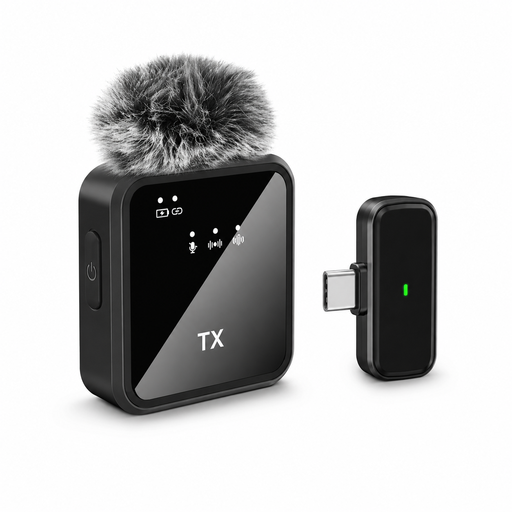 No image available
Verbex ST5 wireless single lapel microphone
This single-microphone version could suit mobile recording for one speaker; check that the connection matches your device.
Single microphone; wireless lapel design.
View at Joybuy
 No image available
USB condenser microphone with cardioid pattern
A cardioid pattern is worth considering if you want to record one speaker in front of the microphone; if someone is sitting opposite you, a test recording is important.
USB condenser microphone; cardioid pattern; monitoring according to the product title.
View at Joybuy
Frequently asked questions
How should I position a microphone for a conversation between two people?
Start with a microphone that has an omnidirectional mode, positioned on a quiet table between the speakers. Record a few sentences from both seats and listen back; the stated recording pattern doesn’t tell you how clear the voices will sound in your room.
Can I connect the RØDE NT-USB Mini to my computer without extra software?
RØDE says the NT-USB Mini doesn’t need drivers or software on a compatible PC or Mac. The cable supplied is USB-C to USB-A; check which cable and support you need if your device only has USB-C.
How can I reduce plosive sounds and monitor the recording as I go?
Check your speaking distance and microphone placement with a test recording. RØDE describes the NT-USB Mini as having a built-in pop filter and direct headphone monitoring; don’t assume every USB model has the same features.
What are my rights if a microphone bought online doesn’t work properly?
According to the Dutch government, you’re entitled to a product that works properly and should contact the seller if there’s a problem. For distance purchases, you’re also often entitled to a 14-day cooling-off period; the terms and conditions apply to the purchase in question.
Can I record a practice conversation and share it with others?
The Dutch Data Protection Authority says that processing data purely for personal or household use falls outside the GDPR, but someone else’s data can’t simply be shared or published online. Tell your conversation partner that you’re recording and agree how you’ll use the recording.


