
Viewer with limited space
You want to watch a performance at home without the screen and stand dominating your room or furniture. Measure both the viewing distance and the available width and depth.


First, measure your viewing distance and the space available for the TV, then check how you’ll play the recording. OLED is well worth comparing if dark scenes and a wide viewing angle matter to you. In a brightly lit room, an LCD or QLED TV may be an alternative, although performance varies by model. Also check separately that your recording source and any audio equipment can be connected.
You want to watch a performance at home without the screen and stand dominating your room or furniture. Measure both the viewing distance and the available width and depth.
You’re mainly interested in contrast, black levels and viewing angles, and want to choose a screen that suits the light in your room.
You want to connect an existing player or recording source and hear speech clearly without adding lots of unnecessary equipment.
Best for: anyone who mainly watches in a room that can be darkened, and values dark scenes or viewing from several seats.
Things to consider: OLED isn’t better in every respect. Also consider reflections, where the TV will go and how your recording source connects.
Best for: anyone who often watches in a bright room and wants to compare LCD or QLED models.
Things to consider: a higher potential brightness doesn’t automatically mean that dark theatre scenes will be equally clear on every model.
Start with the distance from your seat and the space available on your furniture. Use the viewing distance as a guide, then check the picture, connections and sound on the exact model you’re considering.
| What to consider | What should you check? | Who is this important for? |
|---|---|---|
| Size and positioning | Measure the viewing distance and the available width and depth, including the stand. The Consumers’ Association suggests using around 2.4 times the screen diagonal as a starting point for viewing distance. | I want to follow the performance clearly without the TV overwhelming my small unit. Around 29% of consumers prioritise size and positioning. |
| Dark and light scenes | Compare black levels, brightness, viewing angles and reflections in relation to the light in your room. The Consumers’ Association describes OLED as a technology that can offer deeper blacks and often wider viewing angles; LCD TVs can often be bright. | If I want to see dark stage scenes clearly, I look at contrast and black levels. In bright daylight, I also consider brightness and reflections. Around 22% of consumers put picture visibility first. |
| Clear speech and audio | Listen to speech through the TV. If you’re using a soundbar, check that both devices have HDMI-ARC/eARC; an optical connection may be an alternative. | I want to follow dialogue and music without adding a large audio system. Around 21% of consumers prioritise clear sound. |
| Playing the recording | Check that there are enough free HDMI inputs for a separate player. If you’re using a recording file, check the manual for the exact model to see which file formats and subtitles it supports. | I want to use my existing player or recording source and know in advance how to connect it. Around 14% of consumers put the ability to play their own recording first. |
| Use and aftercare | Compare the energy labels of the exact models and check that your existing audio equipment can be connected. If you’re considering an extended warranty, check what additional rights it offers. | I want to take power consumption, any equipment I’ll need and aftercare terms into account. Around 14% of consumers mainly consider use and aftercare. |
The screen may suit your viewing distance, but the stand could still be too wide or deep for your furniture.
Compare the overall dimensions, including the stand, with the space available, and measure the viewing distance too.
You may need to find another place for the TV if it or its stand won’t fit on your furniture.
The extra detail on screen depends on the quality of the source material.
Check the quality of the performance and how you’ll play it before making screen specifications the deciding factor.
A USB port or soundbar feature doesn’t guarantee that your file, subtitles or audio system will work.
Check the manual for the exact TV model and the connections on your existing devices. A separate player will usually need a free HDMI input.
A separate player, cable or different audio connection may take up extra space and require additional connections.
An extended warranty doesn’t replace your statutory rights. The Dutch government advises checking whether the additional cover offers any extra rights.
Read the terms and compare the additional rights offered with what’s already covered by your statutory rights.
The OLED42C5ELB is a 42-inch model to consider if you’re looking for a compact OLED TV.
The 43PUS9000/12 is a 43-inch QLED model with Ambilight.
The P7K series includes a 43-inch model to consider when comparing compact TVs.
The K-43S3 is worth considering if its overall dimensions are important for positioning.
The QE43QN90FATXXN is a 43-inch Neo QLED Mini LED model to consider.
This selection includes TV models for a compact viewing setup, including OLED and LCD or QLED options. Check the dimensions, connection for your recording source and the features that matter in your room for each model.
 No image available
An OLED model to compare if dark scenes matter to you. Check the viewing distance and how your recording source connects.
42 inch; 4K OLED; Dolby Vision; HDR10; Dolby Atmos; HDMI 2.1.
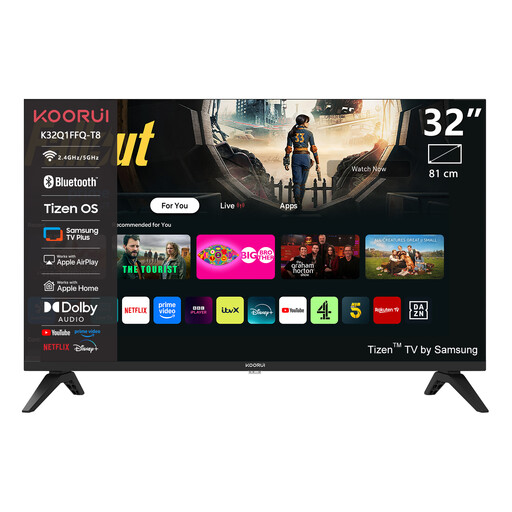 No image available
The 32-inch model is a compact option to compare if space is limited. Check that its connections suit your existing equipment.
32 inch; Full HD QLED; Tizen OS; Dolby Audio.
 No image available
A 4K model to compare if you’re looking for a compact screen. Check which audio connection your existing devices need.
43 inch; 4K.
 No image available
An LED model to compare if you’re looking for a 4K screen for your recording. Check the overall dimensions and the audio connection you’ll need.
LED; 4K; HDR10+; HLG; Dolby Atmos; DTS:X.
 No image available
This 43-inch QLED model is an option to compare for a compact viewing space. Check that your recording source can connect to one of the listed HDMI ports.
43 inch; 4K UHD; QLED; HDR10+; Dolby Vision; Vidaa; 3 × HDMI 2.1.
Measure the distance from your eyes to where the TV will go. The Consumers’ Association suggests using around 2.4 times the screen diagonal as a starting point for a comfortable viewing distance. Also check that the overall dimensions, including the stand, will fit on your furniture.
Yes, as long as the connections on the TV and the devices match. A separate media player or Blu-ray player will usually use HDMI; for a soundbar, check that both devices have HDMI-ARC/eARC. An optical connection may be an alternative, but you may need an extra remote to control it.
No. A USB port alone doesn’t guarantee that your recording file or subtitles are supported. Check the manual for the exact TV model to see which file formats and subtitles it supports.
Not necessarily. The Dutch government distinguishes between making a copy for personal use and distributing or making it available to the public. Whether a particular performance can be copied or shown also depends on the rights and terms that apply to the recording.
No. According to ACM ConsuWijzer, your statutory guarantee depends on what you could reasonably expect from the product. If a fault is covered, the seller must provide an appropriate remedy free of charge. When considering an extended warranty, check what additional rights it offers.