
Viewer with limited space
You want the TV and stand to fit in the space available, while keeping the picture large enough to enjoy from your seats. So measure the space and viewing distance before choosing a screen size.


First, measure the viewing distance and the space available for the TV and its stand. A small screen is easier to fit, but it still needs to be easy to watch from the furthest seat. Then consider viewing angles and reflections, and check that your film source and any soundbar can connect to the TV. The right choice depends on your room and setup; no single model is the obvious choice for every film night.
You want the TV and stand to fit in the space available, while keeping the picture large enough to enjoy from your seats. So measure the space and viewing distance before choosing a screen size.
Your guests may not all be sitting directly in front of the screen. Viewing angles and light levels are therefore important things to consider for the TV and room you choose.
You want to enjoy films without a bulky setup. Compare the screen technology, built-in sound and connections for your film source.
The Consumers’ Association recommends a viewing distance of around 2.4 times the screen diagonal, based on its own research. Use this as a starting point, not a hard-and-fast rule. To compare energy consumption, check the EU energy label for the exact model and look at the HDR information highlighted by the European Commission.
| What to consider | What to look for | Who is it important to? |
|---|---|---|
| Screen size and space | Measure the viewing distance and available width; check the TV’s dimensions, including the stand. | I want the TV to fit in the space and still look large enough from the furthest seat. Around 29% of consumers give screen size and viewing distance top priority. |
| Viewing angles and reflections | Take note of the seating positions and any windows or lamps; if possible, assess the specific screen from an angle. | If guests will be watching from the side or light falls on the screen, I want to check in advance that everyone will be able to see the picture clearly. Around 23% of consumers prioritise a clear view from different seats. |
| Dark film scenes | Compare the specific model in suitable ambient light and consider how the picture looks from your planned seating positions. | When watching films, I want to be able to follow the detail in dark scenes and choose picture technology that suits my room. Around 18% of consumers make film picture quality their top priority. |
| Source and sound | Count the HDMI inputs you need; if you plan to use a soundbar, check that the TV has a suitable HDMI ARC or eARC connection. | I want to connect my film source and hear dialogue clearly without adding more equipment than necessary. Around 18% of consumers prioritise a simple media setup. |
| Energy consumption | Compare the EU energy label and HDR information for the exact models; also consider which accessories you really need. | If energy use and additional costs matter to me, I want to take them into account alongside my choice of screen. Around 12% of consumers put running costs first. |
A TV may fit on the cabinet but look too small from the furthest seat.
Measure both the available space and the viewing distance before choosing a size.
The Consumers’ Association describes QLED as an LCD technology. Its picture characteristics and trade-offs are not the same as those of OLED.
Compare specific models from your planned seating positions and in lighting that suits the room.
The TV and soundbar need compatible ARC or eARC connections to work together. You may also need an extra cable.
Check the labelled connection and count the HDMI inputs you need for your other sources, too.
According to the Dutch government, there is no fixed statutory warranty period in the Netherlands; your statutory rights do not depend solely on the manufacturer’s warranty.
Check what any additional warranty covers and report faults to the retailer.
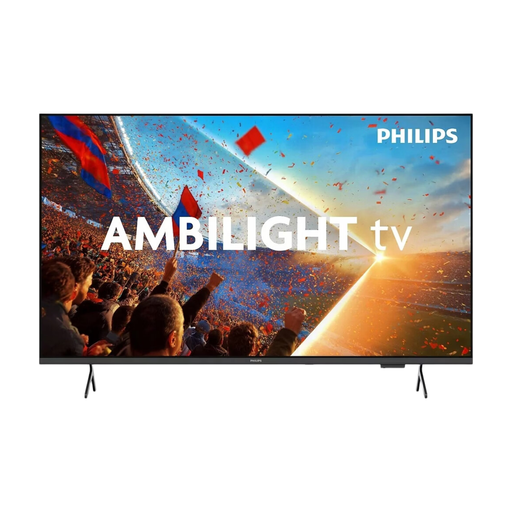
According to Philips’ product information, the Philips 43PUS8001/12 is a 43-inch 4K LED TV with Ambilight and Titan OS.
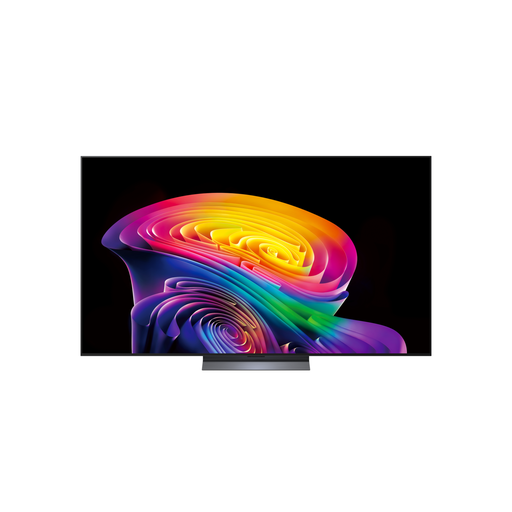
The LG OLED42C67LA is a 42-inch OLED model. LG describes it as a 4K OLED TV.
According to Samsung, the Samsung QE43QN70HAUXXN is a 43-inch mini LED/QLED model.
The Consumers’ Association lists the Hisense 32A4S among 32-inch models and the 43E7S among models measuring 40 to 43 inches.
This selection focuses on compact 42- and 43-inch TVs for a film setup, with OLED, LED and QLED options.
 No image available
Suitable if you’re looking for a compact OLED TV for a film setup.
42 inches, 4K OLED, Dolby Vision and Dolby Atmos.
The product information lists webOS, four HDMI 2.1 connections, eARC and 20 W audio.
 No image available
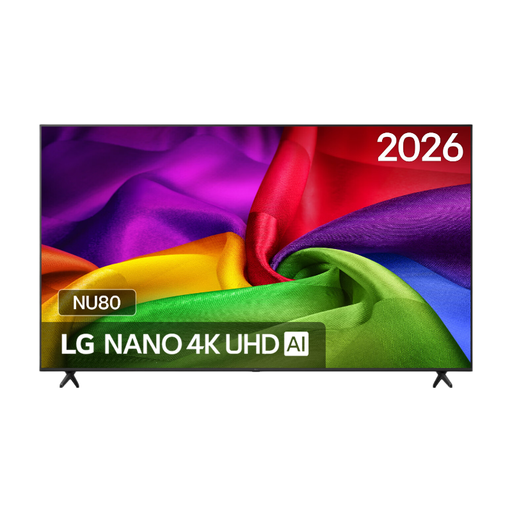
Suitable if you’re considering a compact setup with a 43-inch screen.
The product information lists 4K, Nano UHD, webOS and HDMI eARC.
 No image available
Suitable if you’re looking for a 43-inch LED TV with Ambilight for a compact film setup.
The product information lists Titan OS, Ambilight, three HDMI connections and HDMI eARC.
Also listed: Dolby Atmos and 20 W audio.
 No image available
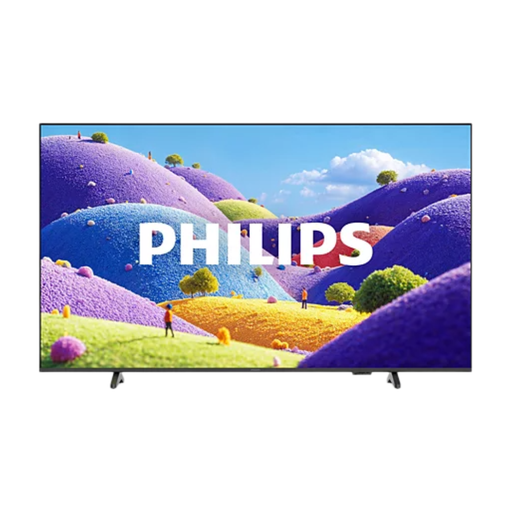
Suitable if you’re considering a 43-inch LED TV for a compact film setup.
The product information lists Titan OS, three HDMI connections including eARC, and two USB connections.
Also listed: Dolby Atmos and 20 W audio.
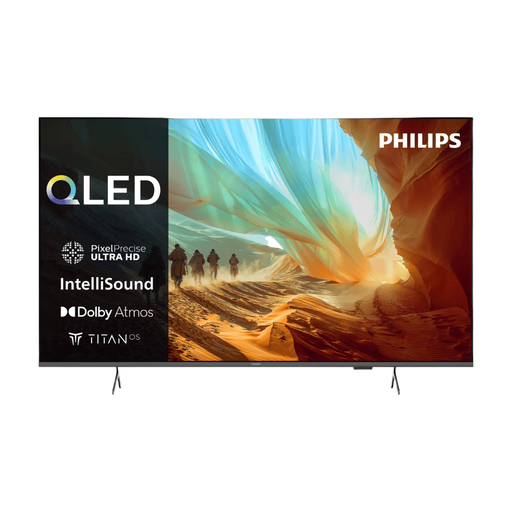 No image available
Suitable if you want to compare a 43-inch QLED TV for a compact film setup.
The product name lists 4K, QLED and smart TV features.
Measure the distance between the seats and where the screen will go, and check how much space there is for the TV and stand. The Consumers’ Association recommends a viewing distance of around 2.4 times the screen diagonal; also check that guests at the back can comfortably follow what’s on screen.
A separate player is usually connected via HDMI. Count the HDMI inputs you need in advance, and check that the TV has a suitable HDMI ARC or eARC connection for a compatible soundbar.
According to the Dutch government, there is no fixed statutory warranty period in the Netherlands: you’re entitled to a product that meets what you can reasonably expect. Report any fault to the retailer; the expiry of the manufacturer’s warranty does not automatically end your statutory rights.
EU energy labelling rules apply to televisions. The label uses a scale from A to G and also provides information about HDR playback; compare the details for the exact model.
Auteursrecht.nl describes an exception for screenings strictly within a domestic circle, such as for family and close friends, which does not require permission from the creators. A private event for a school or association is not automatically covered by this exception. Do not make or distribute an unauthorised copy of the film, either.