
Video editor with a small desk
You want frequent access to your project files and have little room for the drive and its cable. Your computer’s port and the drive’s dimensions will therefore also affect your choice.


If you regularly work directly from the drive or often copy large video files, start by considering a compact SSD. For storing finished projects and lots of source footage, a portable HDD is also worth comparing. Check your computer’s capacity, USB port and cable, as well as the file format required by your devices. A quoted top speed doesn’t guarantee the same speed on your computer, and a single external drive isn’t a separate backup.
You want frequent access to your project files and have little room for the drive and its cable. Your computer’s port and the drive’s dimensions will therefore also affect your choice.
You store footage or finished projects and weigh the capacity you need against the speed you actually require.
You want to keep and restore a separate copy of irreplaceable footage and project files alongside your working drive.
| Concern | What to look for | Who is this important to? |
|---|---|---|
| Working smoothly with video files | Check the USB specifications of your computer and drive, the cable, and test results for the exact model. | If I edit frequently or copy large files, I want to know whether my computer can support the drive’s connection. Around 33% of consumers say editing speed is their top priority. |
| Space for projects and footage | Add up your current projects and the footage you want to keep, then compare the total with the model’s capacity. | As my collection grows, I want enough space for source footage and finished projects. Around 27% of consumers prioritise archive space over editing speed. |
| Limited desk space | Check the dimensions, how much room the cable needs and whether the model you’ve chosen is powered via USB. | If my workspace is small, I want to position a drive without it getting in the way. Around 20% of consumers say a small, easy-to-position drive is their top priority. |
| A recoverable copy of your projects | Decide where the second copy will be stored, when you’ll update it and whether you can restore files from it. | If my footage or editing files are irreplaceable, I want to be able to recover them if the working drive fails or goes missing. Around 20% of consumers say recoverability is their top priority. |
Your host port and cable can affect how much of the quoted interface speed you can actually use.
Check your computer’s connection, the cable supplied and test results for the exact model you’re considering.
Seagate lists USB-C and models up to 4 TB for its current Dutch Expansion Portable range. An older data sheet refers to USB 3.0; that information doesn’t necessarily apply to a current model.
Compare the full model number and the specifications of the model on offer.
If your project files are stored only on that drive, you don’t have a separate copy to fall back on. The National Cyber Security Centre describes the 3-2-1 rule as backup advice, not a product requirement.
Keep a second copy in a different storage location and check that you can restore it.
Formatting can erase existing contents, which may make project files inaccessible.
Check the file format first and make a verified copy in another location before making any changes.
The portable T7 range is a compact SSD option for anyone who transfers files frequently; the T7 Shield is a separate model.
The Expansion Portable range is one option to compare for portable HDD storage and archiving.
The X10 is a portable SSD option to compare if you have a large video archive and your computer can make use of the connection.
The Rugged SSD4 is a separate USB4 model to consider if transfer speeds and protection on the go are important.
This selection includes compact portable SSDs for active projects and portable HDDs for storage and archiving.
 No image available
A portable SSD option for video files in a compact workspace.
 No image available
A portable SSD for transferring video files; the quoted read speed of up to 2.000 MB/s requires a compatible USB 3.2 Gen 2x2 host.
 No image available
A portable HDD option for storing a larger video archive.
 No image available
A portable SSD option for transferring files in a compact workspace.
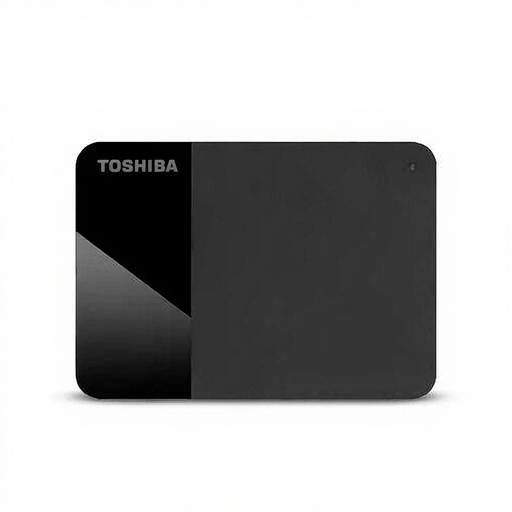 No image available
A portable HDD option for archiving project files in a compact workspace.
Check the file format first: Apple lists exFAT as a format compatible with Windows. Copy any existing files before formatting, as formatting can erase the contents.
Only if the drive’s format suits how you plan to use it. Apple recommends APFS or encrypted APFS for Time Machine; a separate APFS volume on the same physical drive can provide space for other files. This isn’t an independent copy on a second device.
In Windows, safely eject an external drive first to help prevent data loss. After copying important project material, check that the files open from the location where you intend to store them.
Report the fault to the retailer. According to the Dutch government, the retailer must resolve the issue with a faulty product or contact the manufacturer; a manufacturer’s warranty doesn’t replace this legal responsibility.
It can if people are recognisable in the footage. The Dutch Data Protection Authority describes an exception for footage that someone keeps exclusively for private use or shares with a very limited circle; this doesn’t necessarily apply to wider publication or business use.