Who is this relevant to?

Writers looking to adjust their wrist position

If you write and edit a lot, you might want to weigh up whether a fixed curve or independently positioned keyboard halves suit you better. Getting your desk set up properly and varying your tasks remain important; Arboportaal recommends changing tasks while working at a screen.

Editors with limited desk space

If you often switch between your keyboard, mouse and source material while writing, a model without a built-in numeric keypad could be useful. BakkerElkhuizen describes compact keyboards as an option for text work where a dedicated numeric keypad is rarely needed.

Writers who move between workstations

If you take a laptop between desks, you’ll need a separate keyboard with a layout and connection that suit your computer. BakkerElkhuizen and Mousetrapper describe compact keyboard models as options to consider in this situation; check the specification of the model you’re considering.

What should you look for when choosing?

Compact, non-split

A good fit if: you mainly write continuous text, use a mouse often and rarely enter numbers.

The trade-off: you can keep the mouse closer, but you can’t adjust the position of each hand independently.

Fixed split or wave-shaped

A good fit if: you want to keep one keyboard on your desk but prefer a different hand position from the one you get with a straight keyboard.

The trade-off: the shape and distance between the keyboard halves are largely fixed, so allow for the desk space you’ll need.

Two independently positionable halves

A good fit if: you want to choose the distance and angle between your hands and have enough space to do so.

The trade-off: you’ll need to find a comfortable set-up yourself and may need time to get used to the key positions.

Consideration What to look for when buying Who is this important to?
Hand and wrist position Compare the position of both hands while typing; check whether the halves can be positioned independently and what tilt options are available. If I type museum labels for long stretches, I want to know which shape suits my hand position. Around 36% of consumers give hand and wrist position their highest priority.
Keeping the mouse close Check the width and layout of the model; consider how often you type numbers and whether you need a numeric keypad. When I switch often between writing and using the mouse, I don’t want to have to reach further than necessary. Around 29% of consumers prioritise mouse reach.
Familiar key layout Check the physical layout and the position of punctuation marks, arrow keys and Delete, as well as support for your operating system. When I’m editing text carefully, I want letters, punctuation marks and editing keys to be where I expect them. For around 21% of consumers, the key layout is the most important factor in their choice.
Moving between workstations Check whether the exact model is wired or wireless, which connection or receiver it needs, and whether your computer is supported. If you write museum labels at different desks, you’ll want a separate keyboard that connects to the computer you use. Around 14% of consumers give portability their highest priority.

Common mistakes

  • Assuming an ergonomic shape will fix your whole working posture

    A keyboard affects the position of your hands, but your desk set-up, how far you reach for the mouse and how often you change tasks all play a part too.

    Assess your whole workstation while sitting and standing, and vary your tasks and posture.

  • Choosing a split keyboard without checking the layout

    When writing and editing museum text carefully, the physical position of punctuation marks and editing keys, as well as the chosen country layout, can make all the difference.

    Check the physical keys, punctuation, editing keys and exact specification before choosing.

  • Choosing a compact keyboard when you often enter numbers

    A compact model can free up space next to the letter keys, but may not have an easily accessible numeric keypad.

    Think about how often you type inventory numbers and check that the number-entry options on your chosen layout work for you.

Brands to consider

R-Go Tools

The Split Break range is worth considering if you’re looking for two independently positionable halves and a break indicator. The described model is black, wired and has a US QWERTY layout.

  • R-Go Tools says the two halves can be joined magnetically to create one compact keyboard.
  • The manufacturer says the LED indicator works with R-Go Break software; check whether you can use it on your work computer.

Logitech

The ERGO K860 has a fixed split, curved frame, while the Wave Keys has a wave-shaped, more compact design. These models offer different shapes and layouts to compare.

  • Logitech lists feet on the K860 for different palm positions, and Bluetooth and a Logi Bolt receiver for the Wave Keys.
  • Claims about comfort and posture come from the manufacturer and don’t guarantee the same results for every writer or workstation.

BakkerElkhuizen

The compact UltraBoard models are an option if you mainly write text and rarely use a dedicated numeric keypad. The UltraBoard 950 V2 is the wired model described here.

  • BakkerElkhuizen lists USB-C, a USB-A adapter included in the box and an integrated numeric function for the UltraBoard 950 V2.
  • This model doesn’t have independently positionable keyboard halves; claims about reduced physical strain are the manufacturer’s interpretation.

Kinesis

The Freestyle2 is an option if you want to set the distance between the two keyboard halves yourself.

  • Kinesis lists a low-profile design and optional tilt accessories for the international PC version.
  • If buying from a Dutch retailer, check the exact layout, model and any accessories before choosing.

Mousetrapper

The Type Mini is a compact option for writers who move their keyboard regularly; wired and wireless versions are available.

  • Mousetrapper lists adjustable feet at the front and back.
  • Check availability in the Netherlands and the country layout of the exact model you’re considering.

Joybuy products

This selection of Joybuy keyboards includes wired and wireless options in different sizes and layouts. For museum text, check that the model suits your computer, workstation and typing style.

REDRAGON 94-key full-metal mechanical keyboard with wrist rest

REDRAGON 94-key full-metal mechanical keyboard

A wired model for typing at a fixed workstation.

94 keys; mechanical; the product description lists PBT keycaps, replaceable switches and a detachable wrist rest.

Joybuy
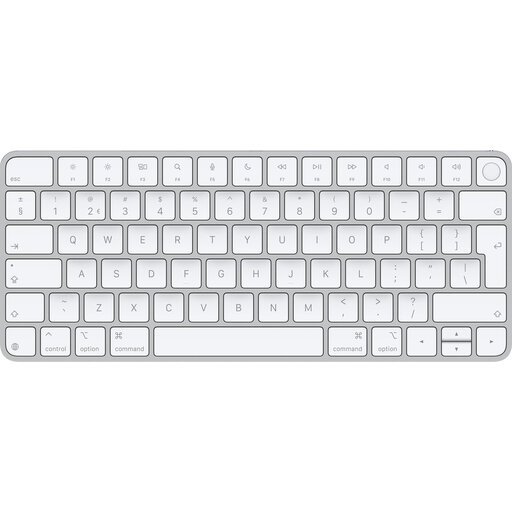
Apple Magic Keyboard with Touch ID, Dutch version for Mac models with Apple Silicon

Apple Magic Keyboard with Touch ID, Dutch

A compact, wireless option if you use a compatible Mac and want to keep space free beside your keyboard.

Tenkeyless layout and Bluetooth. The product information lists Mac models with Apple Silicon and macOS 11.4 or later; check compatibility with your computer.

Joybuy

Trust Lyra compact keyboard and mouse, wireless, US English QWERTY

Trust Lyra keyboard and mouse set, US English QWERTY

A compact keyboard and mouse set if you want to use these two input devices together.

Tenkeyless layout, wireless connection and feet with three height settings, according to the product description. This model has a US English QWERTY layout, not a Dutch layout.

Joybuy

MageGee TS91 60% keyboard, wired, US QWERTY

MageGee TS91 60% wired keyboard

A compact model if you want to free up desk space and a wired connection suits your workstation.

61 keys and a US QWERTY layout. The product description lists compatibility with Windows and Mac; check that the layout suits the way you enter text.

Joybuy
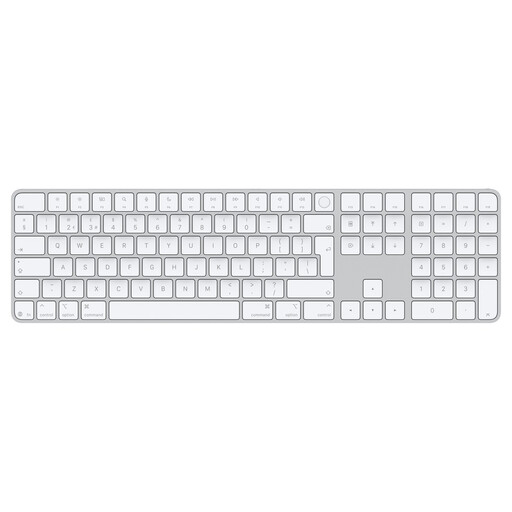
Apple Magic Keyboard with Touch ID and numeric keypad, Dutch version for Mac models with Apple Silicon

Apple Magic Keyboard with Touch ID and numeric keypad, Dutch

An option if you enter Dutch text and regularly type numbers or use navigation keys.

The product description lists Bluetooth, a numeric keypad and navigation keys for documents. The product title limits this model to Mac models with Apple Silicon; check compatibility.

Joybuy

Frequently asked questions

How should you set up your keyboard and sit-stand desk when you switch to standing?

Adjust your workstation and make sure you don’t have to reach too far for your keyboard or mouse. Arboportaal recommends alternating working postures and taking microbreaks when working at a screen; simply using a different keyboard is no substitute for changing your posture.

Do you need a separate keyboard for a laptop?

For employees who work at a screen for more than two hours a day, Arboportaal says that the screen and keyboard must not be attached to each other. The right set-up for your working situation depends on your work and how long you use the equipment.

Do you need to install software for the R-Go Split Break’s break indicator?

According to R-Go Tools, the LED indicator is controlled by R-Go Break software. Before buying, check whether you’re allowed to install it on your work computer; a break indicator is no substitute for varying your tasks.

What warranty applies if a keyboard develops a fault too soon in the Netherlands?

When you buy as a consumer, the product must meet reasonable expectations. According to the Dutch Government, there is no fixed statutory warranty period in the Netherlands; if a product develops a fault after normal use, contact the retailer for an appropriate solution. Also check any separate manufacturer’s warranty terms.
