
Sushi maker with a small worktop
You regularly make small portions of sushi rice and want to check both the space needed for the cooker and whether it has a clearly labelled cooking setting.


Choose a rice cooker whose external dimensions and uncooked rice capacity suit your kitchen and the portions you make. If you regularly make sushi, a model with a clearly labelled sushi programme may offer a useful feature. A simpler model may suit you better if you need fewer settings and prefer to adjust the cooking method yourself. A programme label alone is not independent proof of the cooking results.
You regularly make small portions of sushi rice and want to check both the space needed for the cooker and whether it has a clearly labelled cooking setting.
You don’t want to cook more rice than you need, so you compare how much uncooked rice a small cooker can handle.
You have little room for another appliance and may prefer a simple cooker to a model with several programmes.
First, check that the appliance will fit on your worktop and can cook the amount of uncooked rice you usually need. Then compare its programmes and controls with the way you make sushi rice.
Best for: anyone who regularly makes sushi and wants a separately labelled programme.
Consider: more programmes mean more choices, and a sushi label alone doesn’t prove the quality of the results.
Best for: anyone who wants to cook small amounts of other types of rice as well as sushi rice.
Consider: being able to cook short-grain rice isn’t the same as having a dedicated sushi programme. Compare the dimensions and measuring cup for each model.
Best for: anyone who wants fewer steps and prefers to adjust the cooking method themselves.
Consider: the cited specifications for the Tristar RK-6141 don’t mention a separate sushi setting.
| What to consider | What should you check? | Who is this important for? |
|---|---|---|
| Worktop space | Measure the available width, depth and height, then compare them with the dimensions of the exact model. Leave enough room to open and operate the appliance, too. | If my worktop space is limited, I want to know in advance whether the appliance will fit. Around 27% of the group prioritise the space needed for the cooker. |
| A clearly labelled sushi setting | Check the programme list for the specific model. A mention of short-grain rice isn’t the same as a separate sushi programme. | If I regularly make sushi rice, I may specifically look for a programme labelled for it. Around 33% of the group prioritise this type of setting. |
| Capacity for small portions | Compare how much uncooked rice the model can handle and check what the manufacturer means by a cup. Don’t assume cups, litres and portion sizes are directly interchangeable. | If I cook for one or two, I want to be able to match the amount of dry rice to what I need. Small portions are the main priority for around 27% of the group. |
| Simple controls or extra features | Compare the controls you’ll actually use, such as a cook switch or separate programmes. Also check how easy it is to access the inner pot and lid. | If I prefer to use fewer settings, simple controls and ease of use matter more to me than extra programmes. Around 13% of the group prioritise simplicity. |
Manufacturers describe capacity in different ways. A capacity in litres doesn’t automatically tell you how much uncooked rice you can make.
Check the amount of uncooked rice for the exact model and find out how much its measuring cup holds.
Tristar lists sushi among the programmes for the RK-6238. The cited specifications for the Reishunger digital mini mention short-grain rice, but don’t confirm a separate sushi setting.
If a dedicated sushi programme matters to you, check the programme list for the exact model.
According to the manufacturer, the Tristar RK-6238 and RK-6141 both have a capacity of 0.6 L, but their external dimensions differ.
Measure the space available and compare the model’s width, depth and height. Allow room to open the lid and operate the appliance.
The compact models mentioned offer different ways to balance sushi rice features with straightforward controls.
Yum Asia presents the Panda Mini as a cooker for small kitchens and small amounts of uncooked white rice.
According to Reishunger, the digital mini has a capacity of 0.6 L and settings for types of rice including short-grain.
These Joybuy products are rice cookers and compact cooking options to compare for small portions. Check each model’s capacity and controls, and make sure you have enough space for it.
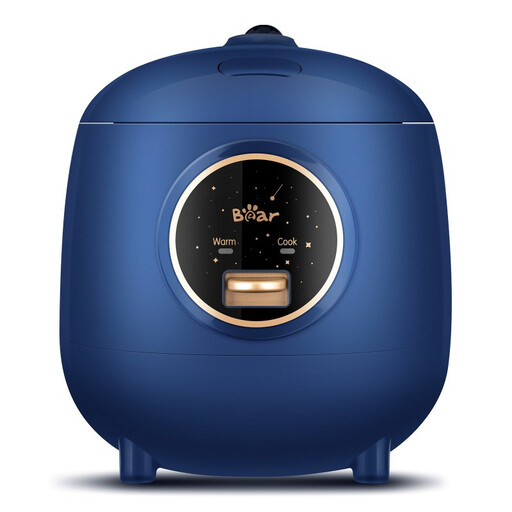 No image available
The product information lists one-button operation and a capacity of up to two cups of uncooked rice, which you can compare with your usual portions.
The stated dimensions are 21.7 × 19.0 × 21.7 cm. The product name lists 200–238 W and a non-stick inner pot.
The instructions recommend waiting at least 15 minutes before starting another cooking cycle.
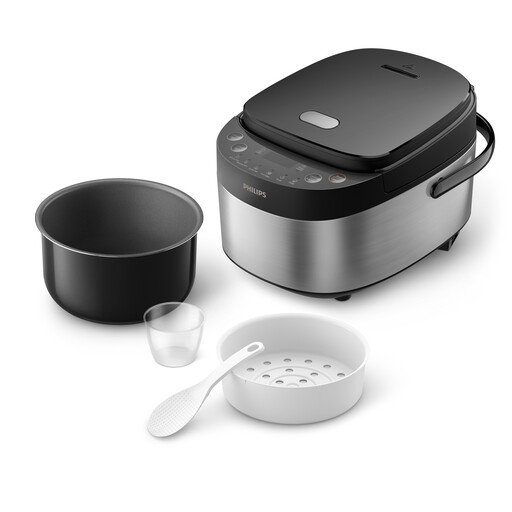 No image available
The product description lists a dedicated sushi rice programme and says the cooker is suitable for 2–3 people.
The stated capacity for dry rice is 0.85 L; according to the product information, the model has eight programmes.
The instructions recommend not leaving rice on the keep-warm setting for more than 12 hours.
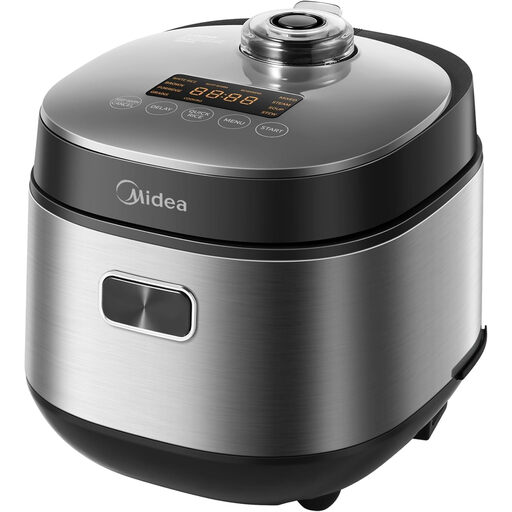 No image available
The product information lists a maximum of four cups of uncooked white rice, with 160 ml per cup, and says the cooker is suitable for 1–3 people.
According to the product information, the model has nine functions, a removable inner pot, a timer and a keep-warm function. The description also lists cooking options for white, brown and mixed rice, among others.
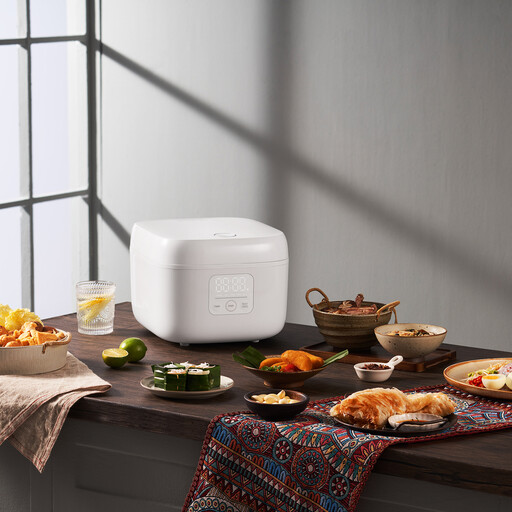 No image available
The product information describes this as a compact rice cooker. Check its stated capacity against the amount you usually cook.
The product name lists a rice capacity of 1.6 L, a water capacity of 4 L and 220V/890.
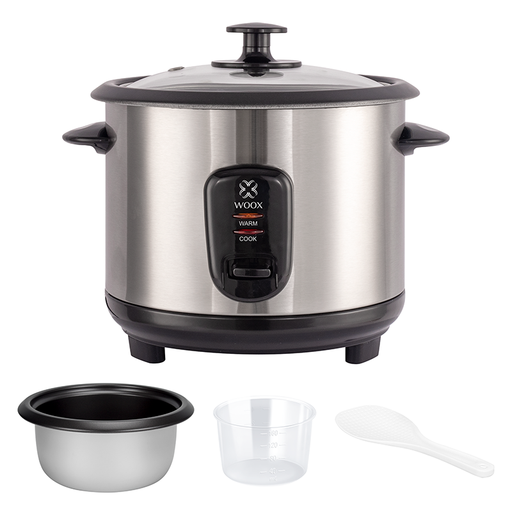 No image available
The product description lists rice as one of the foods you can cook, and says the cooker is suitable for small meals for one or two people.
The product name lists 400 W, a glass lid, a stainless steel body and a non-stick inner pot.
No, don’t assume they’re the same: pot capacity, cups of uncooked rice and portions are different measures. Yum Asia defines a cup as 180 ml and separately states how much uncooked white rice the Panda Mini can hold. Always compare like with like.
Cool leftovers quickly and store them in a sealed container in the fridge. The Netherlands Nutrition Centre advises not leaving cooked rice out of the fridge for more than two hours and says it can be kept in the fridge for two days. This doesn’t mean a keep-warm setting will keep rice safe for that length of time.
If you have a problem, contact the seller. The Government of the Netherlands explains that you’re entitled to a product that works properly and that the seller must provide a solution. There isn’t a fixed statutory two-year guarantee period for every product in the Netherlands.
Check the information for the specific appliance and the rules that apply. The Netherlands’ Business.gov.nl explains that for an appliance which meets the requirements, the manufacturer applies the required CE marking and draws up an EU declaration of conformity. The EU Low Voltage Directive applies to electrical equipment within the voltage range it specifies. A CE marking isn’t a test of cooking performance.