
Detail-focused macro photographer
You want to capture veins, seeds and surface textures in close-up. So compare the magnification offered by the specific lens or close-up mode.


Start by checking the magnification offered by the specific lens or close-up mode: don’t judge a mirrorless camera on the body alone. If you need a seed pod to be sharp from front to back, a suitable focus-stacking option matters. A compact camera can save you the hassle of separate accessories and changing lenses. With a mirrorless camera, factor in a dedicated macro lens, a stable setup and room for lighting.
You want to capture veins, seeds and surface textures in close-up. So compare the magnification offered by the specific lens or close-up mode.
You want both the front and back of the subject to be sharp. Check whether the camera can take a focus-bracketed sequence and combine the images itself, or whether you’ll need to edit them afterwards.
You want to get started with as few separate accessories as possible, while allowing room for a stable setup and lighting.
When photographing seed pods in a home studio, the key considerations are linked: the framing you want, depth of field, lighting, the complete setup and how easy it is to use.
Choose this option if: you want to select a suitable interchangeable lens and use focus stacking for a deep seed pod.
Bear in mind: you’ll need a separate macro lens and a stable setup, and the process can vary between camera models.
Choose this option if: you want to get started without changing lenses and a smaller setup is important to you.
Bear in mind: a short minimum focusing distance alone doesn’t tell you how much room you’ll have for lighting or what magnification you’ll get.
| What to consider | What should you check? | Who is this important for? |
|---|---|---|
| Capturing small details in close-up | Check the maximum magnification of the specific lens or close-up mode, and assess whether it gives you the framing you want. | If you want fine seed details to fill the frame, magnification is your first priority. Around 31% of consumers prioritise capturing small details. |
| Depth of field | Check whether the specific camera model can take a focus-bracketed sequence and combine the images in-camera or process them afterwards. | If you want both the front and back of a deep seed pod to be sharp, check the entire focus-stacking workflow. Around 25% of consumers prioritise depth of field. |
| Lighting around your subject | Check whether there’s room beside the camera for a light source and a stable support. | If you want to position a light close to the seed pod, the available working space matters. Around 19% of consumers prioritise their lighting setup. |
| Complete setup | Compare the camera body, the lens you need and any support or lighting accessories as a complete setup. | If you want to understand the cost of a complete, practical setup, check what you’ll actually need. Around 13% of consumers prioritise the complete setup. |
| Ease of use | Compare the close-up mode and the steps involved in taking and, if needed, combining images. | If you want to keep separate accessories or processing steps to a minimum, compare the entire workflow. Around 12% of consumers prioritise ease of use. |
The lens partly determines the magnification you can achieve. For close-ups, you may also need a tripod or lighting accessories.
Before buying, check which lens is actually included with the body and what else you’ll need for a complete setup.
A suitable macro lens and, if needed, support or lighting may have to be bought separately.
Focus bracketing takes images at different focus positions; with some cameras, you’ll need to combine them afterwards.
Check whether the specific model also combines the images in-camera, and keep both the camera and subject steady.
If you need to combine the images afterwards, allow time for post-processing.
A short focusing distance doesn’t tell you how much room there’ll be in front of the camera for lighting, and it doesn’t prove that you’ll get 1:1 magnification.
Try framing a seed pod of a similar size and check how much room you’ll have for lighting.
The EOS R10 can be paired with a separate RF macro lens. Camera features and lens specifications apply to different components.
The Z50II can be used with a separate NIKKOR Z macro lens. Focus bracketing and lens magnification are separate considerations.
The OM-5 Mark II can be paired with a separate macro lens, while the TG-7 has a built-in microscope mode.
The α7 IV is a full-frame mirrorless camera body that can be paired with a separate FE macro lens.
The X system offers a separate XF macro lens, giving you the option to weigh up lens choice and working space.
This selection of Joybuy products includes compact and mirrorless cameras. For seed pods, check the close-up capabilities and the magnification of the lens you’ll actually use.
 No image available
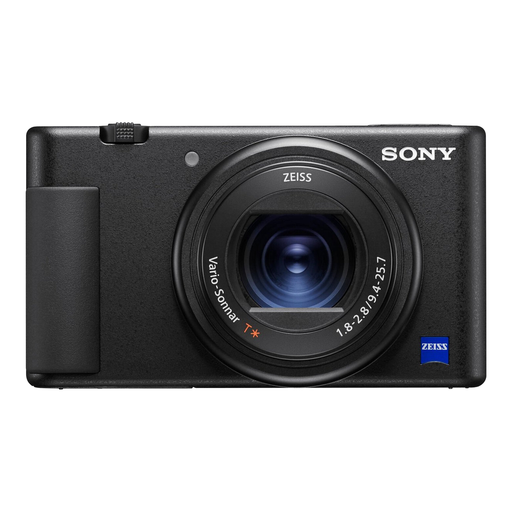
This compact setup could suit you if you want to keep separate accessories to a minimum. Check separately whether the close-up framing works for your seed pods.
The product name mentions a 1-inch CMOS sensor and 4K/120fps video.
 No image available
A good fit if you want to put together an interchangeable-lens system; the product description mentions compatibility with Sony E-mount lenses.
This is the body only. Check which lens you’ll need for the close-up framing you want.
 No image available
The product name lists a 16–50mm zoom lens with this mirrorless camera. Check whether it gives you the framing you want for your seed pod.
Check the magnification you need before choosing this kit for macro photography.
 No image available
The product name lists an included 16–50mm f/3.5–5.6 OSS II lens. Check whether it gives you the close-up framing you want.
Assess the complete kit before deciding whether you’ll need a separate macro lens for seed pods.
 No image available
This compact camera could suit a small setup. Check whether its close-up capabilities and framing work for the size of your seed pods.
No. Compare the magnification of the specific lens with the space you’ll have in front of it. OM SYSTEM lists 1:1 magnification and a minimum focusing distance of 0.19 m separately for the M.Zuiko Digital ED 60mm F2.8 Macro. For the TG-7’s microscope mode, it specifies focusing from 1 cm. That distance alone doesn’t prove you’ll get 1:1 magnification.
It depends on the camera model. Canon describes in-camera combining for the EOS R10, while the Nikon Z50II manual describes a focus-bracketed sequence that is combined later. Keep the camera and seed pod steady before taking the sequence.
Make room for a light source around your subject and use a stable setup if needed. Canon notes that close-up photography can mean less light reaches the sensor, so getting closer to your subject isn’t always an advantage.
When you buy from a business online, you generally have a 14-day cooling-off period, according to the Dutch government. Check whether the terms apply to your purchase. You’re also entitled to a product that works as it should; according to the Dutch government, the Netherlands has no fixed statutory warranty period. If there’s a fault, contact the seller; a manufacturer’s warranty is separate.