Which option is right for you?

Online shop owner taking product photos regularly

You photograph several handbags and want to assess the framing, background and colour consistently after each set-up. A tripod and a controlled set-up are useful choices. Product photographer Jillian Lenser and Adobe explain the benefits of a stable frame and a controlled environment.

Creator who wants to show finishing details

You want to capture stitching, fastenings or the texture of the material separately. So, check the magnification of the specific lens, as well as how much room you’ll have for lighting. Nikon, Sony and Fujifilm specify 1:1 magnification for the separate macro lenses mentioned; Canon lists 1:2 for its RF 35mm F1.8 MACRO IS STM.

User who packs the kit away each time

You share your workspace and want a camera that’s easy to carry and put away. Compare the complete kit rather than just the camera body’s weight: a compact camera has a fixed lens, while with a mirrorless camera you’ll need to factor in your chosen lens and any accessories.

What should you look for when choosing?

Existing smartphone with a fixed set-up

Choose this if: you want to see whether a fixed frame, uncluttered background and controllable lighting are enough for your overview shots.

Trade-off: you won’t need to buy a camera body, but check for yourself whether your phone offers enough detail and control for your intended use. This isn’t guaranteed with every device.

Compact camera with a fixed lens

Choose this if: you often pack your kit away and want to take overview and close-up shots without changing lenses.

Trade-off: Canon lists the PowerShot G7 X Mark III at approximately 304 g including battery and card, with a closest focusing distance of 5 cm at the wide-angle end and 40 cm at the telephoto end. A short focusing distance alone doesn’t tell you how much detail will fill the frame.

Mirrorless camera with interchangeable lens

Choose this if: you regularly photograph small details and want to match the lens to your preferred magnification and available working space.

Trade-off: a camera body and standard zoom don’t automatically provide the magnification of a dedicated macro lens. An extra lens makes the kit larger and may leave little room for lighting.

What to consider What should you check? Who is this most relevant to?
Consistent colour, exposure and framing Check that you have room for a fixed background, controllable lighting and a stable tripod position. Adobe describes a controlled environment as part of product photography; Jillian Lenser for MPB recommends a tripod for a stable frame. If I photograph several bags from a similar angle, I want to be able to assess differences in my images more easily. Around 33% of consumers prioritise a repeatable set-up.
Details of stitching, fastenings and material Compare the magnification of the exact lens and test the distance required in front of it. Nikon, Sony and Fujifilm specify 1:1 magnification for the separate macro lenses mentioned; Canon lists 1:2 for the RF 35mm F1.8 MACRO IS STM. If I want to show seams or hardware separately, I look at how large those details appear in the frame and whether there’s room for lighting. Around 25% of consumers prioritise detail magnification.
A manageable kit for a shared space Compare the weight including lens and accessories. Canon Netherlands lists the PowerShot G7 X Mark III at approximately 304 g including battery and card, and the black EOS R50 at approximately 375 g including battery and card, without a lens. When I need to take the camera with me and put it away after use, the weight of the complete kit matters to me. Around 25% of consumers prioritise quick set-up and pack-away.
Contents and cost of the complete kit Read the full list of box contents: Canon Netherlands’ EOS R50 kit mentioned here includes RF-S 18–45mm and RF 75–300mm lenses; the Nikon Z50II kit mentioned here includes 16–50mm and 50–250mm lenses. Neither of the kits listed includes the separately specified macro lens. If I need to buy the body, a suitable lens and the set-up together, I want to know in advance what the kit includes. Around 17% of consumers prioritise the complete purchase.

Buying pitfalls

  • Comparing camera bodies alone

    A standard zoom isn’t the same as a dedicated macro lens. The EOS R50 and Z50II kits described here include different lenses from the specific macro lenses mentioned.

    Check the exact box contents and make a list of what you need for both overview and detail shots.

    You may need to buy a suitable lens for detail shots, a tripod or controllable lighting separately.

  • Assuming ‘macro’ and a short focusing distance mean the same thing

    The Nikon, Sony and Fujifilm lenses mentioned are specified as 1:1; Canon lists 1:2 for the RF 35mm. Being able to focus up close doesn’t, by itself, tell you how large a stitch will appear in the photo.

    Compare the magnification of the exact lens and check whether you’ll still have room for lighting with your preferred framing.

  • Expecting a larger camera to solve changing workshop lighting

    A camera body won’t automatically make the lighting or background consistent. Product photography tips from Jillian Lenser for MPB and Adobe also highlight a stable frame and a controlled set-up.

    First, work out how you can reset the camera position and lighting after packing everything away.

Camera brands to consider

Canon

Canon offers both mirrorless cameras with interchangeable RF and RF-S lenses and compact cameras with a fixed lens.

  • Canon Netherlands specifies the EOS R50 as an APS-C mirrorless camera. For the separate RF 35mm F1.8 MACRO IS STM, Canon lists a maximum magnification of 1:2.
  • The magnification specification for that macro lens doesn’t automatically apply to an EOS R50 kit zoom. The stated weight of the EOS R50, including battery and card, excludes the lens.

Nikon

The Nikon Z50II is an interchangeable-lens option; Nikon also offers a separate NIKKOR Z MC 50mm f/2.8 lens for detail shots.

  • Nikon specifies 1:1 magnification for the separate NIKKOR Z MC 50mm f/2.8.
  • According to its listed contents, the Z50II twin-zoom kit reviewed includes different lenses. Check whether a macro lens is actually included with the kit you choose.

Sony

Sony offers the Alpha 6400 with interchangeable E-mount lenses and the RX100 VII, a compact camera with a built-in zoom.

  • Sony Netherlands specifies the Alpha 6400 with an APS-C sensor and E-mount. For the separate E 30mm F3.5 Macro SEL30M35, Sony lists a maximum magnification of 1:1.
  • For the RX100 VII, Sony lists a focusing distance of approximately 8 cm at the wide-angle end and approximately 100 cm at the telephoto end. Those distances alone don’t prove that it offers suitable magnification for detail shots.

Fujifilm

The Fujifilm X-M5 is a mirrorless camera with an X mount; the separate XF30mmF2.8 R LM WR Macro lens is one possible choice for detail work.

  • Fujifilm specifies 1:1 magnification and a minimum focusing distance of 10 cm for the XF30mmF2.8 lens.
  • These specifications apply to this specific lens, not to every Fujifilm lens or kit. Check whether there’s room for lighting at the short working distance.

Cameras on Joybuy for this purpose

A selection of Joybuy products relevant to this topic. For each model, check whether the photography features, detail capture and included accessories suit your set-up.
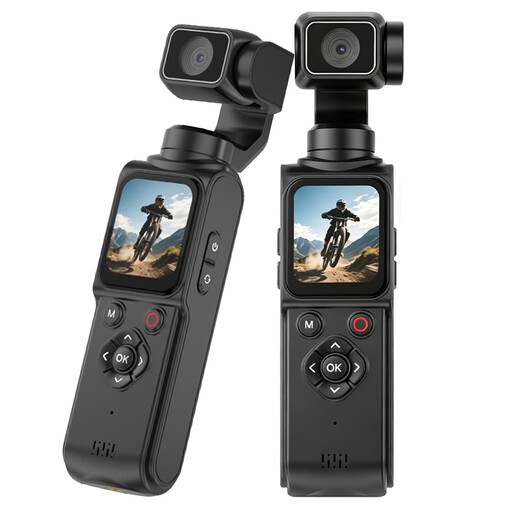
KINSI Mini Vlog Camera 4K with swivelling lens and touchscreen

KINSI Mini Vlog Camera 4K, Wi-Fi, 64 MP, swivelling lens

The product information lists photography and an included mini tripod; check whether its detail capture suits what you want to photograph on your handbags.

The title mentions a 330° swivelling lens and a 1.72-inch touchscreen.

The product information lists a weight of 84 g.

View at Joybuy
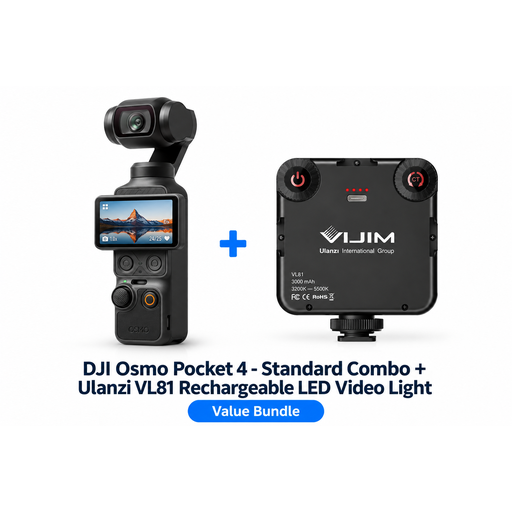
DJI Osmo Pocket 4 Standard Combo with Ulanzi VL81 light

DJI Osmo Pocket 4 Standard Combo + Ulanzi VL81 LED video light

The bundle lists product photography as one use for the included light; consider whether the lighting will suit the space you have around the bag and camera.

According to the product information, the Ulanzi VL81 light has an adjustable colour temperature of 3200 K to 5500 K.

View at Joybuy
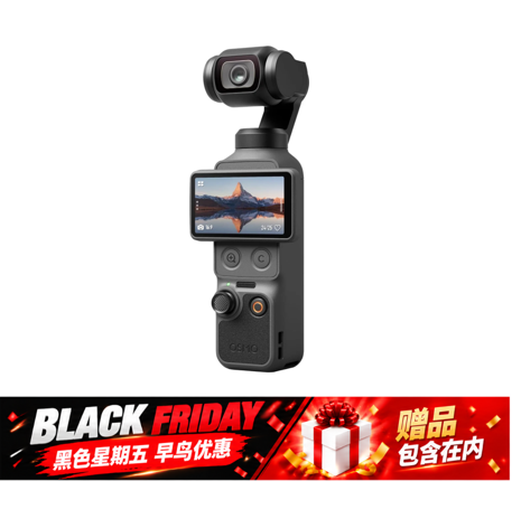
Osmo Pocket 4 Standard Combo with 1-inch CMOS sensor

Osmo Pocket 4 Standard Combo, 1″ CMOS, 4K/240fps

The product title mentions photography; check whether the camera can capture the close-ups you need of seams, fastenings and material texture.

The title lists a 1-inch CMOS sensor, 4K/240fps and 107 GB of built-in storage.

View at Joybuy
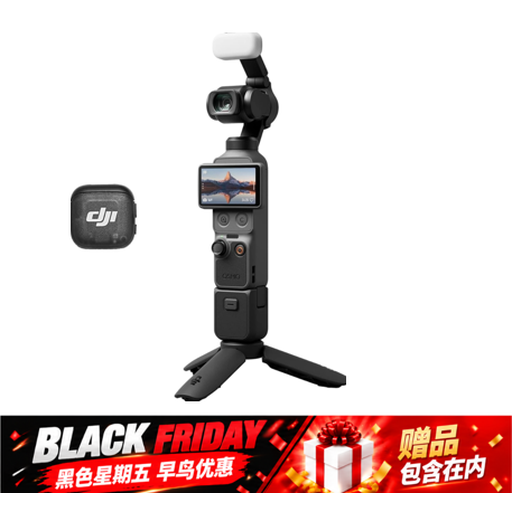
Osmo Pocket 4 Creator Combo with handle featuring a 1/4-inch thread

Osmo Pocket 4 Creator Combo, 1″ CMOS, 4K/240fps

The product title mentions a handle with a 1/4-inch thread; check whether it’s compatible with the accessories you want to use in your set-up.

The title lists a 1-inch CMOS sensor, 107 GB of built-in storage and a handle with a 1/4-inch thread.

View at Joybuy

KOMERY G7-A 4K digital camera in pink

KOMERY G7-A 4K digital camera, pink

The product title mentions photography; before buying, check whether the camera offers the detail framing and colour reproduction you need for handbag photos.

The title lists 80 MP and 18× zoom.

View at Joybuy

Frequently asked questions

Can a tripod help even if the handbag isn’t moving?

Yes. A tripod can keep the frame consistent across a series of photos while you adjust the bag or lighting. It doesn’t, by itself, guarantee accurate colour reproduction.

Is the closest focusing distance enough to photograph a fastening or stitch?

No. You should also check the maximum magnification of the specific lens and the space in front of the camera for lighting. The 1:1 and 1:2 figures mentioned apply to separate lenses and don’t automatically apply to an included standard zoom.

What should you check after a photo session in a shared workshop?

Make a note of the camera position and lighting set-up so you can recreate them at your next session, and check that your camera, lens and accessories are all together before packing away. Product photographer Jillian Lenser explains the benefits of a stable frame for taking a series of product shots.

Should I buy an extended warranty for a camera in the Netherlands?

Not automatically. According to the Dutch government, the seller must provide a solution if a product is faulty. Check the additional terms to see whether a paid warranty gives you extra rights. There isn’t one fixed statutory warranty period that applies to every camera.

Can I include identifiable people who share the workspace in published product photos?

First, check the applicable privacy rules. The Dutch Data Protection Authority states that the GDPR applies when someone photographs and publishes identifiable people on behalf of a business or organisation for professional or commercial purposes; a lawful basis under the GDPR is required. Keep others out of shot if you don’t need them in the product photo.
