
Print catalogue creator
You regularly photograph framed prints and want to assess colours and straight edges carefully. Look for a repeatable lighting setup and the option to review and edit your shots afterwards.


When photographing framed prints behind glass, the lighting setup matters more than simply choosing a different camera body. The Canadian Conservation Institute describes using two light sources, positioned at a 45° angle on either side, for even illumination. A compact camera suits occasional photography when you want to keep your kit simple; a mirrorless camera gives you more choice of lenses if you photograph prints regularly. Compare the complete setups and take a test shot to check that reflections, the print and the frame all remain visible against the dark background.
You regularly photograph framed prints and want to assess colours and straight edges carefully. Look for a repeatable lighting setup and the option to review and edit your shots afterwards.
You want to stop windows or lamps reflected in the glass from obscuring parts of the print. A camera alone won’t remove those reflections, so it’s worth considering the light placement and whether to use a filter.
You want to capture a complete framed print from time to time and are weighing up a simple camera setup against the extra choices that come with an interchangeable lens.
A good fit if: you photograph complete frames occasionally and want to carry as little separate equipment as possible.
Bear in mind: you can’t change the lens, so check that the available framing suits your print and the space you have to set up in.
A good fit if: you photograph prints more often, have frames in different sizes or want to edit RAW files.
Bear in mind: a body without a suitable lens isn’t a complete setup; check which lens is included with the version you’re buying.
| Consideration | What to check before buying | Who will find this important? |
|---|---|---|
| Reflections in the glass | Check whether you can move the light sources. If you’re considering a filter, also check that it’s suitable for the lens. | If I want to reduce reflections without losing parts of the print, I want to be able to adjust the lighting setup first. Around 36% of consumers give reflection control top priority. |
| Colour and tone | Check RAW support for the exact camera model and allow for suitable software; assess the print under even lighting. | Even lighting and editing flexibility matter if you want to assess colours and tones carefully afterwards. Around 29% of consumers put colour assessment first. |
| Detail and full framing | Check the resolution of the exact camera body, which lens is included and whether you can assess a test print with all its corners in view. | If I want to capture fine detail as well as the whole frame, I look at the combination of body, lens and framing. Around 21% of consumers give detail top priority. |
| How straightforward the complete setup is | For a mirrorless camera, check what’s included in the kit. For a compact camera, check that its lens can capture the whole print from the space available. | If you only take photos occasionally and don’t want to work out which separate components to buy, a setup that suits your space is especially useful. Around 14% of consumers put simplicity of the complete setup first. |
Reflections come from the glass and can cover parts of the print; a higher stated pixel count won’t automatically solve the problem.
First, test the light placement and glazing. Only then compare camera bodies and lenses.
A mirrorless camera body and a compact camera with a lens are different types of purchase. With a mirrorless camera, how useful it is also depends on the lens included with the version you choose.
Check exactly what’s included with each version and what equipment you already have.
RAW gives you more scope to edit your photos, but doesn’t by itself guarantee accurate colour. A filter can affect the colour and sheen you see.
Take test shots with and without the filter under the same lighting, then compare them with the physical print. You’ll need suitable software to process RAW files.
Canon offers an interchangeable-lens option with the EOS R50, as well as a compact camera option with the PowerShot G7 X Mark III.
The Nikon Z50II is a DX mirrorless camera with a Nikon Z mount, for anyone who wants to choose a suitable lens themselves.
The Fujifilm X-S20 is a mirrorless camera with an X mount, for anyone looking for RAW capture and a choice of lenses.
Sony offers interchangeable-lens models with an E mount, including the α6400, as well as compact cameras such as the RX100 VII.
This selection includes compact cameras and mirrorless cameras. Check whether the lens, accessories and shooting features included with each model suit your frame and lighting setup.
 No image available
Could suit you if you want to frame your shot from different distances; the zoom specification alone says nothing about reproduction accuracy.
The product name lists 12× optical zoom, 4K, 64 MP and Wi-Fi.
 No image available
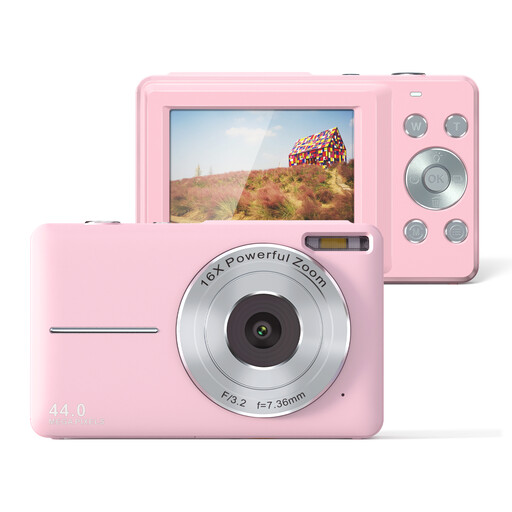
Could suit you if you’re looking for a pocket camera; digital zoom alone doesn’t show how much fine detail will remain visible in a print.
The product name lists 4K, 44 MP and 16× digital zoom. A microSD card isn’t included.
 No image available
Could suit you if you’re looking for a mirrorless camera with a kit lens; check the framing and reflections with your own frame and lighting setup.
The product information lists a 24.2 MP APS-C sensor and a 16–50mm lens. An SD card and adapter/charger aren’t included.
 No image available
Could suit you if you want an interchangeable-lens camera setup; check that the included lens suits the space you have to set up in.
The product information lists an E mount, a 16–50mm lens and a 24.2 MP APS-C sensor.
 No image available
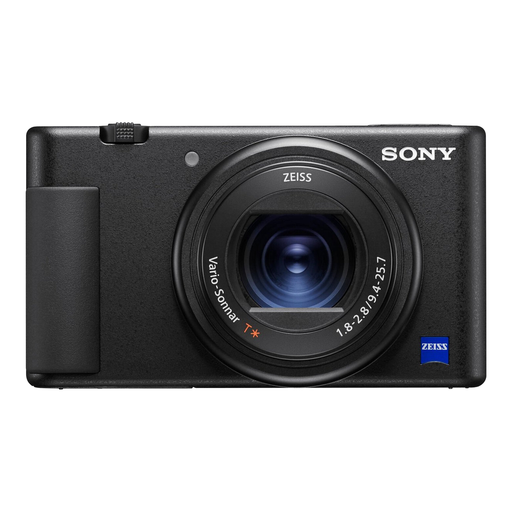
Could suit you if you’re looking for a compact camera and want to edit RAW shots; bear in mind that you’ll need suitable software.
The product information lists RAW, 20 MP and a zoom lens with an equivalent range of 24–70mm.
Start with two light sources on either side of the print and take a test shot. The Canadian Conservation Institute describes positioning them at a 45° angle for even illumination; check whether any reflections are still visible in your glazing.
First check the visible surfaces and move the light sources before taking framed work apart. Glazing can be made from different materials, so don’t assume you’re guaranteed a reflection-free result.
The Dutch government states that products sold in the Netherlands must meet statutory requirements and that there’s no fixed legal guarantee period. The right solution depends on the circumstances of the fault.
For distance purchases from a business, a 14-day cooling-off period applies in many cases. Check the relevant terms and exceptions; the Dutch government distinguishes between buying from a business and buying from a private individual.
Don’t assume that owning the print also gives you the right to publish it. According to the Dutch government, a copyright-protected photo may be copied for personal use, but can’t be shared or made public without permission. Check who owns the rights and what permission or exception applies.