Who are these cameras suitable for?

Spontaneous canal photographer

You want to capture a reflection quickly while out for a walk, so portability and being able to frame a useful shot without changing lenses are your priorities. The Consumers’ Association describes a compact camera as a single unit with a fixed lens.

Photographer of wide views and details

You want to capture wide canal scenes and smaller reflective details from different viewpoints. The lens included in your chosen kit, and whether you can change lenses later, are important things to consider.

Exhibition planner

You’re taking photos with a particular print in mind and want to retain enough pixels after any cropping for the size and viewing distance specified by the organiser or print service.

What should you look for when choosing?

Compact camera with fixed zoom

A good fit if: you want to try both a wide canal view and a tighter frame without changing lenses. Canon lists a fixed 24–100 mm 35mm-equivalent zoom for the PowerShot G7 X Mark III.

Bear in mind: you can’t change the lens later, so check that the zoom range suits the viewpoints available to you.

Compact camera with fixed wide-angle lens

A good fit if: portability and a wide street scene are your priorities, and you don’t expect to rely on optical zoom. Ricoh lists a fixed lens with an approximately 28 mm 35mm-equivalent focal length for the GR IV.

Bear in mind: details further away may require a different viewpoint or cropping; cropping leaves fewer pixels for a print.

Mirrorless camera with zoom lens

A good fit if: you want to choose a lens for both wide views and details, or change lenses later. Canon and Nikon, for example, list kits that include a zoom lens.

Bear in mind: check everything included in the kit; a body without a lens isn’t a complete camera setup. Stabilisation varies between bodies and lenses.

Consideration What to look for when buying Who should pay particular attention?
Lens range and framing Compare the angle of view and, for a mirrorless camera, check exactly which lens is included. I want to be able to frame both a wide view and reflective details from where I’m standing. Around 33% of consumers put lens range and framing first.
Moving water and light Check the shutter speed controls and the stabilisation provided by the body-and-lens combination. For very long exposures, plan to use a firm support. If I want to choose between freezing the water and showing its movement, I focus on shutter speed and a stable setup. Around 25% of consumers prioritise how moving water is rendered and keeping the camera steady.
Taking it on a walk Compare the weight of the complete setup and decide whether the fixed lens or included zoom suits your walks. I want a camera that’s easy to take with me, so I can capture a reflection when the opportunity arises. Around 25% of consumers put portability first.
File for printing Ask the organiser or print service about the size and file requirements, then check the pixel dimensions of your final crop. For a planned exhibition, I want to know whether my final crop will work for the requested print size. Around 17% of consumers put print suitability first.

Common buying pitfalls

  • Choosing a polarising filter because it’s supposed to always make the water look clearer

    A polarising filter can reduce or sometimes remove reflections on water. That may not be what you want if the reflection itself is your subject; Nikon explains both possible effects.

    Decide whether you want to capture the reflection or details beneath the water’s surface, and compare the effect on location before choosing a filter.

  • Comparing camera bodies alone

    With a mirrorless camera, the lens included in the kit determines your range of options on your first day out taking photos. Canon and Nikon list the lens separately in their kit descriptions.

    Compare the full product name and box contents, including the lens and its stabilisation.

  • Assuming a high megapixel count guarantees a suitable print

    Fewer pixels remain after cropping. Adobe explains that resolution decreases when the same pixels are spread across a larger print size.

    Ask about the file requirements and assess the final cropped image, not just the sensor’s megapixel count.

Camera brands to consider

Canon

For this choice, Canon offers both a compact camera with a fixed zoom and mirrorless cameras with interchangeable lenses.

  • Canon lists a fixed 24–100 mm 35mm-equivalent zoom for the PowerShot G7 X Mark III.
  • The EOS R50 kit described includes an RF-S 18–45mm lens.
  • The PowerShot’s lens can’t be changed. The EOS R50 body doesn’t have sensor-shift stabilisation, so check the stabilisation provided by the lens in your chosen kit.

Nikon

The Z50II kit described pairs a mirrorless camera with a NIKKOR Z DX 16–50mm zoom lens.

  • Nikon lists VR in the lens included in this specific kit.
  • If you’re looking at another Z50II kit, check which lens is included. For a very long shutter speed, Nikon recommends a tripod or a firm support.

Ricoh

The GR IV is a compact option with a fixed lens for anyone looking to capture a wide canal view.

  • Ricoh lists an approximately 28 mm 35mm-equivalent focal length and around 25.74 effective megapixels.
  • The fixed focal length doesn’t offer optical zoom for details further away.

Fujifilm

The X-S20 is a mirrorless option for comparing in-body stabilisation and interchangeable lenses.

  • Fujifilm lists a 26.1 MP sensor and five-axis in-body stabilisation for this model.
  • The stated stabilisation doesn’t guarantee that moving water will be sharp; also check which lens is included in your chosen kit.

Sony

The α6700 is an E-mount mirrorless camera you can compare with other systems for lens choice and in-body stabilisation.

  • Sony Netherlands lists an APS-C sensor with approximately 26.0 effective megapixels and five-axis in-body stabilisation.
  • Check the exact version and included lens; these model specifications aren’t an independent performance test.

Cameras at Joybuy

These Joybuy products are digital cameras for anyone who wants to try different ways of framing canal photos. Check the product name and kit contents to see which zoom lens or version is included with your choice.

Komery W6 digital camera with 12× optical zoom and 4K

Komery W6 12× Optical Zoom 4K Digital Camera

The product title mentions optical zoom, which lets you try different framings from one viewpoint.

The title lists 12× optical zoom, 4K and 64 MP.

View at Joybuy
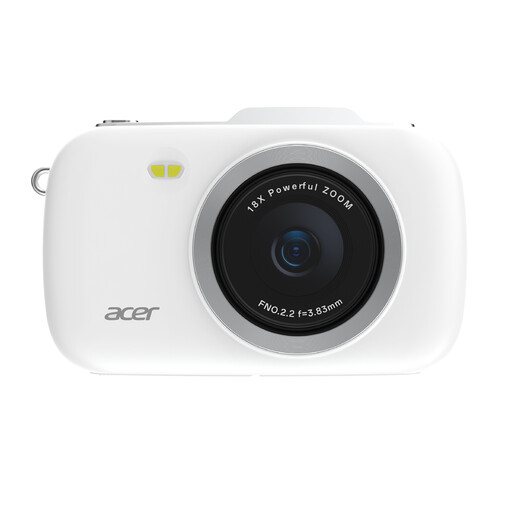
KOMERY G7-A digital camera with 18× zoom, 80 MP and white finish

KOMERY G7-A 18× Zoom 4K Digital Camera, White

The product title mentions zoom; compare the stated range with the framing you want for photos taken from the canal.

The title lists 18× zoom, 80 MP UHD and a white finish.

View at Joybuy
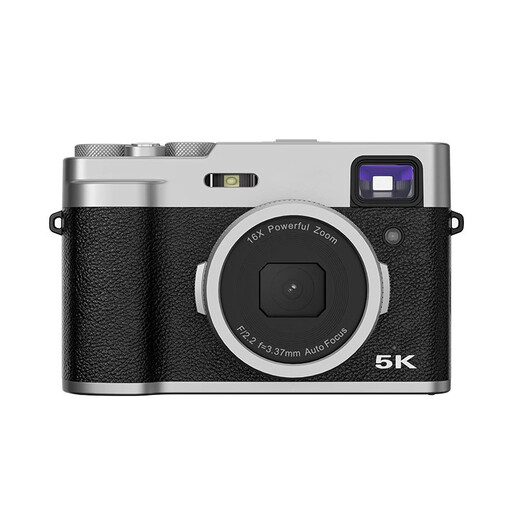
Songdian compact digital camera with autofocus and optical viewfinder

Songdian Retro 48MP Autofocus Compact Camera, Black

The product title describes a compact camera; compare the version with the way you want to frame shots while out for a walk.

The title lists 48 MP and autofocus; the product name specifies a black finish.

View at Joybuy
Sony ZV-E10 with 16–50mm zoom lens, black finish

Sony ZV-E10 + 16–50mm Zoom, Black

The product name describes a Sony ZV-E10 kit with a 16–50mm zoom lens for trying different framings.

Check that the listed lens and version suit your intended use and the print you have in mind.

View at Joybuy
Sony Alpha A6100 with 16–50mm f/3.5–5.6 OSS II lens

Sony Alpha A6100 + 16–50mm f/3.5–5.6 OSS II

The product name lists a Sony Alpha A6100 kit with a 16–50mm lens for adjusting your framing.

Check the lens version and kit contents before comparing the camera with other kits.

View at Joybuy

Frequently asked questions

Should you buy a polarising filter to make reflections easier to see?

Not necessarily. Nikon explains that a polarising filter can reduce reflections on water, which may be useful if you want to see beneath the surface but less helpful if the reflection is your subject. Try it on location before choosing a filter.

Do you need image stabilisation or a tripod for a long exposure?

For a deliberately very long shutter speed, Nikon recommends a tripod or another firm support. Also check whether stabilisation is in the body, the lens or both; stabilisation won’t freeze moving water.

How do you prepare a photo for an exhibition?

First, ask about the required print size and file requirements. Then check the pixel dimensions of your final cropped photo against the required print resolution. Adobe explains that enlarging an image without adding new pixels reduces its pixel density.

What warranty and cooling-off period apply when buying in the Netherlands?

When a consumer makes a purchase, the seller must resolve issues with a faulty product. According to the Government of the Netherlands, there’s no single fixed statutory warranty period for all products in the Netherlands. For online purchases from a business, a 14-day cooling-off period applies in many cases. According to the Government of the Netherlands, an online purchase from a private individual doesn’t count as a distance sale in this sense.

Can you use recognisable passers-by in a photo for an exhibition?

It depends on the photo and how the exhibition or any online publication is organised. The Dutch Data Protection Authority explains that organisations need a valid legal basis to publish personal data, and that consent is often required. Discuss recognisable people and the intended use with the organiser in advance; don’t assume there’s a general exemption for photos taken in public places.
