If you want to switch from the whole skyline to the finer details on a morning walk without changing lenses, start by looking at a compact camera with a suitable wide-angle setting and optical zoom. A mirrorless camera is a better fit if you want the option to change lenses later, but compare the complete kit rather than just the camera body. In low morning light, the lens and sensor also matter; zoom or stabilisation alone won’t guarantee a sharp photo of a moving boat, as the Consumers’ Association and the specifications from Sony, Panasonic and Canon make clear.
Who is this choice relevant to?
Walker looking to travel light
You want to take your camera along without changing lenses and quickly capture a wide view. The Consumers’ Association highlights size and zoom range as points to consider, so check that the wide-angle setting suits your walking route.
Photographer capturing the first morning light
You take photos before it’s fully light and want to weigh up the lens and sensor against the size of your kit. The Consumers’ Association points out that both are important for image quality.
Looking to capture details across the water
You want to frame distant buildings or boats from the same bank. Optical zoom can help, but a high zoom level can make it harder to keep a subject in the frame.
Which buying concerns matter?
First decide whether, from your chosen spot, you mainly want to capture a wide skyline or details across the water. Then compare portability and performance in the light you’ll be shooting in.
| Buying concern |
What to check before you buy |
Who should consider this most? |
| Framing the whole skyline |
Compare the equivalent wide-angle setting and the weight of the complete setup, including the lens, battery and memory card. |
If you can’t step further back from the path, you’ll want the skyline to fit into a single frame. Around 36% of consumers prioritise a portable camera that can capture a wide view. |
| Taking photos in low morning light |
Look at the sensor, the lens’s maximum aperture at the focal length you’ll use, and the stabilisation of the exact setup. According to the Consumers’ Association, the lens and sensor are important factors in image quality. |
If you’re taking photos before it’s fully light, you’ll want to consider the lens and sensor, and may be happy to accept a larger setup or a more limited zoom range. Around 29% of consumers prioritise performance in the early morning light. |
| Capturing details across the water |
Check the optical zoom range and angle of view; framing a subject at a high zoom level can be trickier. Zoom alone doesn’t tell you how well a camera performs in low light. |
If you can’t get closer to buildings or boats, optical zoom is important when shooting from the same bank. Around 21% of consumers prioritise distant details over a wide angle of view or a compact kit. |
| Walking in changeable weather |
Check the weather protection of both the camera body and the lens you’ve chosen; a weather-sealed body doesn’t automatically make the whole setup weatherproof. |
If you’ll still be walking in the rain, you’ll want to know what protection the complete setup offers. Around 14% of consumers prioritise protection in changeable weather. |
Common buying mistakes
-
Assuming the highest zoom is automatically the deciding factor
A high zoom level can make it harder to keep a distant subject in the frame. With compact cameras, the sensor and lens aperture also affect image quality.
First work out how much zoom you’ll need from your spot by the water, then compare the sensor and maximum aperture.
-
Confusing the weight of the camera body with the weight of your walking kit
The weight of a body doesn’t tell you how much you’ll actually be carrying or what angle of view you’ll have available straight away.
Compare the complete kit and its ready-to-use weight. If you’re looking at a body-only option, check which lens you’ll still need.
Also check whether a suitable lens, memory card and, if needed, an extra battery are included in the setup you’ve chosen.
-
Expecting stabilisation to freeze moving subjects
Image stabilisation helps reduce camera shake, but it doesn’t mean a moving boat will be sharp at every shutter speed.
When taking a test shot, pay attention to how the subject is moving and to the shutter speed you’re using, not just the stabilisation indicator.
Camera brands to consider
Sony
The RX100 VII is a compact camera with a fixed lens, suited to anyone who wants to switch between wide views and details on a walk.
- Sony lists a 24–200 mm equivalent lens, a weight of around 302 g including battery and memory card, a Type 1.0 sensor and optical stabilisation for photos.
- The lens isn’t interchangeable. Sony gives the maximum aperture as f/2.8 to f/4.5.
Canon
The EOS R50 with RF-S 18–45 mm IS STM is a mirrorless camera kit with an interchangeable lens.
- Canon lists the lens as having a 29–72 mm equivalent range and optical image stabilisation.
- Canon states that the EOS R50 doesn’t have in-body image stabilisation. The body weight isn’t the same as the weight of the complete kit.
Panasonic
The LUMIX DC-TZ99 is a compact camera for anyone who wants plenty of optical zoom from a single spot.
- Panasonic lists 30× optical zoom and a weight of around 322 g including battery and SD card.
- The specifications list a 1/2.3-inch sensor and a maximum aperture of f/3.3–6.4. A long zoom range alone doesn’t prove better results in low light.
Nikon
The Z50II with Z DX 16–50 mm VR is a mirrorless camera kit with a standard zoom lens. It’s also available with a second 50–250 mm VR lens.
- The kit version determines whether the second telephoto lens is actually included.
- Nikon states that the twin-lens kit doesn’t include a charger. Check what’s included with the version you’ve chosen.
OM SYSTEM
The OM-5 Mark II and the specific 12–45 mm F4.0 PRO kit are worth considering if weather protection is important for walks in changeable conditions.
- OM SYSTEM lists the camera body as IP53-rated.
- That specification doesn’t mean every setup is fully waterproof. Check the weather protection of the lens you’ve chosen.
Joybuy product picks
These Joybuy product picks are related to photography on a walk; check whether the features of each model suit the skyline photos you want to take.
 No image available
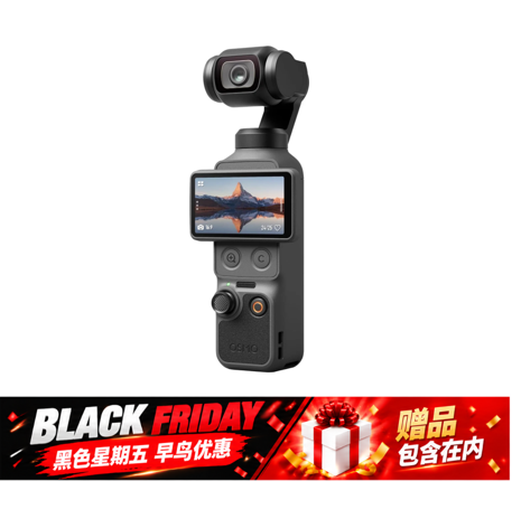
DJI Osmo Pocket 4 Standard Combo
The product title describes this model as a pocket gimbal camera for photography.
The title lists a 1-inch CMOS sensor, 2× lossless zoom and 107 GB of built-in storage.
View at Joybuy
 No image available
Komery W6 digital camera
The optical zoom could be useful if you want to frame details from the same bank; check that the camera otherwise suits your photography needs.
The product title lists 12× optical zoom, 4K and Wi-Fi.
View at Joybuy
 No image available
DJI Osmo Pocket 3
The product title mentions photography, so this could be worth considering if you’re looking at a pocket camera; check whether the features suit the kind of skyline photos you want to take.
The title lists a 1-inch CMOS sensor, 3-axis stabilisation and a rotating touchscreen.
View at Joybuy
 No image available
Songdian 5K digital camera, black
The product title mentions both photography and video; check that the controls and angle of view suit the wide view or details you want to capture.
The title lists 10× optical zoom and 56 MP.
View at Joybuy
 No image available
Sony ZV-E10 with 16–50 mm zoom lens, black
This version is sold with a 16–50 mm zoom lens; check that the angle of view of this combination suits your viewpoint.
The product name lists a Sony ZV-E10 with a 16–50 mm zoom lens. Check which accessories are included with the version you’ve chosen before buying.
View at Joybuy
Frequently asked questions
Should you focus mainly on megapixels when capturing the whole skyline?
No. First check whether the angle of view of the supplied lens is wide enough from your chosen spot. The Consumers’ Association says that both the lens and sensor are important for image quality; a higher megapixel count alone doesn’t prove that a camera will take better photos in low light.
What should you check before taking a mirrorless camera on a walk?
Check what’s included in the exact kit, and take a charged battery and a compatible memory card. Nikon, for example, states that its Z50II twin-lens kit doesn’t include a charger.
Who can help if a camera bought online breaks down too soon?
If a product is faulty despite being used normally, the seller is responsible under the legal guarantee. In the Netherlands, this guarantee doesn’t have a fixed term of just two years: what you can reasonably expect from a product’s lifespan depends on the product and the circumstances. When you buy from a business at a distance, you’ll also usually have a 14-day cooling-off period.
Can you share a skyline photo publicly if passers-by are recognisable?
According to the Dutch Data Protection Authority, the exception for personal or household use applies when you keep photos private or share them only with a very limited circle. This exception doesn’t apply when you share photos of recognisable people more widely in public; you’ll need an appropriate legal basis under the GDPR. This isn’t a general ban on photographing a skyline.


