Choose based on the smallest details you want to capture and the space the camera, lens and lighting will take up around the table. An OM SYSTEM TG-7 offers close-up capabilities without a separate lens; a mirrorless camera gives you more choice of lenses, but the kit zoom supplied with it won’t necessarily be suitable for small engravings. A stable setup helps you take consistent overview shots, while depth of field and reflections need separate consideration.
Who is this guide for?
Anyone documenting small details
If you want to capture inscriptions, serial numbers and signs of wear as well as the whole camera, check the magnification of the actual lens rather than relying on the camera specifications alone. OM SYSTEM and Nikon describe the TG-7’s close-up capabilities and a separate macro lens for Nikon Z DX.
Anyone with limited table space
The camera, subject and lighting all need to fit on or around a small table. Choose a setup that still lets you frame your shot and direct the light; OM SYSTEM’s quoted minimum focusing distance doesn’t, by itself, tell you how much room you’ll have left for lighting.
Anyone taking repeatable photos
If you take similar photos of collectables, pay attention to consistent framing, backgrounds and how clearly the camera’s condition is shown. Canon Netherlands recommends using a tripod to achieve a consistent composition in product photography.
What should you look for when choosing?
First decide which photos you’ll take most often: an overall view, small details or a consistent presentation. Then check whether the lens, working space and lighting are suitable for that setup.
| What to consider |
What should you check? |
Who should prioritise this? |
| Small details |
Check the close-up mode or maximum reproduction ratio of the exact camera and lens combination, and try capturing the smallest details you want to show. |
If I want to capture engravings, serial numbers or wear as well as the whole camera, the lens needs to show those details large enough. Around 31% of consumers put detail reproduction first. |
| Space around the table |
Consider the framing and the distance between the lens and the subject; minimum focusing distance isn’t the same as the free space you need for lighting. |
If my table has limited space, I want to position the camera and lighting without losing the whole subject from the frame. Around 25% of consumers prioritise working space. |
| Sharpness and presentation |
Check whether you can work steadily, adjust the lighting and background, and, if needed, capture multiple focus points. |
If I want to take similar photos where different parts of the camera remain clear, I’ll consider both focusing options and reflections. Around 25% of consumers prioritise consistent presentation. |
| Complete setup |
Compare the exact box contents with the lens and accessories you need for your photos. |
If I want to know in advance which components I’ll need to capture the details I want, I’ll look beyond just the camera body or kit name. Around 19% of consumers prioritise the complete setup. |
Common buying mistakes
-
Assuming the minimum focusing distance is the working distance you need
OM SYSTEM’s quoted focusing distance of up to 1 cm for the TG-7 doesn’t tell you how much room will be left to direct light onto the subject.
Before choosing based on that specification, try photographing your smallest subject with the lighting and framing you plan to use.
-
Assuming a mirrorless camera kit includes a macro lens
The Nikon Z50II kit mentioned comes with a 16-50mm zoom; Nikon sells the Z DX MC 35mm f/1.7 separately.
Check the exact box contents and whether you’ll need a separate lens to capture the details you want.
A suitable macro lens may be a separate purchase if the kit zoom doesn’t show the details large enough.
-
Assuming more megapixels mean a completely sharp photo
Resolution alone doesn’t determine whether parts at different distances will look sharp or whether shiny surfaces will be well lit. Depth of field, stability and lighting each need separate consideration.
Consider the lens, depth of field and lighting setup alongside the sensor resolution.
Camera brands to consider
OM SYSTEM
The TG-7 offers a compact option with built-in close-up capabilities, while the OM-5 Mark II is a mirrorless camera with Focus Stacking.
- OM SYSTEM states that the TG-7 can focus as close as 1 cm and has approximately 12 megapixels; the Dutch product information mentions a microscope mode.
- The stated focusing distance doesn’t tell you how much room will be left for lighting. With the OM-5 Mark II, also consider your chosen lens and available working space.
Canon
The EOS R50 with RF-S 18-45mm kit lens is a mirrorless camera option for overview shots, with a choice of compatible RF lenses available later on.
- Canon specifies 24.2 megapixels and focus bracketing for the EOS R50.
- These features don’t prove that the kit zoom will magnify small engravings enough; assess the magnification you need separately.
Nikon
The Z50II kit comes with a standard zoom; for detail-focused work, a separate macro lens is also worth considering.
- Nikon specifies a maximum reproduction ratio of 0.67× for the Z DX MC 35mm f/1.7.
- The Z50II kit mentioned comes with a 16-50mm zoom, not the separate macro lens. This specification isn’t a comparison of measured image quality.
Sony
The ZV-E10 II is an alternative if you want to shoot product videos as well as photos, using interchangeable lenses.
- Sony describes the camera as an APS-C model with approximately 26.0 megapixels and offers a bundle with a 16-50mm power zoom.
- These details don’t show that the bundled lens will magnify small vintage camera details enough; assess a specific lens for that.
Cameras at Joybuy
These cameras are designed for photography or combine photography with video. For each model, check whether the lens, close-up capabilities and lighting will suit the vintage cameras you want to photograph on your table.
 No image available
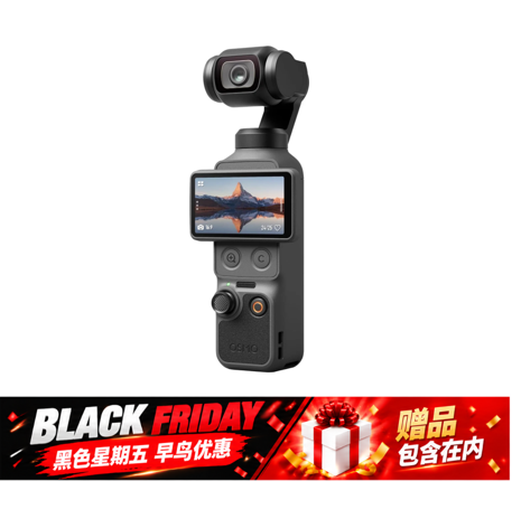
DJI Osmo Pocket 4 Standard Combo
The product name mentions photography and a rotating screen; check separately whether the camera offers the close-ups and lighting your subject requires.
1-inch CMOS sensor, 4K/240fps, 107GB built-in storage and a rotating 2-inch screen.
View at Joybuy
 No image available
Komery W6
The product name mentions photography and optical zoom; check whether the lens shows the smallest details you want to capture large enough.
12× optical zoom, 4K, Wi-Fi and 64MP.
View at Joybuy
 No image available
DJI Osmo Pocket 3 Creator Combo
The product name mentions photography and video; assess separately whether its close-up capabilities suit your vintage cameras.
1-inch CMOS sensor, 4K/120fps, 3-axis stabilisation and included microphone.
View at Joybuy
 No image available
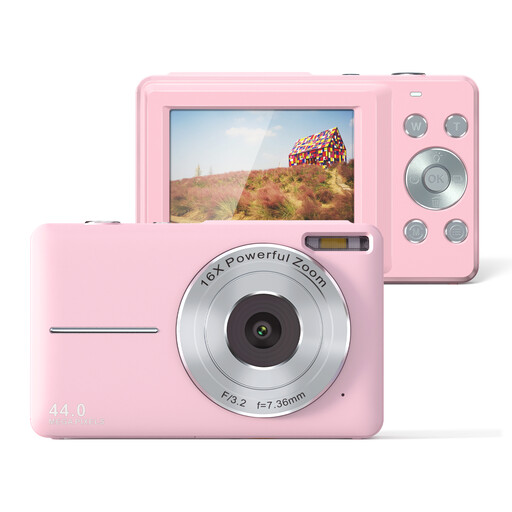
Songdian Pocket Camera 4K 44MP, pink
The product name describes a pocket camera for photography; check how its digital zoom compares with the framing you want for your subject.
4K, 44MP and 16× digital zoom.
View at Joybuy
 No image available
Sony ZV-E10 + 16-50mm Zoom, black
This bundle includes a zoom lens for framing subjects; check whether its magnification is sufficient for small inscriptions and signs of wear.
16-50mm power zoom lens and vari-angle screen.
View at Joybuy
Frequently asked questions
Do I need a macro lens straight away to take an overview photo of a vintage camera?
No, not for an overview photo alone. First check the framing with the kit zoom; for small engravings or signs of wear, compare the magnification of a specific macro lens or a close-up mode.
How can I take a series of similar photos on a table?
Set up the camera securely and keep the framing and background consistent. Then check the exposure and focus from your chosen angle; Canon Netherlands recommends using a tripod to achieve a consistent composition in product photography.
Does focus bracketing mean the whole subject will be sharp in one shot?
No. With focus bracketing, you take several shots at different focus points; those images need to be combined to create a composite. Check which shooting and merging functions the exact camera model offers.
What warranty applies in the Netherlands when I buy a camera from a business?
For a consumer purchase, the product must have the qualities you can reasonably expect, and you can contact the seller to resolve any issues. The Dutch government states that the Netherlands has no fixed statutory warranty period; a manufacturer’s warranty is an additional benefit.
Do I always have 14 days to change my mind when buying online?
In many cases, a 14-day cooling-off period applies when you buy remotely from a business. The Dutch government lists exceptions and distinguishes between buying from a business and buying from a private seller, so check who the seller is and whether an exception applies.


