
Flower-detail photographer
You want to capture veins, petals or small arrangements in sharp detail. So pay attention to the focusing distance and magnification of the specific lens or camera.


Choose a compact camera if you want to switch between subjects without changing lenses; a mirrorless camera is a better fit if you want to choose a lens for flower details. In overcast light, your choice also depends on the lens, shutter speed and how much your subject moves. So check the focusing distance and exactly what’s included in the kit you’re considering.
You want to capture veins, petals or small arrangements in sharp detail. So pay attention to the focusing distance and magnification of the specific lens or camera.
You switch between stall-wide shots and fleeting moments. Ease of use and focusing matter, as well as performance in low light.
You want to carry as little as possible and would rather not change lenses. Compare the convenience of a compact camera with the limitations of a fixed lens.
Choose this if: flower details matter to you and you’re happy to match the lens to your subject. Canon says the EOS R50 supports RF and RF-S lenses.
Trade-off: you’ll need to check the lens and what’s included in the package yourself; according to Canon, the EOS R50 does not have sensor-shift image stabilisation.
Choose this if: you want to frame different shots without changing lenses. Sony specifies an equivalent zoom range of 24–200mm for the RX100 VII.
Trade-off: the lens is fixed, and the focusing distance varies depending on the zoom setting; Sony quotes around 8 cm at the wide-angle end and around 100 cm at the telephoto end.
Choose this if: you need to photograph subjects from very close up and want protection in wet conditions. OM Digital Solutions says the Tough TG-7 can focus from around 1 cm and is waterproof to 15 m.
Trade-off: the lens is fixed, and the manufacturer lists a sensor of around 12 megapixels. The published firmware and software support period ended on 30 September 2026.
| What to consider | What to look for | Who is this important for? |
|---|---|---|
| Sharpness in overcast light | Compare the maximum aperture of the supplied lens at the focal length you’ll use. Also check whether image stabilisation is in the camera body, the lens or both. | If I want to photograph flowers or visitors in motion, I need to know whether the lens I choose lets in enough light. Around 36% of consumers prioritise sharp photos in overcast light. |
| Close-up flower photography | Check both the focusing distance and maximum magnification of the exact lens or camera. The minimum focusing distance can vary depending on the zoom setting. | If you want to fill the frame with veins or small flower details, suitable close-up capabilities are particularly useful. Around 29% of consumers give flower details top priority. |
| Quick framing | Look at the zoom range of the lens you’ll be taking with you, and compare the controls and response speed of the exact model. | If I’m quickly switching between distances and subjects as I move between stalls, I want to react quickly without having to change lenses each time. Around 21% of consumers prioritise capturing fast-moving moments at the market. |
| Portability and wet conditions | Compare the weight of the complete set, including the lens. Check the weather protection of the exact camera model and, for a mirrorless camera, the lens too. | If you want to keep your camera kit light during a market visit, consider the total weight; protection from wet conditions matters most if you expect to encounter them. Around 14% of consumers prioritise portability or, where relevant, protection from wet conditions. |
Focusing distance and magnification depend on the lens and settings, not just the camera body.
Check the full bundle name, mount and lens specifications before comparing models.
For the Sony RX100 VII, Sony quotes a minimum focusing distance ranging from around 8 cm at the wide-angle end to around 100 cm at the telephoto end.
Compare the focusing distance and magnification at the focal length you’ll use to photograph flower details.
The Tough TG-7’s waterproof rating is specific to that model. OM Digital Solutions says the published support period for firmware and named software ended on 30 September 2026.
Check what protection and support apply to the exact model and your intended use.
The EOS R50 is an APS-C mirrorless camera; an RF-S 18–45mm lens is one option for wide shots and some close-ups.
The RX100 VII has a fixed zoom lens for anyone who wants to frame different shots without changing lenses.
The Z50II offers an option for anyone who wants to put together a lens combination for market photography and future close-ups.
The Tough TG-7 is a rugged compact camera for anyone who wants to capture very close-up details and needs protection in wet conditions.
This Joybuy selection includes digital cameras, 360° cameras and action cameras. For each model, check that its photo capabilities, focusing distance and lens are suitable for close-up flower shots and wider market scenes.
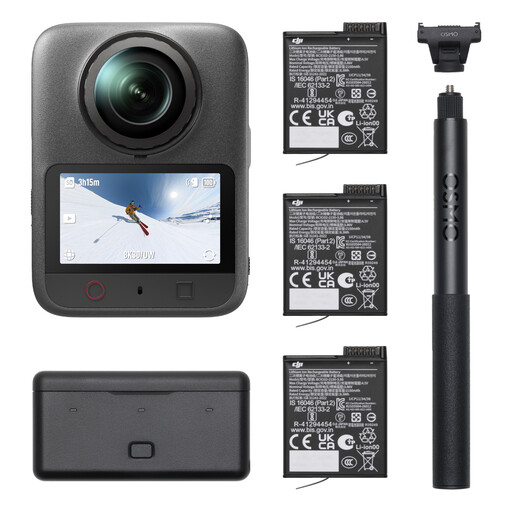 Image unavailable
For stills at the flower market, check that this model supports the type of photo you want and the close-up distance you need.
The product name identifies this as a 360 camera and specifies the Adventure Combo bundle.
 Image unavailable
For flower details, check that the focusing distance of this exact model suits the framing you want.
The product name specifies 8× optical zoom, 5K, 64 MP, a dual lens and the colour white.
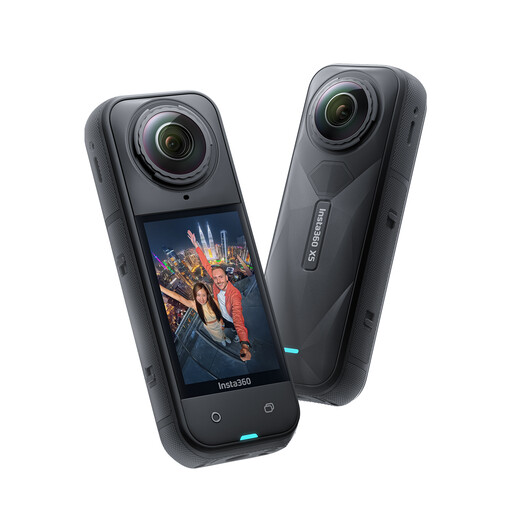 Image unavailable
Check whether this type of 360° action camera is suitable for the everyday photos and close-ups you want to take at the market.
The product name specifies 8K, waterproofing, a replaceable lens and a 3-hour battery life.
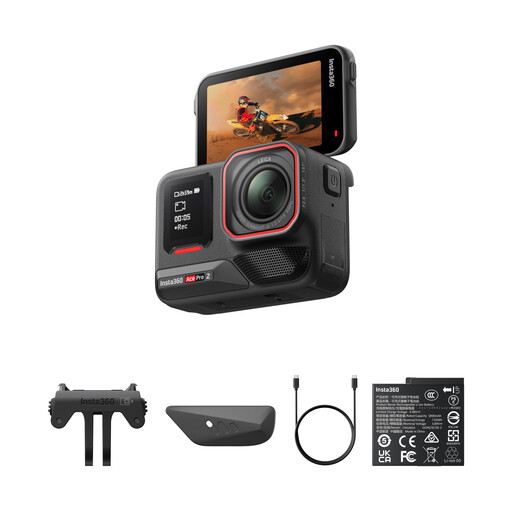 Image unavailable
Check whether the recording features and close-up capabilities of this action camera suit your flower-market photography.
The product name specifies an 8K waterproof action camera, a Dual Battery Bundle and a 1/1.3″ sensor.
Not for every bouquet or wide market scene. If you want to fill the frame with small flower details, compare the maximum magnification and focusing distance of the exact lens. Nikon describes macro and telephoto lenses as different ways to photograph flowers.
Check that the shutter speed is fast enough for your moving subject and adjust the exposure accordingly. Nikon explains that a faster shutter speed lets in less light; image stabilisation helps prevent camera shake, but it won’t freeze subject movement.
Check whether the package on offer includes a lens and whether its mount fits the camera body. Canon says the EOS R50 directly supports RF and RF-S lenses; EF and EF-S lenses require a suitable adapter, while EF-M lenses are not compatible.
For a typical online consumer purchase in the Netherlands, ACM ConsuWijzer says you generally have up to 14 days after delivery to change your mind, subject to legal exceptions. You’re also covered by the statutory guarantee: under the applicable conditions, the seller must resolve issues if a product doesn’t meet what you could reasonably expect from it during normal use. In the Netherlands, there is no fixed general two-year period for the statutory guarantee.
Distinguish between private use and wider publication. The Dutch Data Protection Authority explains that identifiable people are personal data, and the exception for personal or household use only applies if images stay private or are shared with a very limited circle. The GDPR may apply to wider publication or commercial use, in which case you need an appropriate legal basis; don’t assume you have general consent simply because the market is open to the public.