
Maker who wants to show off embroidery stitches
You want to capture small stitches and the texture of the thread clearly. That’s why the magnification of the specific lens and the close-up mode matter, not just the camera body.


A compact camera with a close-up mode is a good fit for a shared workbench if you want to pack everything away quickly and avoid changing lenses. A mirrorless camera gives you more choice of lenses if you want to photograph both the whole bag and small stitches. Start with the smallest detail you want to show, then check that there’s enough room for support and lighting. Compare test shots under the same lighting too, so you can assess colour and framing.
You want to capture small stitches and the texture of the thread clearly. That’s why the magnification of the specific lens and the close-up mode matter, not just the camera body.
You photograph the bag regularly and want to repeat the framing and assess colour differences caused by changing workbench lighting.
You need to be able to put your equipment away after taking photos, so you want to know how much space the camera, support and lighting take up together.
Choose based on the detail you want to show, the space available on your workbench and how easily you can repeat the same framing and lighting.
| What to consider | What to look for when buying | Who is this important to? |
|---|---|---|
| Showing fine embroidery stitches | Compare the magnification of the exact lens or the close-up mode. If possible, take a test crop of the smallest stitch you want to show. | I want the smallest stitches to remain clear, even when I’m photographing the whole bag. Around 33% of consumers say stitch detail is their top buying priority. |
| Repeating fabric colour and framing | Assess the white balance and take a test shot under the lighting you plan to use. Check whether you can put your camera and bag in the same place each time. | When I take several photos, I want to assess the fabric colour and crop under similar lighting. For around 25% of consumers, colour and repeatable framing come first. |
| Clearing the workbench | Assess how much space the complete setup of camera, support and lighting takes up, not just the body. | I need to clear the workbench after taking photos, so I want to know how much room the whole setup needs. Around 25% of consumers give being able to put their equipment away top priority. |
| Fitting the whole bag in the frame | Check whether the lens can frame the entire bag from the available distance, and whether the version you’re considering includes a lens. | I want a clear photo of the whole bag first and would rather not buy extra equipment until I need it. Around 17% of consumers prioritise a full-bag photo and a straightforward purchase. |
The stated 1:1 or 1:2 magnification applies to a specific lens. It doesn’t automatically apply to every kit from the same brand.
Before buying, compare the full model name, lens mount and included lens. Canon and Sony specify the magnification for the individual macro lenses mentioned here as examples.
A suitable macro lens may need to be purchased separately.
Photographing close to your subject can leave little room for lighting. Nikon also explains that depth of field is often shallower in macro photography.
With the bag and lighting in their actual positions, check that the stitch detail you want is in focus and that there’s enough room in front of the lens.
Changing light or a different white balance can affect how colours appear between shots. Canon Netherlands explains that, for example, a white wall can look yellow under artificial light if it isn’t corrected.
Compare test shots under the same lighting and check the white balance before choosing a different body.
The EOS R50 with an RF mount is a mirrorless camera with an interchangeable lens. For detail shots, the RF 35mm F1.8 MACRO IS STM is a separate lens option.
The ZV-E10 II has an E mount. The separate E 30mm F3.5 Macro is an option for photographing small stitches. Sony also describes a kit with an E PZ 16-50 mm F3.5-5.6 OSS II zoom lens.
The Z50II is a mirrorless camera with a viewfinder. The NIKKOR Z MC 50mm f/2.8 is a separate macro lens for detail shots.
The Tough TG-7 is a compact camera with a fixed lens and close-up mode, for anyone who doesn’t want to build a separate lens system.
This selection includes vlog cameras, digital cameras and a Sony ZV-E10 with a zoom lens. Check each version to see whether you can frame the whole bag and capture the stitch detail you want in focus.
 No image available
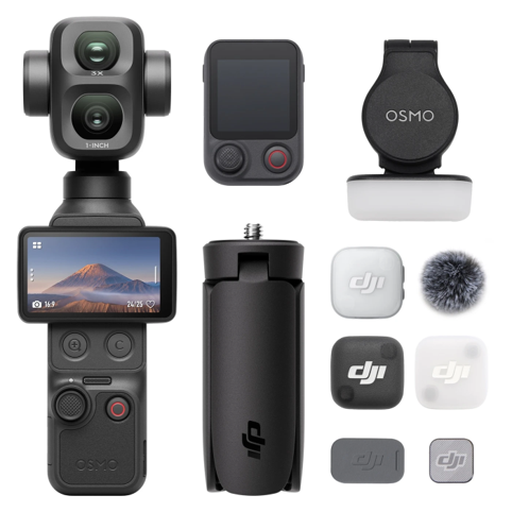
This vlog combo could be a good fit if you want to shoot video as well as take photos. Check whether its close-up capabilities are suitable for the stitches you want to show.
 No image available
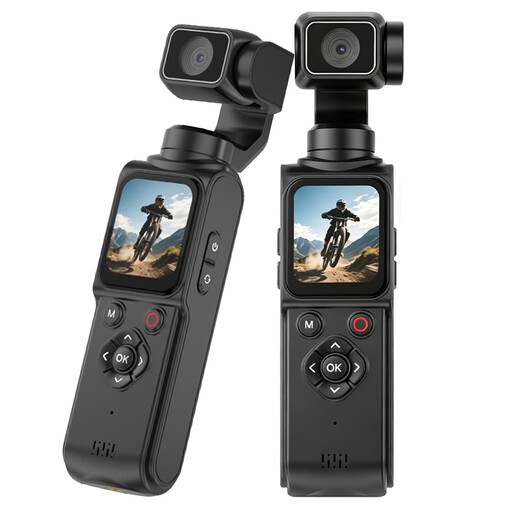
Assess this vlog camera based on the crop you need, and check whether its lens can capture the embroidery detail you want.
The product name lists a 330° rotating lens, a 1.72-inch touchscreen, face recognition, a tripod and Type-C.
 No image available
Take a test shot to check whether this digital camera can capture both the whole bag and the smallest stitches that matter to you.
The product name lists 5K, 80MP and 18X Zoom.
 No image available
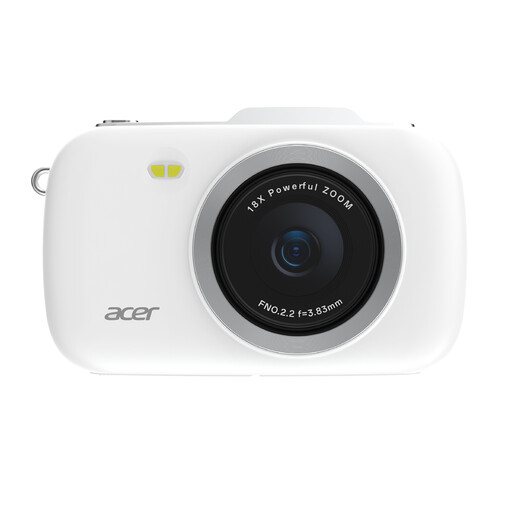
Take a test shot to assess whether the camera captures the embroidery details you want in sharp focus.
The product name lists 4K, 80MP and 18X Zoom.
 No image available
This version could suit you if you want to compare different crops. Check whether you’ll need a separate macro lens for the smallest stitches.
The product name lists a 16-50mm zoom lens.
No. First check whether your current lens shows the smallest relevant stitch clearly enough. Canon lists up to 1:2 magnification for the RF 35mm F1.8 MACRO IS STM and Sony lists 1:1 for the E 30mm F3.5 Macro. These are specifications for those lenses, not a general minimum requirement for photographing bags.
Put the bag and camera in the same place each time, use a stable support if possible, and check the white balance if the lighting changes. Canon Netherlands explains that a tripod can help you achieve consistent composition.
Check what’s included with the exact version. Sony describes a ZV-E10 II kit with an E PZ 16-50 mm F3.5-5.6 OSS II zoom lens; the E 30mm F3.5 Macro discussed here is a separate lens. Also consider which support and lighting will suit your setup.
According to the Dutch government, many online purchases made by consumers come with a 14-day cooling-off period, subject to exceptions. A purchase from a private seller isn’t necessarily covered by the same rules. In the Netherlands, there’s no fixed statutory warranty period. If a product is faulty, contact the seller.
If colleagues are recognisable in the photo and it’s published, the circumstances need to be assessed individually. The Dutch Data Protection Authority states that an employer needs a lawful basis to photograph and publish images of recognisable employees; in most cases, this means consent.