What should you look for in a compact keyboard?
Start by checking how much space you have for the keyboard and mouse. Then check which keys you need during testing and which connections your test devices support.
| What to consider |
What to look for |
Who is this important for? |
| Space for the keyboard and mouse |
Measure the available width and allow for the space you want to leave beside the keyboard for the mouse. Compare this with the dimensions of the exact version. |
If I want to use the mouse beside the keyboard on a small desk, I prioritise having enough combined workspace. Around 36% of consumers say space for a keyboard and mouse is their main requirement. |
| Keys you can access directly |
Make a list of the keys and combinations you use, then check the layout of the model on offer. Look out for functions accessed via Fn or NumLock. |
If I need navigation or function keys during repeated search and filter tests, I want to know where they are and how to use them. Around 29% of consumers give direct access to frequently used keys top priority. |
| Connection to test devices |
For each device, check which Bluetooth or USB connections are available and which cable or receiver comes with the specific version. |
If I run tests on different devices, I want to be able to choose compatible connections without having to rebuild my setup each time. Around 21% of consumers prioritise the connection to their test device. |
| Posture and breaks |
Assess where the keyboard and mouse sit on your desk. If there’s a break indicator, also check whether the required software will work on your test computer. |
If I want to take a visual reminder to have breaks into account when working at a screen, I check that the feature will work with my setup. Around 14% of consumers give posture and breaks top priority. |
Keyboards for a small testing workspace
This selection of Joybuy products includes compact keyboards for small desks, in both wired and wireless versions. When choosing, also check the listed key layout and connection.
 No image available
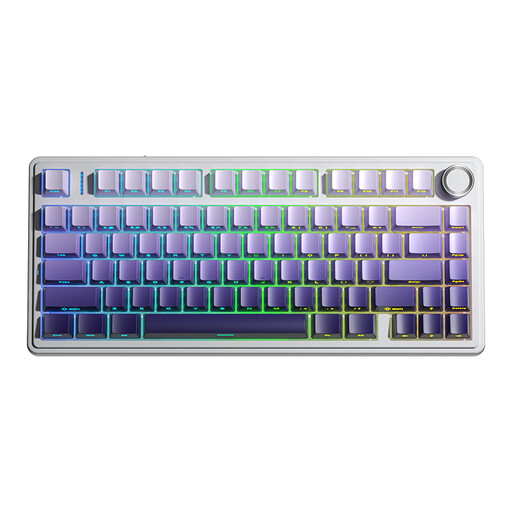
AULA F75 PRO 75% mechanical keyboard, US-QWERTY, tri-mode (wired/Bluetooth/2.4G), Gradient Purple/Star Vector Switch
An option for a small testing setup where you want the choice of a wired or wireless connection.
The product title lists a 75% size, US-QWERTY layout, and wired, Bluetooth and 2.4G connections. Check that the US layout suits your typing needs and that the connections are compatible with your devices.
Joybuy
 No image available
AULA WIN60HE 60% wired gaming keyboard, Hall Effect Magnetic Switch, Rapid Trigger
A wired option to consider if you’re looking for a compact keyboard for a small testing space.
The product title lists a 60% size, wired connection, Hall Effect Magnetic Switch and Rapid Trigger. Check the dimensions and key layout of the version on offer to make sure it suits your setup.
Joybuy
 No image available
Redragon M68 Magnetic Switch mechanical keyboard, metal top plate, 68 keys, US layout
An option to consider if you’re looking at a 68-key layout for a small workspace.
The product title lists Magnetic Switch, a metal top plate and a US layout. Check the physical dimensions and whether the layout suits the keys you use during testing.
Joybuy
 No image available
AJAZZ AK820 75% wired mechanical keyboard, US-QWERTY, grey-white
A wired version to consider for a dedicated testing space with limited desk room.
The product title lists a 75% size and US-QWERTY layout. Check the dimensions of the version and whether your computer has a compatible connection.
Joybuy
 No image available
Razer Huntsman Mini (Purple Switch), US-QWERTY layout
A compact keyboard option to consider when setting up a small testing workspace.
The product title lists a Purple Switch and US-QWERTY layout. Check the physical dimensions, connection and layout of the version before connecting it to your test computer.
Joybuy
Frequently asked questions
Should I always choose the smallest keyboard for a small desk?
No. Choose a size that leaves room for both the keyboard and mouse and suits the keys you use. Logitech lists the Pebble Keys 2 K380s as 279.5 mm wide, but that model measurement doesn’t guarantee the keyboard will fit every workspace.
What should I check before connecting a wireless keyboard to my test computer?
Check which Bluetooth or USB connection your computer supports and which connection the exact keyboard version uses. R-Go describes the wireless Compact Break as using Bluetooth and allowing you to choose one of three channels; these steps don’t automatically apply to the wired version.
Does a break indicator need software?
The Break indicator described by R-Go needs Break software to control it. Check whether you can use the software on your test computer, and remember to take breaks and vary your tasks when working at a screen for long periods.
What cooling-off period or rights apply if I’m not happy with a keyboard after buying it?
For a standard online consumer purchase in the Netherlands, you generally have a statutory cooling-off period of up to 14 days after delivery; ACM ConsuWijzer explains the exceptions. A faulty product is different from simply changing your mind, so check the returns and warranty information that applies to your order.
Are there Dutch rules for keyboards used with screen-based work?
For employees who work at a screen for more than two hours a day, Arboportaal states that the screen and keyboard must not be attached to each other. This is a workplace requirement that applies in certain circumstances, not a general product rule for every individual buyer.


