
Photo organiser with limited mouse space
You work at a narrow desk and want to leave enough room to keep your mouse close by as you review photos. Arboportaal describes situations where a mouse needs to be positioned precisely or moved frequently.


Start by considering the space available on your desk and the keys used by your photo software, then check the layout, connection and compatibility with your computer. A smaller keyboard can free up space for your mouse, while a 75% layout keeps more keys within easy reach. Wireless models give you more freedom to move, but need batteries or recharging.
You work at a narrow desk and want to leave enough room to keep your mouse close by as you review photos. Arboportaal describes situations where a mouse needs to be positioned precisely or moved frequently.
You review lots of images one after another and want easy access to the keys used by your photo software. Adobe describes keyboard shortcuts for Lightroom Classic; the keys you need will depend on your software and workflow.
You might switch between a computer and tablet while organising photos, for example, and want to know in advance how pairing and switching work. Logitech and CHERRY describe keyboards that can connect to multiple devices.
First, measure the space available for your keyboard and mouse. Then compare the keyboard shortcuts in your photo software with the exact key layout. For Lightroom Classic, Adobe describes keyboard shortcuts and ways to organise photos using flags and ratings.
| What to consider | What should you check? | Who is this important for? |
|---|---|---|
| Space for your keyboard and mouse | Measure the available desk width and compare it with the dimensions of the exact model. Also check where the arrow keys are positioned. | If you have a narrow desk, you’ll want to be able to move your mouse beside the keyboard. Around 36% of consumers give the space available for their keyboard and mouse top priority. |
| Keys for selecting photos | Compare the keyboard shortcuts in your photo software with the arrow, number and function keys on the exact layout. | During long selection sessions, I want the keys used by my photo software to be within easy reach. Around 29% of consumers prioritise quick photo controls. |
| Connecting to devices | Check Bluetooth support, operating system compatibility and the USB port required. Find out whether the cable transfers data or only charges the keyboard. | If I organise photos on multiple devices, I want to know how to switch between them. Around 21% of consumers give connecting to and switching between devices top priority. |
| Key noise and power | Check the key mechanism and power source for the exact model, such as AAA batteries or USB charging. | In a shared space, I want to type quietly and know how the keyboard is powered. Around 14% of consumers give quiet operation and a suitable power option top priority. |
Compact models vary in their function rows and key placement. CHERRY notes that you need to use the Fn key for some functions on the KW 9200 MINI.
Before choosing, compare your software’s shortcuts with an image of the exact physical layout.
A port or charging cable doesn’t automatically mean the keyboard supports a wired data mode.
Check whether the cable transfers data, which USB port is required and whether any necessary receiver is included.
Features can vary between versions. Apple distinguishes the Magic Keyboard (USB-C) from the version with Touch ID; Keychron only offers hot-swap on a specific version of the K3.
Compare the full model name, version, physical key layout and included accessories on the product page.
The MX Keys Mini and Pebble Keys 2 K380s are compact options with different features and power sources.
The KW 9200 MINI is a compact option for anyone weighing up different connection choices.
The K3 Version 3 is a compact mechanical option with a 75% layout.
The Magic Keyboard (USB-C) without a numeric keypad is an option for use with a compatible Mac.
These models have a compact 60% or 75% layout. Compare the connection and key layout listed with the space on your desk and the shortcuts in your photo software.
 No image available
A 75% layout to consider if you’re looking for a compact keyboard that retains navigation keys.
The product name lists US QWERTY, wired, Bluetooth and 2.4 GHz connections. The product description says it retains navigation keys; check that the US layout suits your needs.
 No image available
A 60% model to consider if you want to use as little desk space as possible for your keyboard.
The product name lists a wired connection, Hall-effect switches and Rapid Trigger. The listed layout is US; check that the keys you need for your photo software are easy to reach.
 No image available
A 75% layout to consider if you’re looking for a compact mechanical keyboard with customisable keys.
The product name lists wired, Bluetooth and 2.4 GHz connections, hot-swap and VIA compatibility. The listed layout is US.
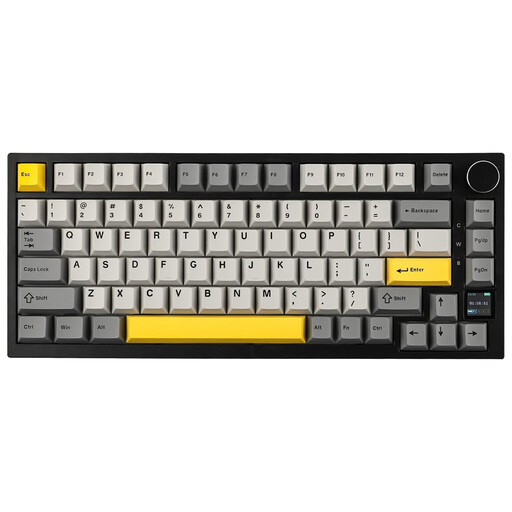 No image available
A 75% model to consider if you’re looking for a compact layout with navigation keys within easy reach.
The product name lists wired, Bluetooth and 2.4 GHz connections and hot-swap. The product description mentions arrow keys; the listed layout is US QWERTY.
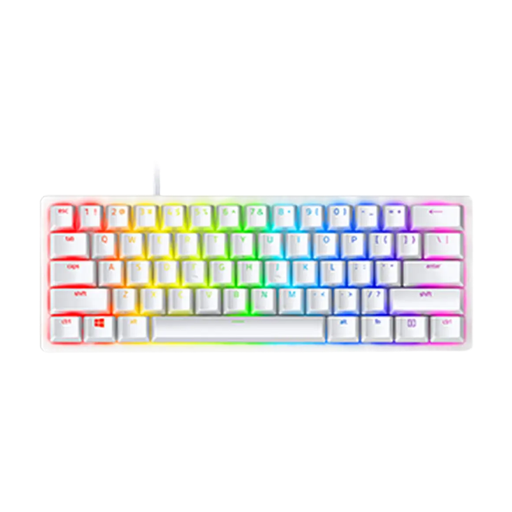 No image available
A 60% model to consider if a compact wired set-up suits your workflow.
The product name lists linear optical switches; the product description mentions a detachable USB-C cable. The listed layout is US.
Not necessarily. First, check the shortcuts and input tasks in your photo software. For Lightroom Classic, Adobe describes using flags and ratings, among other features; whether a keyboard without a numeric keypad works for you depends on your workflow.
Follow the instructions for the exact model and check which ports are available and whether Bluetooth is supported. CHERRY lists a wired data connection for the KW 9200 MINI; Logitech lists 2 × AAA batteries for the Pebble Keys 2 K380s. Also check that the key layout you choose matches your operating system.
Consumers who buy online are generally entitled to a statutory cooling-off period. ACM ConsuWijzer states that this ends 14 days after delivery and explains the exceptions. In addition, if a product doesn’t provide what you could reasonably expect under normal use, the seller must put things right, according to ACM ConsuWijzer.
According to the Dutch government, when you buy a new, similar appliance, you can hand in your old one at the shop. You can also take used household batteries to shops and supermarkets that sell batteries.