
Reviewing feedback with limited desk space
You read and respond to course feedback beside a screen and want to leave room for a mouse or documents. Both the size and a practical key layout matter.


Choose a compact keyboard that leaves enough room for your mouse or documents, while still giving you the keys you need to read and respond to feedback. A cover is particularly useful if you often take your keyboard with you; multiple connection options matter if you switch between devices. Check the layout and connection for the exact version you’re considering. If you choose a wireless model, also check for the CE marking and applicable radio equipment requirements, as explained by the Dutch Authority for Digital Infrastructure.
You read and respond to course feedback beside a screen and want to leave room for a mouse or documents. Both the size and a practical key layout matter.
You might switch between a computer and a tablet while working through responses. So pay attention to the connections and key layout of the version you’re considering.
You take your keyboard with you, so you’ll want to weigh up protection in your bag and power options against how comfortable it is to use once you’re back at a desk.
Start with the space you have available and the keys you use to edit text. Then check whether the connection and how you plan to carry the keyboard suit your devices and workspace.
| What to consider | What should you check? | Who is this important for? |
|---|---|---|
| Desk space | Compare the dimensions of the version you’re considering with the available space beside your screen and pointing device. | When I review feedback beside my screen, I want to leave room for my mouse or papers; that’s why around 33% of consumers prioritise desk space. |
| Typing and navigation | Check the physical key layout, punctuation keys, and how easy it is to reach the navigation and function keys. | When I do a lot of reading and editing, I want to use the keys in a way that suits how I work; around 27% of consumers prioritise typing and navigation. |
| Device connection | Check which connections your devices support and whether you have a suitable free USB port if you want to use a receiver. | When I work through feedback on more than one device, I want to know how to connect each one; around 20% of consumers prioritise connectivity and switching between devices. |
| Portability and power | Compare the dimensions for carrying, any key protection, and the stated power method. | When I work in different places, I want to protect the keys in transit and know how the keyboard is powered; around 20% of consumers prioritise portability and power. |
A smaller keyboard can save space, but its layout may not include the keys you often use to work through responses or edit text.
Check the dimensions and physical keys of the exact version. Make sure the keys you need are easy to reach.
Bluetooth and a USB receiver are different ways to connect. You can only use a receiver if your device has a suitable port.
Check your devices’ available ports and Bluetooth support against the specifications of the model you’ve chosen. Allow for an adapter if your device doesn’t have the required port.
A manufacturer’s description is not a comparative sound test of different keyboards.
If noise matters in a shared space, try the feel and sound of the keys for yourself where possible. Don’t rank keyboards based on a product description alone.
The Dutch government states that the Netherlands has no fixed statutory warranty period. This does not affect your rights if a product is faulty.
Check exactly what any additional cover includes. If there’s a fault, contact the seller to discuss a solution.
The Pebble Keys 2 K380s is designed for compact working and switching between devices. According to Logitech, the universal Keys-To-Go 2 has a built-in cover for the keys.
The Lyra 24707 is a compact option with Bluetooth and a USB receiver.
The KW 7100 MINI BT is a compact option for anyone who wants to switch between Bluetooth devices.
This selection includes keyboards for compact workspaces and versions for certain iPad models. Before buying, check that the layout, connection and device compatibility suit the way you work through feedback.
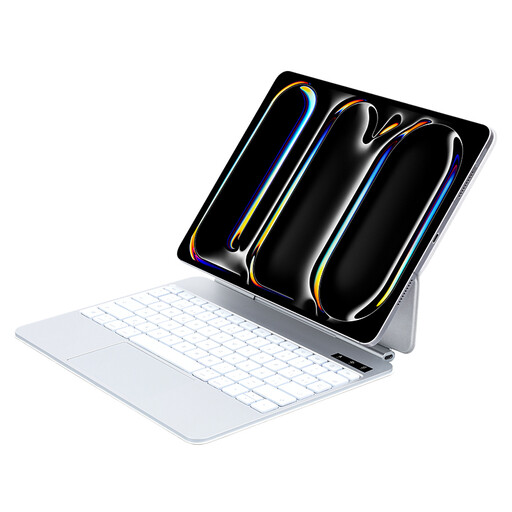 No image available
An option for working through feedback on a compatible iPad Pro; check the exact model of your tablet.
The product name specifies a version for 11-inch iPad Pro models with M4 or M5 chips.
 No image available
A keyboard option if you work through course feedback on an iPad Pro 13-inch M4; check that it matches your tablet.
The product information specifies a Dutch QWERTY layout.
 No image available
A compact layout could suit you if you want to keep desk space free; check that the key layout works for your typing.
The product name specifies tri-mode connectivity, an 8000mAh battery and hot-swappable switches.
 No image available
A 75% model to consider if you’re looking for a compact layout; check that the keys suit the way you navigate and edit text.
The product name specifies wired, Bluetooth and 2,4G connections.
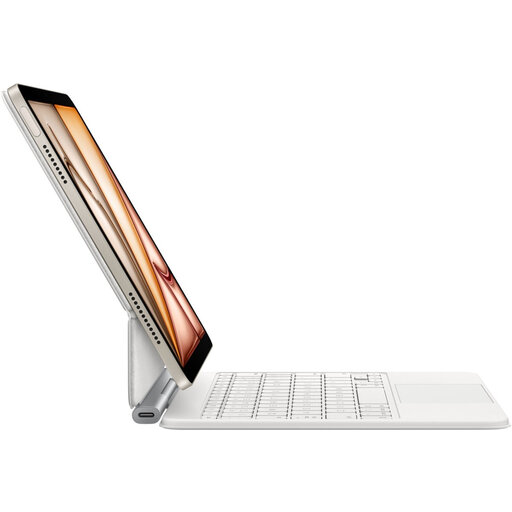 No image available
An option for working through feedback on a compatible iPad Air; check that your tablet supports the version specified.
The product name specifies a Dutch layout and a version for iPad Air 11-inch M3.
No, not necessarily. Measure the available space and also check whether the keys you use for navigation and editing text are easy to reach. A small case alone doesn’t tell you whether the layout suits the way you work.
First check which connections both devices support. Logitech lists Easy-Switch for the K380s; Trust lists a USB receiver and two Bluetooth connections for the Lyra. You’ll need a suitable port to use a receiver.
Check the power method and what’s included with the exact version. Trust lists a rechargeable battery for the Lyra; Logitech describes the universal Keys-To-Go 2 as having an integrated key cover. Follow your model’s instructions for charging and use.
According to the Dutch government, when you buy from a business online as a consumer, you have a 14-day cooling-off period. You’re also entitled to an appropriate solution if a product is faulty; the seller is your point of contact. The cooling-off period and a solution for a fault are separate rights.
Equipment placed on the market in the Netherlands must carry the required CE marking; wireless models are also subject to applicable radio equipment requirements. The Dutch Authority for Digital Infrastructure explains that the manufacturer applies the marking when the requirements have been met. Check the information for the specific version.
Not in every situation. Arboportaal sets out requirements for employees who work with a screen for more than 2 hours a day, including that the screen and keyboard must not be fixed together; when using a laptop, a separate screen or keyboard must be available. This does not apply to every student or a short feedback session.