
Moving home with limited wardrobe space
Wants to iron a few cotton shirts before moving and then store the appliance away neatly.


If you have a few cotton shirts to iron and little storage space after your move, a compact steam iron is an obvious choice. A steam generator may suit longer ironing sessions, but it takes up more room and you’ll need space for both the appliance and a suitable ironing board. Always check the care label on each shirt first.
Wants to iron a few cotton shirts before moving and then store the appliance away neatly.
Wants to smooth collars, cuffs and other tricky areas carefully, while following the care label.
Wants to iron several garments in one go and is weighing up less frequent refilling against the space a steam generator takes up.
Best for: a small pile of ironing and limited storage space. The Consumentenbond says a standard steam iron is suitable if you do little ironing or have little space.
The trade-off: the smaller tank may mean you need to refill more often during longer ironing sessions.
Best for: ironing lots of shirts one after another, if you have room for the separate tank and a suitable ironing board. The Consumentenbond describes this as an option for people who do more ironing.
The trade-off: it takes up more space and is less convenient to move or store.
If you’re planning to iron cotton shirts around a move, storage, careful ironing, session length and maintenance may be your main priorities. The Consumentenbond recommends following the care label.
| What to consider | What to look for | Who might prioritise this? |
|---|---|---|
| Storage | Compare the space needed for the appliance and water tank with the space available where you’ll store it after moving. | If I have little room among the moving boxes, I want to be able to put the iron away easily after a small ironing session. Around 33% of consumers give compact storage top priority. |
| Cotton and details | Follow the care label and check whether a precision tip and suitable temperature setting are right for collars and cuffs. | When ironing collars and cuffs, I want to tackle creases without damaging the fabric, so I follow the care label. Around 33% of consumers prioritise ironing cotton carefully. |
| Long sessions | Compare the tank design and consider how much room you have for an ironing board and, if needed, a separate tank. | If I’m ironing several shirts one after another, I don’t want to keep stopping to refill the water. Around 17% of consumers prioritise long sessions without refilling. |
| Purchase and maintenance | Check which features you need and follow the maintenance instructions for the exact model. | If I only iron occasionally, I don’t want to choose features or maintenance requirements that don’t suit how I use the iron. Around 17% of consumers prioritise keeping purchase and maintenance requirements to a minimum. |
A separate tank can be useful for long sessions, but it takes up extra room when packing and storing the appliance.
Remember to allow space for an ironing board suitable for the larger appliance, too.
Choose the type of appliance based on both how much ironing you do and where you’ll store it afterwards.
The Consumentenbond points out that manufacturers list continuous steam output and the temporary steam boost separately. Too much steam can also leave laundry wet.
Compare the figures separately and consider whether you’ll mainly be ironing for longer periods or tackling localised creases.
Limescale can cause brown marks and leaks; a cleaning function does not replace the maintenance instructions for your specific model.
Cleaning takes time, and any consumables you need will depend on the system you choose.
Read the manual for the exact model and don’t use vinegar or descaler unless the manual says to.
According to Tefal, the Express Steam FV2838E0 is a standard steam iron with a ceramic soleplate, a 270 ml tank and a precision tip.
According to Braun, the TexStyle 3 SI 3030 features a precision tip and self-cleaning.
Philips offers both a standard steam iron and a model with a separate steam generator in this product range.
The products below are steam irons for a compact setup. When choosing one for cotton shirts, pay particular attention to the temperature settings, soleplate type and tank capacity.
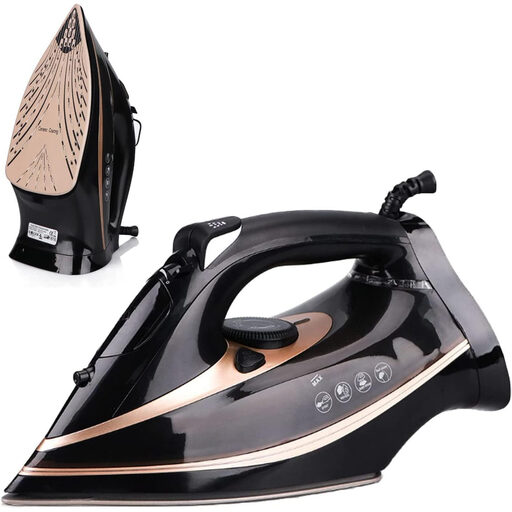 No image available
A standard steam iron for anyone looking for a compact appliance for smaller ironing sessions.
The product name lists 2600 W, continuous steam of 70 g/min, a steam boost of 120 g/min, a 300 ml tank and self-cleaning.
 No image available
A handheld steam iron for anyone planning a standard ironing session for cotton shirts; remember to follow the care label.
The product name lists 2400 W, a non-stick soleplate, automatic cleaning and an anti-drip system.
 No image available
The product name describes a compact, lightweight handheld steam iron with dual voltage, which may be a factor in your choice.
The tank holds 0,15 l; you may need to refill it more often during longer ironing sessions.
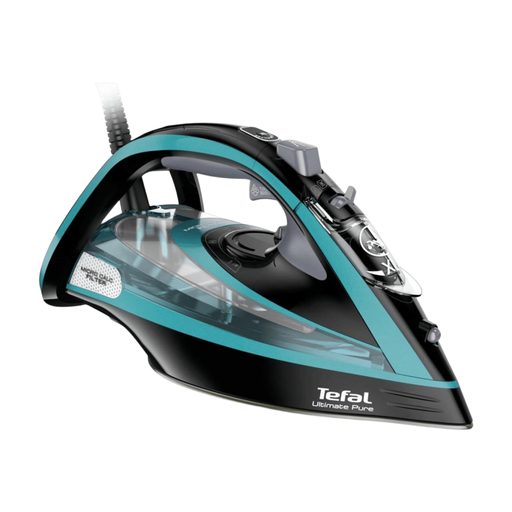 No image available
A standard steam iron for anyone considering a compact appliance for smaller ironing sessions.
For cotton shirts, check that the settings on this version are suitable for the care label.
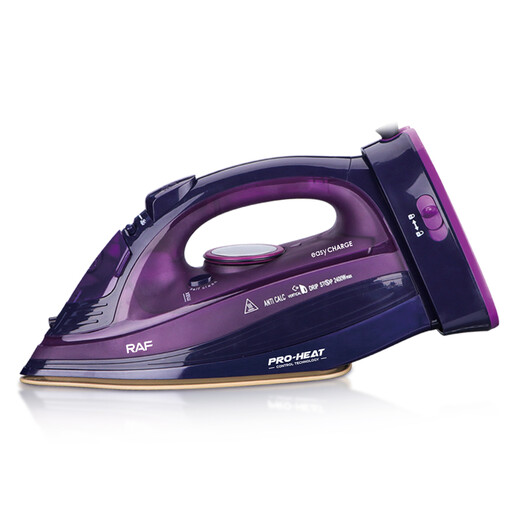 No image available
This cordless steam iron is ideal if you don’t want to move a cord around while ironing.
The product name lists 2400 W, a ceramic soleplate, a 320 ml tank, steam output of 15–25 g/min and self-cleaning.
No. Check the shirt’s care label first: too much heat can damage the fabric or make it shiny. Don’t judge a mixed fabric or special finish by the word ‘cotton’ alone.
A steam boost or spray function may help, but too much steam can leave laundry wet. Only use steam once the iron is sufficiently hot, and let the shirt cool and dry after steaming.
Follow the maintenance instructions for the exact model. Philips describes a Self Clean procedure for its steam irons; Tefal warns that descaling methods vary by type. Don’t use vinegar or descaler in the steam tank unless the manual says to, and let the appliance cool before putting it away.
When you buy as a consumer in the Netherlands, you have a legal guarantee: according to the Rijksoverheid, the seller must offer a solution if the product does not meet expectations. For online purchases from a business, you are also often entitled to a 14-day cooling-off period; check the terms and any exceptions that apply to your purchase.
The manufacturer must assess the appliance against the applicable requirements, affix a CE mark and draw up an EU declaration of conformity. These are the product requirements described by Ondernemersplein, part of the Rijksoverheid.