
Home baker who wants to melt chocolate gently
Wants to control the process and understands that the selected hob setting isn’t the same as the temperature of the chocolate.


If you only need one pan at a time, a portable induction hob with a single cooking zone is an obvious choice. Check that your pan is compatible and that the hob will fit on your worktop. The hob’s selected setting doesn’t tell you how hot the chocolate itself will get: Callebaut Chocolate Academy recommends 40–45 °C for melting and describes the bain-marie method. Measure the chocolate itself, and use a bain-marie if you can’t control the heat accurately. A two-zone hob is mainly useful if you regularly use two pans at once and have the space for it.
Wants to control the process and understands that the selected hob setting isn’t the same as the temperature of the chocolate.
Usually uses one pan at a time and is looking for a separate hob that can be put away after use.
Wants to check in advance that the base of their existing pan is within the range supported by the model they choose.
| What to consider | What should you check? | Who is this important for? |
|---|---|---|
| Gentle, controllable heat | Check the available settings, but don’t rely on the hob setting alone to tell you the temperature of the chocolate. Use a bain-marie if needed, and measure the chocolate. | If you want to melt chocolate gently, you’ll want to be able to check the temperature in the pan. Around 36% of consumers say gentle heating is their main requirement. |
| Space and storage | Measure the available space and compare it with the hob’s width and depth. Also check where you can store the appliance after use. | If you have limited worktop space and usually use one pan, you’ll want a hob that fits the space available and can be put away. This applies to around 29% of consumers who prioritise space. |
| Pan compatibility | Check that the base is magnetic and flat, and compare its diameter with the range specified for the exact model. | If you want to keep using your small saucepan, its base must be suitable for induction and fall within the stated range. Around 21% of consumers prioritise pan compatibility. |
| Connection and controls | Follow the model’s connection instructions and check for the CE marking on the specific appliance. The Netherlands Food and Consumer Product Safety Authority (NVWA) says that CE marking is mandatory for electrical products placed on the Dutch market. The Netherlands Fire Service advises plugging high-power appliances directly into a socket. | If you mainly want to know whether the hob can be used safely and conveniently in the space available, pay attention to the connection and controls. Around 14% of consumers say this is their main consideration. |
The setting on the hob won’t tell you how hot the chocolate in the pan will get. Melting and tempering are also two different steps.
Choose your method first. Use a bain-marie if needed, and measure the chocolate itself rather than relying on the hob setting alone.
A compact induction hob won’t necessarily work with every small melting pan. If a pan falls outside the supported range, you may need to use a different one.
Compare your pan’s base diameter, material and flatness with the specifications for the exact model.
If your current pan isn’t suitable, you may need a compatible induction pan before you can use the hob.
An extra zone takes up space. With portable hobs, the available power supply may also limit how much you can cook at the same time.
Choose two zones only if you regularly use two pans at once, and compare the external dimensions and connection details beforehand.
The KI120T is a portable, single-zone hob for pans within the stated diameter range.
The 303010 is a portable, single-zone model with adjustable temperature and power settings.
The IK-6178 is a portable single-ring hob with touch controls for temperature, power and the timer.
The ProAdvanced E1 is a single hob designed for portable use or built-in installation.
These models are portable induction hobs designed for use with one pan at a time. For melting chocolate, check that your pan is compatible and measure the temperature of the chocolate itself.
 No image available
Suitable for use with one pan at a time; check that your pan is induction-compatible.
10 levels; temperature control from 60–240 °C; timer and automatic shut-off.
 No image available
The portable design may suit you if you want to put the hob away after use; check that you have a suitable place to set it up.
8 adjustable levels; temperature control from 60–270 °C; suitable cookware with a base of 12–26 cm; timer of up to 3 hours.
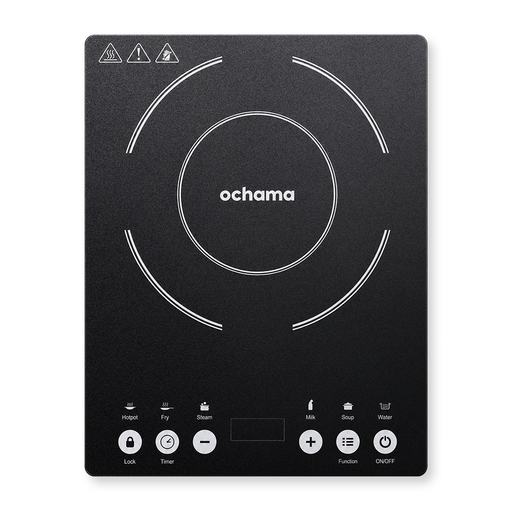 No image available
A portable hob may suit you if you use one pan at a time; check that you have enough space to use and store it.
10 heat settings; touch controls; 6 functions and a child lock.
 No image available
The single cooking zone is suited to using one pan at a time; check that your pan’s base is compatible.
10 power levels; temperature control from 60–240 °C; Ø 26 cm cooking zone; 99-minute timer.
 No image available
The single induction cooking zone is designed for one pan at a time; check that your pan is suitable for this model.
10 power levels; temperature control from 60–240 °C; 99-minute timer.
A 60 °C hob setting doesn’t confirm that the chocolate itself will reach that temperature. Callebaut Chocolate Academy recommends 40–45 °C for melting and describes the bain-marie method. If temperature matters, measure the chocolate itself. Tempering is a separate step if you want a glossy finish and a firm set.
It depends on the base of the pan and the hob’s specifications. Inventum specifies a pan size of 15–20 cm for the KI120T; CASO gives a base diameter of 12–24 cm for the ProAdvanced E1. Also check that the base is flat and suitable for induction.
Follow the connection details and instructions for the exact model. The Netherlands Fire Service advises plugging high-power appliances directly into a socket wherever possible, rather than using a cable reel or extension socket.
The NVWA says CE marking is mandatory for electrical products placed on the Dutch market. Check the marking on the specific appliance. CE marking alone doesn’t tell you how suitable a model is for gently melting chocolate.
In the Netherlands, you’re entitled to a product that meets the expectations you’re entitled to have of it, but there’s no fixed statutory warranty period. The Government of the Netherlands says the seller is your point of contact if there’s a fault. Any manufacturer’s warranty is in addition to your statutory rights.