
Hummus maker with limited worktop space
You mainly want to make hummus, so your first consideration is whether the appliance and its attachments will fit in your available workspace and storage.


If you mainly make small batches of hummus, look for a compact chopper whose manufacturer says it can purée. If you also want to chop and grate, a compact food processor may be a better fit. Compare the usable working capacity with your recipe, and allow space for all the attachments. A hand blender is another option if you prefer to purée ingredients in your own bowl. Manufacturer specifications are not directly comparable hummus tests.
You mainly want to make hummus, so your first consideration is whether the appliance and its attachments will fit in your available workspace and storage.
You want to prepare a batch in as few rounds as possible. So look at the usable working capacity, not just the stated bowl capacity.
You want to use the same appliance for hummus and other food preparation tasks, and you have room to store the extra attachments.
A good fit if: you usually make small batches and want a separate, compact appliance. KitchenAid lists puréeing and hummus among the uses for the 5KFC3516EER.
Consider: a small working capacity may mean preparing the recipe in several batches. A chopping function alone doesn’t tell you what texture the hummus will have.
A good fit if: you regularly want to chop or grate ingredients as well as make hummus, and have room to store the extra attachments.
Consider: attachments need storage space and cleaning; the bowl capacity is not the same as the usable working capacity.
A good fit if: you want to purée ingredients in a suitable bowl of your own. The Netherlands Nutrition Centre (Voedingscentrum) lists a hand blender as well as a food processor for making hummus.
Consider: check which beaker and attachments are included with the model you choose; sets can come with several separate parts.
| What to consider | What should you check? | Who should consider this? |
|---|---|---|
| Worktop and storage space | Measure the available space and compare it with the dimensions and storage requirements of the complete model. | I want to store the appliance and its attachments without cluttering my worktop. Around 33% of consumers who prioritise space have this as their main consideration. |
| Puréeing for hummus | Check whether the manufacturer says the exact model can purée or make hummus, and which blade is included. | I want to know whether the appliance is designed for puréeing, not just chopping. For around 27% of consumers who prioritise a purée function, this is their main purchasing consideration. |
| Usable capacity per batch | Look up the working capacity for the exact model and compare it with your recipe; don’t assume the bowl size tells you the capacity. | I’d prefer to make my desired portion in as few batches as possible. Around 20% of consumers who mainly consider portion size have this as their primary priority. |
| Cleaning | Check the cleaning instructions for each part, and don’t assume the whole set is dishwasher-safe based on a claim about just one part. | I don’t want to clean more parts than necessary after puréeing. For around 13% of consumers who consider ease of cleaning, this is their main purchasing priority. |
| Other food preparation tasks | Compare the included discs and attachments with the tasks you do regularly. | I also want to use the appliance to chop or grate ingredients, for example, and have space for the attachments. Around 7% of consumers who prioritise versatility have this as their main priority. |
The stated bowl capacity may be greater than the amount you can process in one go. For example, Philips lists a 0.7 l bowl capacity and a 0.5 l chopping capacity for the HR1393 series; Kenwood also distinguishes between bowl capacity and working capacity for the MultiPro Go.
Compare the capacity for the exact model with your recipe and follow the filling instructions. A smaller capacity may mean preparing the recipe in extra batches.
Chopping and puréeing are different functions, and a product specification is not an independent test of hummus texture.
Check whether the manufacturer says the exact model can purée, and follow the relevant instructions. Treat claims about the result as product information, not as a comparative test.
With multifunctional appliances, bowls, discs and attachments can also take up space.
Decide in advance which attachments you’ll actually use and where you can store the complete set. Also consider the extra parts you’ll need to clean after use.
For the 5KFC3516EER mini chopper, KitchenAid lists an 830 ml bowl, two speeds and a pulse function.
According to Kenwood, the MultiPro Go FDP22.130RD combines a food processor with a chopping blade and a reversible slicing and grating disc.
The Philips Daily Collection HR1393 series is a compact chopper designed for smaller quantities.
Braun describes the MQ55755M as a hand blender set with a 500 ml mini food processor and other attachments.
Bosch describes the MMR08A1 as a chopper with a pulse switch.
This selection includes mini choppers, a hand blender and compact food processors for making hummus and similar dishes. For each model, compare the portion you want to make, the included parts and the space you have available.
 No image available
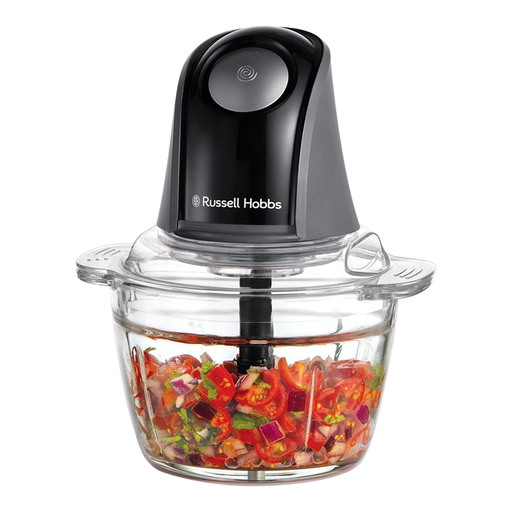
A compact chopper for anyone looking to prepare a small batch of hummus.
The bowl has a capacity of 1 l, with a stated filling capacity of 500 ml. The product name lists 200 W and dishwasher-safe parts.
 No image available
A hand blender option for anyone who wants to purée hummus; check which parts are included with this model.
Don’t use the appliance with boiling liquids.
 No image available
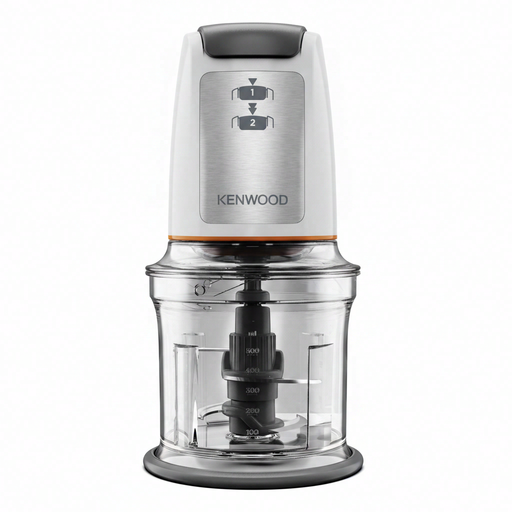
A mini chopper for smaller preparations; the product information lists dips and herbs as suitable uses.
The stated maximum filling weight is 225 g. Use the chopper for no more than 30 seconds at a time, then leave it to cool for 2 minutes.
 No image available
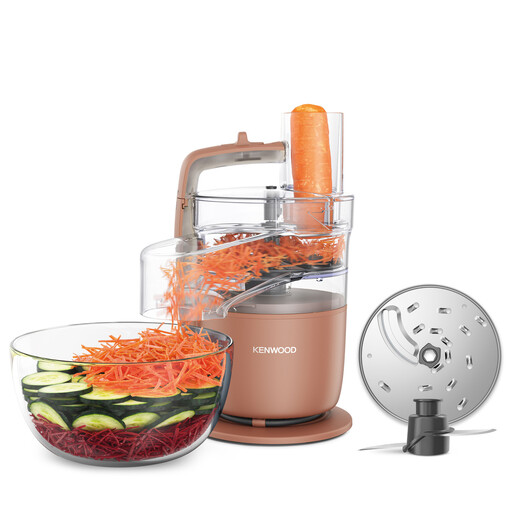
A compact food processor for anyone who wants to chop, slice or grate ingredients as well as make hummus.
For this model, Kenwood lists a 1.3 l bowl capacity and a 0.75 l working capacity for liquids. The stated liquid capacity is not the same as the bowl capacity.
 No image available
The product name lists two glass bowls, with capacities of 2 l and 0.6 l, giving you a choice of batch sizes.
The product name lists 300 W. The bowls and lids are not heat-resistant; avoid temperature changes above 50 °C and don’t use them in the microwave. Also allow for storage space for the second bowl.
No, you can also use a hand blender to make hummus. The Netherlands Nutrition Centre (Voedingscentrum) lists both options; choose according to your portion size, available space and other food preparation tasks.
Not without checking the instructions for the exact model. Philips lists a 0.7 l bowl capacity and a 0.5 l chopping capacity for the HR1393 series; Kenwood also gives a separate working capacity for the FDP22.130RD.
The Netherlands Nutrition Centre (Voedingscentrum) advises keeping homemade plain hummus in the fridge for 1–3 days. Use clean utensils and don’t eat the hummus if it has become discoloured and watery.
According to the Dutch Government, you’re entitled to a product that works as it should. There is no fixed statutory guarantee period, and the retailer is your point of contact if a product is faulty. For qualifying online consumer purchases, you generally have 14 days to change your mind. Check the terms that apply to your specific purchase.
The Netherlands Food and Consumer Product Safety Authority (NVWA) states that CE marking is compulsory for electrical products covered by the relevant rules; kitchen appliances are among the examples of electrical equipment. Check the marking and product information for the model on offer: a mention on a sales page is not, by itself, an independent safety test.