
Vandaag of morgen in huis

Kwaliteit gegarandeerd

Welkomstaanbiedingen ontgrendelen: GRATIS bezorging | Tot 80% korting | Gratis 30 dagen JoyPlus-proefperiode
Download de app
A small kitchen, student room, studio or home office calls for appliances that suit both the available space and your everyday needs. When choosing compact household appliances, the lowest price is not the only consideration. An appliance may look small, but an awkward door, limited capacity or difficult-to-clean surface can still cost you valuable space and time.
In this buying guide, you’ll discover what to look for when choosing small household appliances, such as a tabletop fridge, compact freezer, electric heater, air fryer or contact grill.
An appliance that is approximately 55 cm wide may appear to fit your kitchen on paper. You should also check the depth, ventilation space, door opening and cable clearance. Fridges and freezers need to be able to release heat. A niche that is too tight can affect performance and make cleaning difficult.
Also consider which way the door opens. A reversible door is useful if the layout of your kitchen, office or studio changes later.
Marketing copy sometimes uses energy-efficient as a general description. That’s why you should check the annual energy consumption in kWh and the energy label. The actual cost depends on your energy tariff and usage conditions.
A simple calculation:
annual consumption in kWh × your price per kWh = estimated annual electricity costs
For example, you can compare a fridge using 139 kWh per year with a compact freezer using 105 or 166 kWh per year. The energy label alone does not tell you the full cost picture.
An adjustable thermostat, non-stick coating or automatic switch-off can be useful, but check how the feature works in practice. Does the appliance have a dial or digital display? Are the plates removable? Is the component dishwasher-safe? For a freezer, does it have No Frost, automatic defrosting or require manual maintenance?
Measure the space before ordering. Leave room around a fridge or freezer for ventilation and check that the door can open fully. Then compare the net capacity, rather than just the type of model.
According to the product information, the Salora CFT109 models offer 95 litres of fridge space and 14 litres of freezer space. The Salora FRT910 models have a capacity of 91 litres and four transparent drawers. The Wiggo WF-TT82C(B) is listed with a net capacity of 85 litres, three storage compartments and a freezing capacity of 4.5 kg per 24 hours.
An adjustable thermostat gives you more control than an appliance with just one fixed setting. However, check the temperature range and how it is adjusted.
The following points are also important for a fridge or freezer:
The Wiggo is listed with energy label C, 105 kWh per year, 39 dB and a storage time of 10 hours during a power cut. The Salora FRT910 has energy label E, 166 kWh per year and a noise level of 40 dB. These figures come directly from the supplied product specifications and are more useful for comparison than general terms such as “economical” or “quiet”.
When choosing an air fryer, teppanyaki plate, contact grill, sandwich maker or waffle maker, look beyond the wattage. Higher power can mean faster heating, but it also increases electricity consumption during use. You should also consider:
A non-stick coating can make it easier to remove food and clean the appliance. Use the kitchen utensils recommended by the manufacturer, as metal spatulas can damage the coating. For an electric heater, a stable surface, overheat protection and sufficient distance from curtains or furniture are important. Never cover an electric heater.
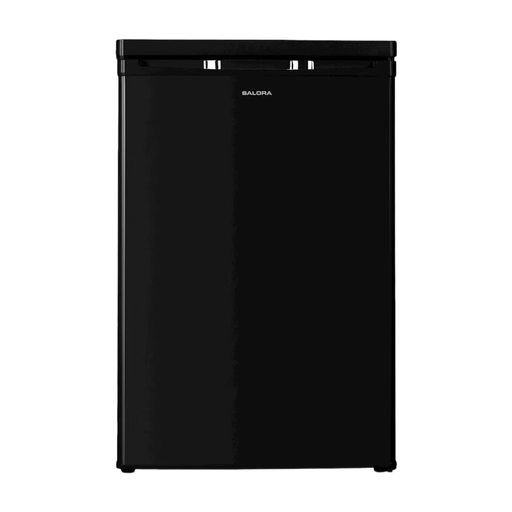
Why it suits this profile: This tabletop fridge offers a total capacity of 109 litres, including 95 litres of fridge space and 14 litres of freezer space. It combines two functions in one appliance, making it suitable for a small kitchen or student room.
The specifications list dimensions of 85 × 55 × 58 cm, energy label E and 139 kWh per year. This allows you to check the space and energy consumption in advance.
Adjustable thermostat, reversible door and a 4-star freezer compartment.
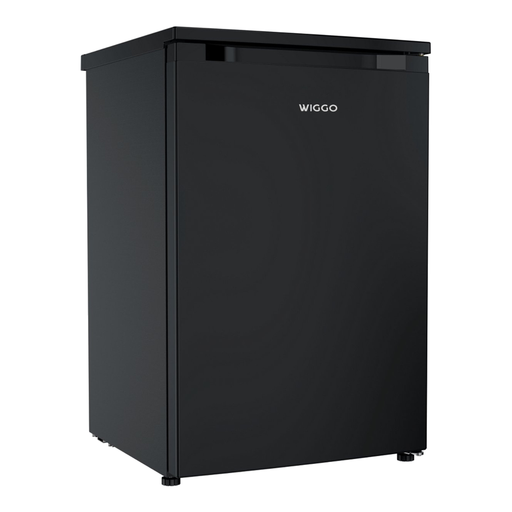
Why it suits this profile: If you need extra freezer space, this compact model offers a net capacity of 85 litres, three storage compartments and a freezing capacity of 4.5 kg per 24 hours.
The reversible door makes flexible positioning easier. The product specifications also list 39 dB, 105 kWh per year and 10 hours of storage time during a power cut.
Energy label C, mechanical temperature control and a clear, practical layout.
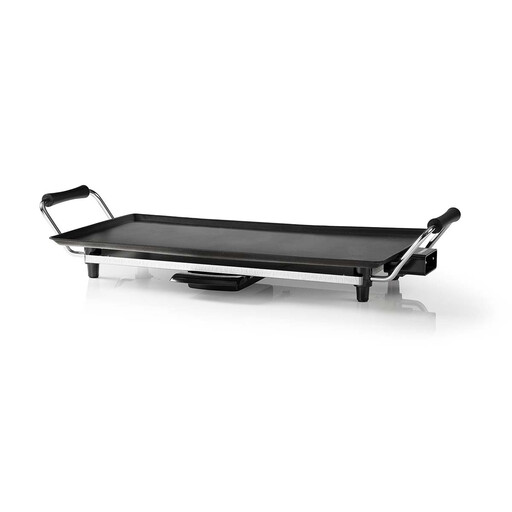
Why it suits this profile: The large 47.5 × 26.5 cm cooking plate is suitable for preparing several ingredients at once. It’s ideal for cooking at the table, family meals or regular use in an office space.
The detachable thermostat, grease tray and non-stick coating make temperature control and cleaning easy to assess in practical terms.
2000 W power, continuously adjustable thermostat, cool-touch handles and non-slip feet.

Why it suits this profile: This compact model offers four heat settings, an adjustable thermostat from 5 to 35 °C, ECO mode, a timer and remote control.
The thermostat and timer help prevent the heater from running unnecessarily. The product information also mentions tip-over and overheat protection.
1800 W power, oscillation, ECO mode and two specified safety features.
We’ve put together a complete, up-to-date list of products that fully meet these strict selection criteria and the applicable European safety regulations.
This varies by model. Always check the manual and product specifications. At the very least, allow for ventilation at the back and sides, a door that can open fully and enough space to remove drawers or shelves. Do not place a fridge or freezer in direct sunlight or a damp environment.
Not necessarily. For fridges and freezers, compare annual consumption in kWh. For an air fryer, contact grill or electric heater, power, usage time and the selected temperature are the main factors. An adjustable thermostat, timer or ECO mode can help you tailor usage more effectively, but actual consumption depends on your usage pattern.
Their lifespan depends on build quality, frequency of use, maintenance and correct positioning. Clean filters, drip trays and surfaces according to the manual, do not use damaged cables and allow an appliance to cool down before storing it. Also keep your proof of purchase: consumers are entitled to statutory conformity, while any additional warranty may vary by product or seller.
